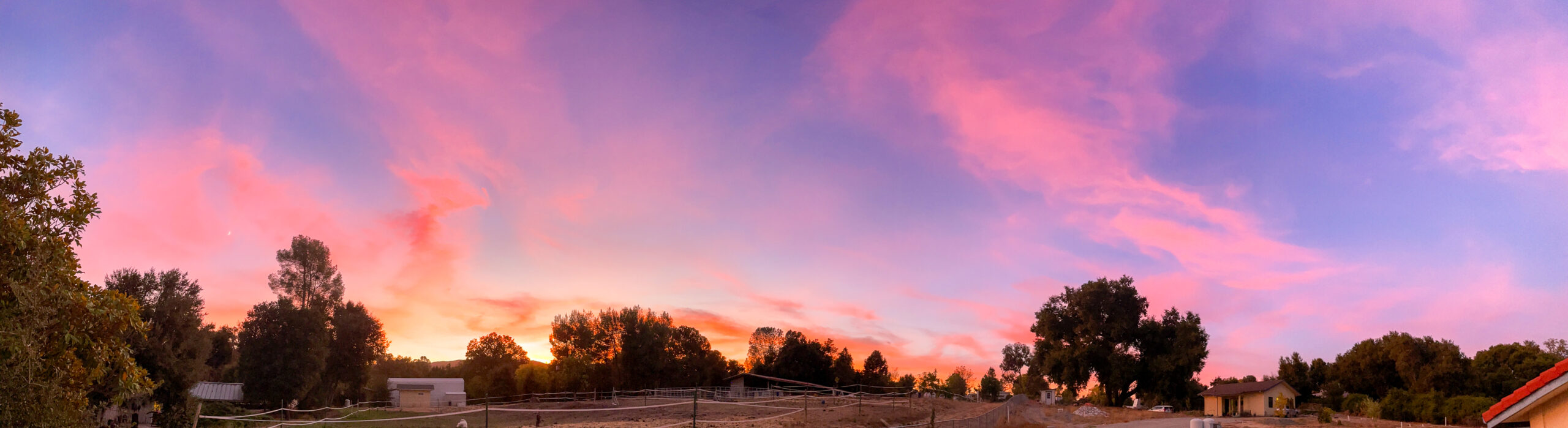
It feels like bug season is winding down here at the Rancho de Colibri. I’m not seeing any patrolling dragonflies anymore, the butterflies appear to have gone, and the native bees aren’t flying, at least not right now. Just about the only insect I could find on the first day of my weeklong vacation was the introduced Apis mellifera, the European Honeybee. They’re regular visitors at our non-beeproof hummingbird feeders. (We have two beeproof ones, bringing us to 50 percent beeproof and I’m thinking we need to switch to 100 percent soon.)
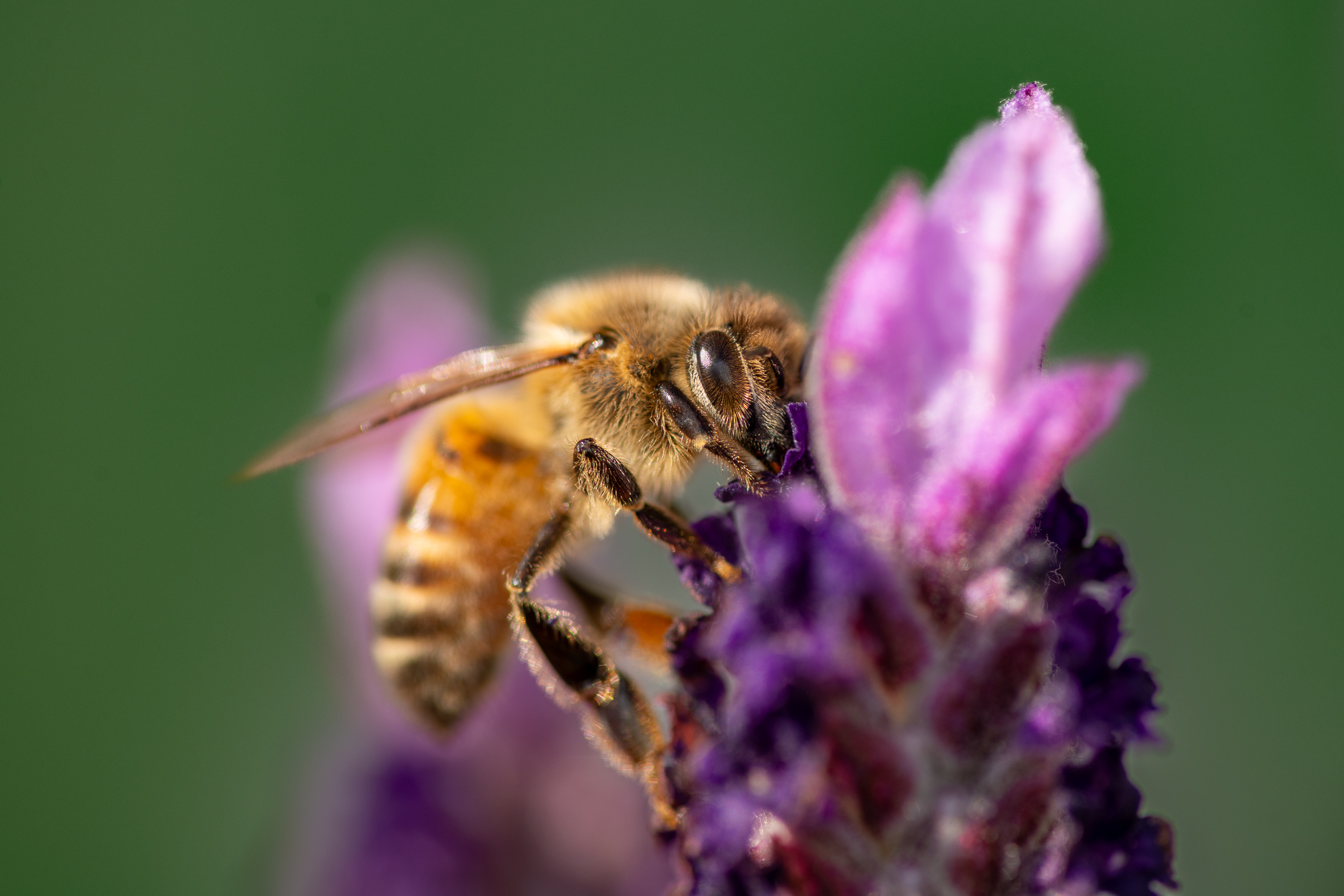
Appropriately enough for this exotic bee, it was nectaring on an exotic plant: the Spanish lavender that provides flowers until what few natives we have really start blooming. (We just planted a few buckwheats and sages this year; the buckwheats are looking fairly spent and the sages are too new to be flowering just yet.)
Anyhoo, here’s the only in-focus photo of the dozen or so frames that I managed to grab this afternoon. Full frame and a cropped version (the joys of the razor-thin focal plane of a macro lens):
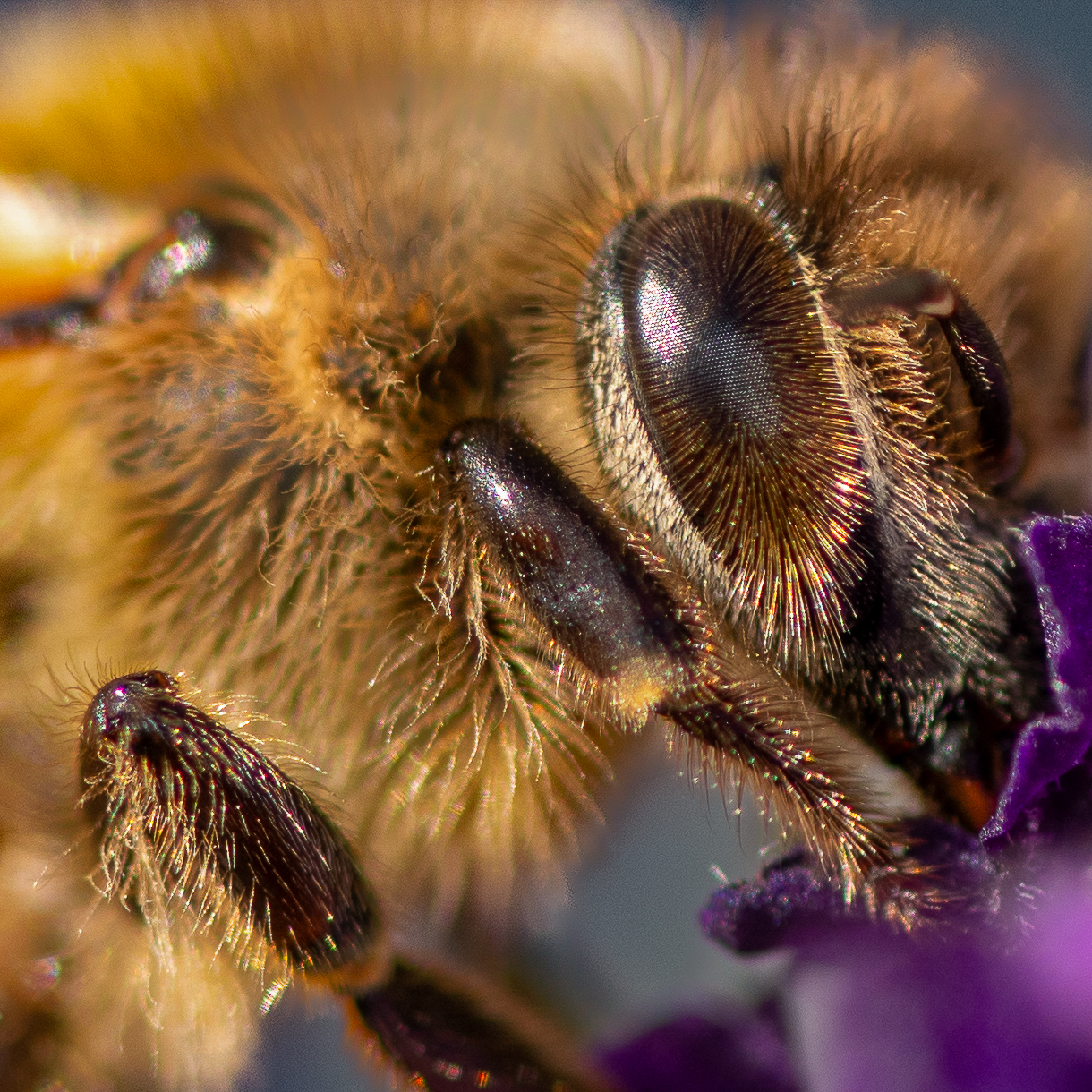
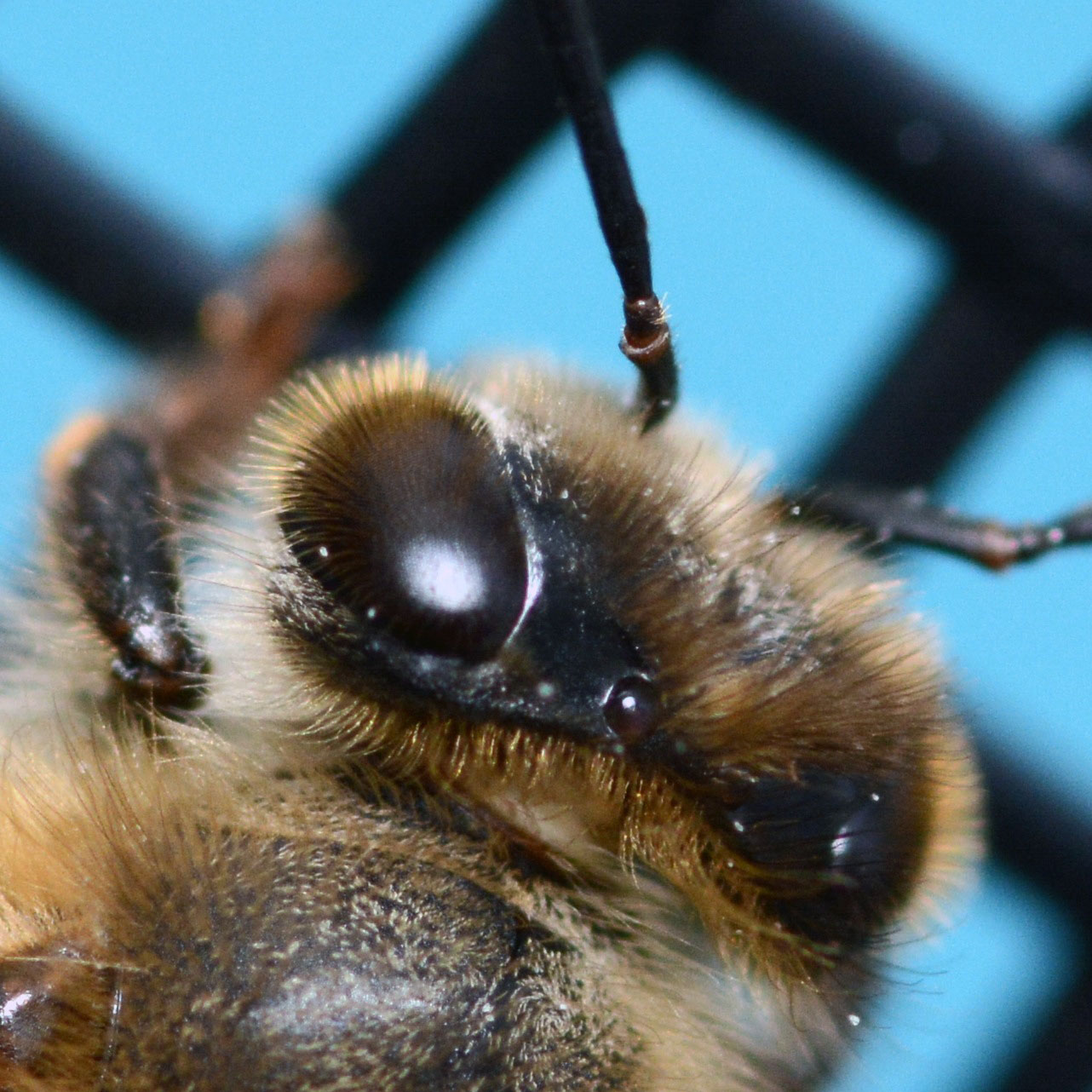
And it’s nice to know that upgrades to both my technique and my gear since 2014 have improved my photography. Back then I was just happy to see an insect and not have it fly away before I could get a photograph, so the images are, shall we say, less than aesthetically pleasing. Here’s my photo of a hairy honeybee eye from back then:
On the less important gear side, I’ve completely upgraded my kit since then. Back in those days I was using a nice little 100mm macro lens, a Tokina AT-X Pro D 100 mm F/2.8, on the old Nikon D7100, which I’d just started using in 2013 (prior to that I was on one of the earlier prosumer DSLRs, a Nikon D70). The lens was good, but it always seemed a bit limiting: had to get a bit close to the bug, squashing the perspective and blocking my own light, in order to get true macro results. And the DSLR’s autofocus was always a challenge (though admittedly less so in macro photography, where manual focus is king anyway).
Though I went mirrorless for my bird photography two years ago thanks to my DSLR failing to focus on an osprey in flight out at Point Buchon, I still prefer to use my big old Nikon DSLR for bugs, though now it’s their flagship D850 instead of their prosumer D7100. I’ve upgraded from the 100mm to a bigger, better lens, the 200mm Nikon micro (Nikon brandspeak for macro).
Probably more important than either of those upgrades in gear, though, is the continual upgrade in technique I’ve gathered over the decade in the field (and lots of time on YouTube!). I’ve learned that the angle from which you take a photo, and the background you give it, make a serious difference to the image quality and appeal. I mean, just compare the two close-ups: the old one from almost directly on top of the bug, from above, looking down (although to be fair, it was on a vertical screen, so I was looking sideways). I was satisfied that the hairs appeared, even though the image itself is barely in focus. Then today’s shot, from the side, on a pleasing background, focus plane aligned with the plane of the bee’s eye. It’s hard to overstate how much better my images might have been back then, on that primitive gear, if my technique had been better.