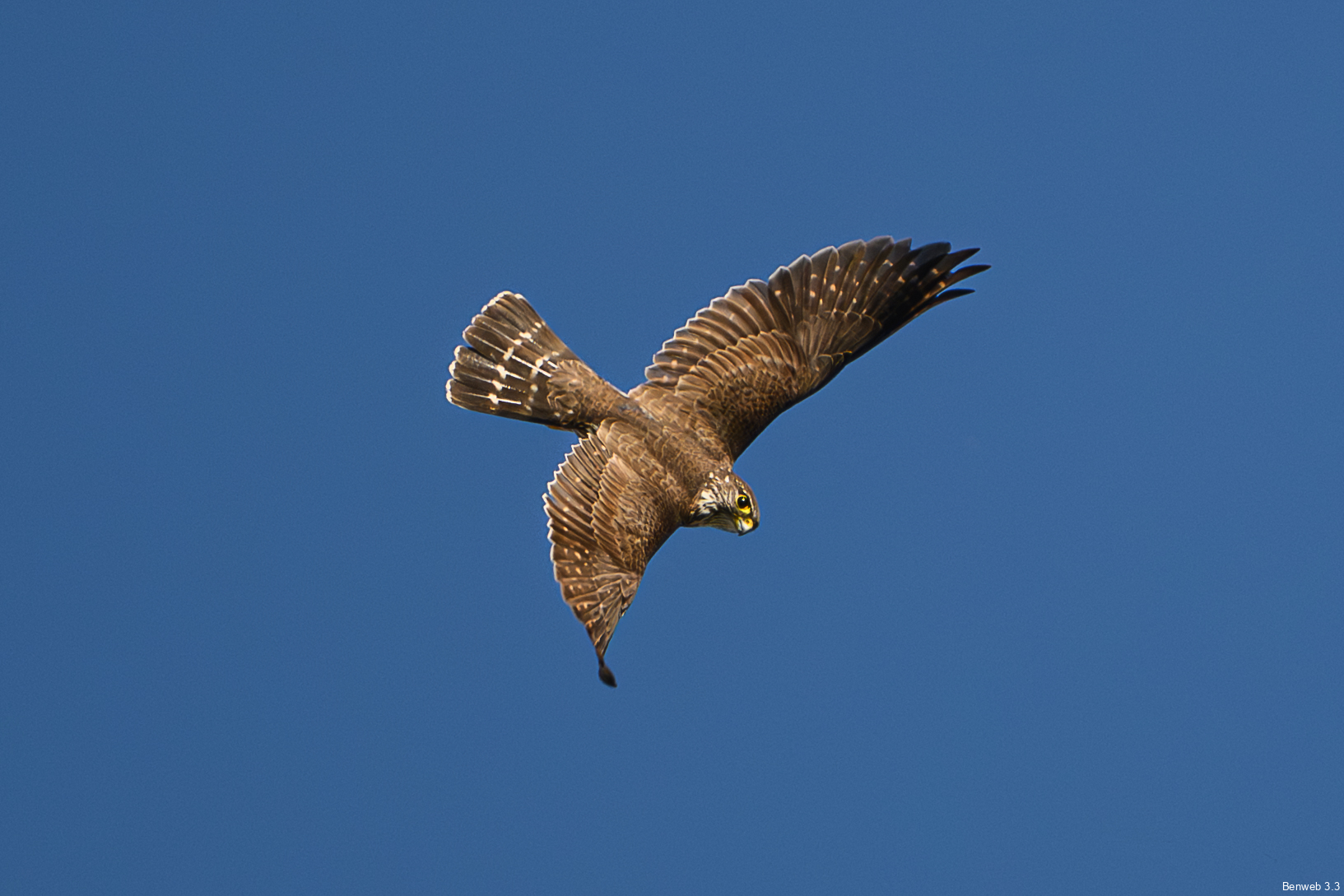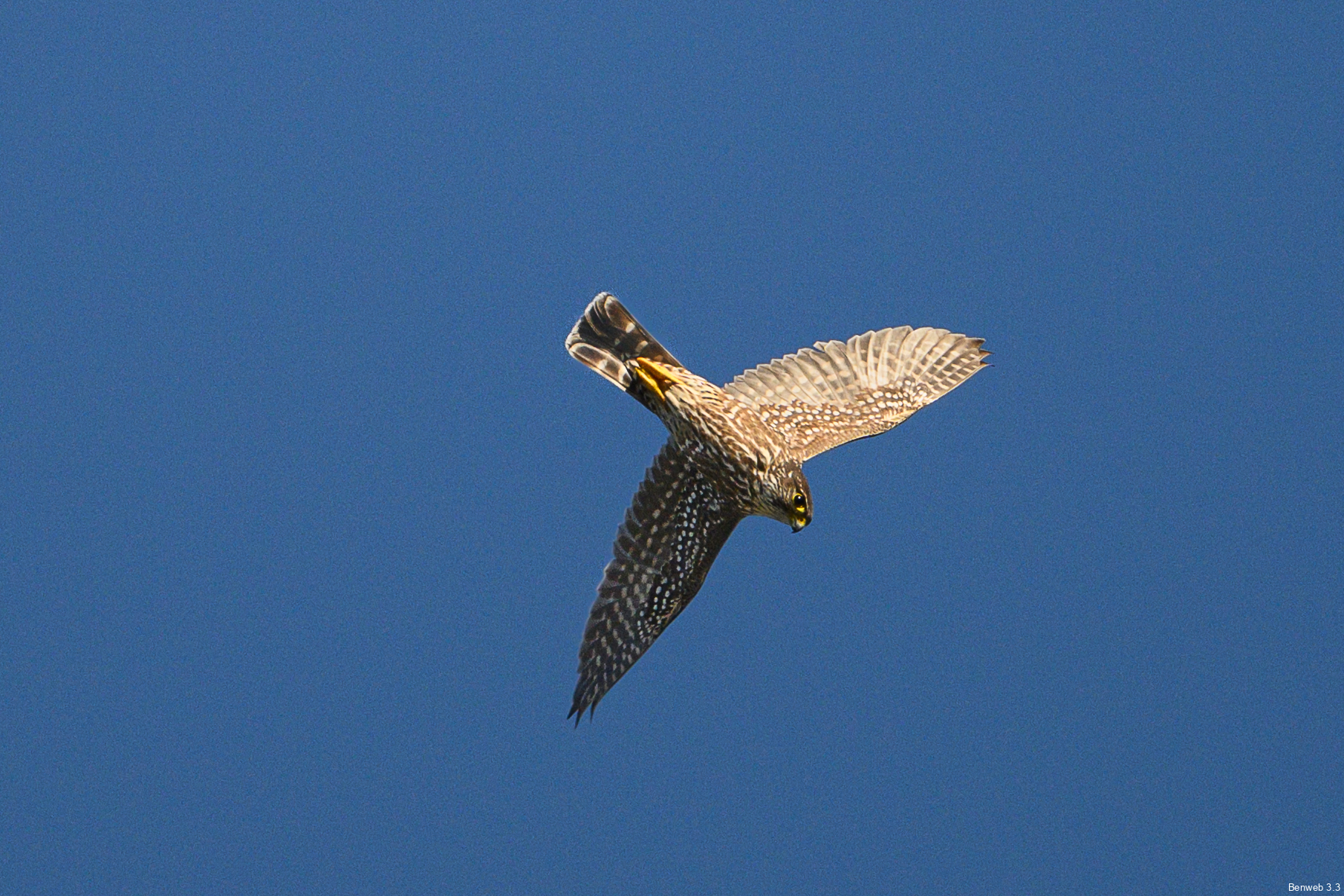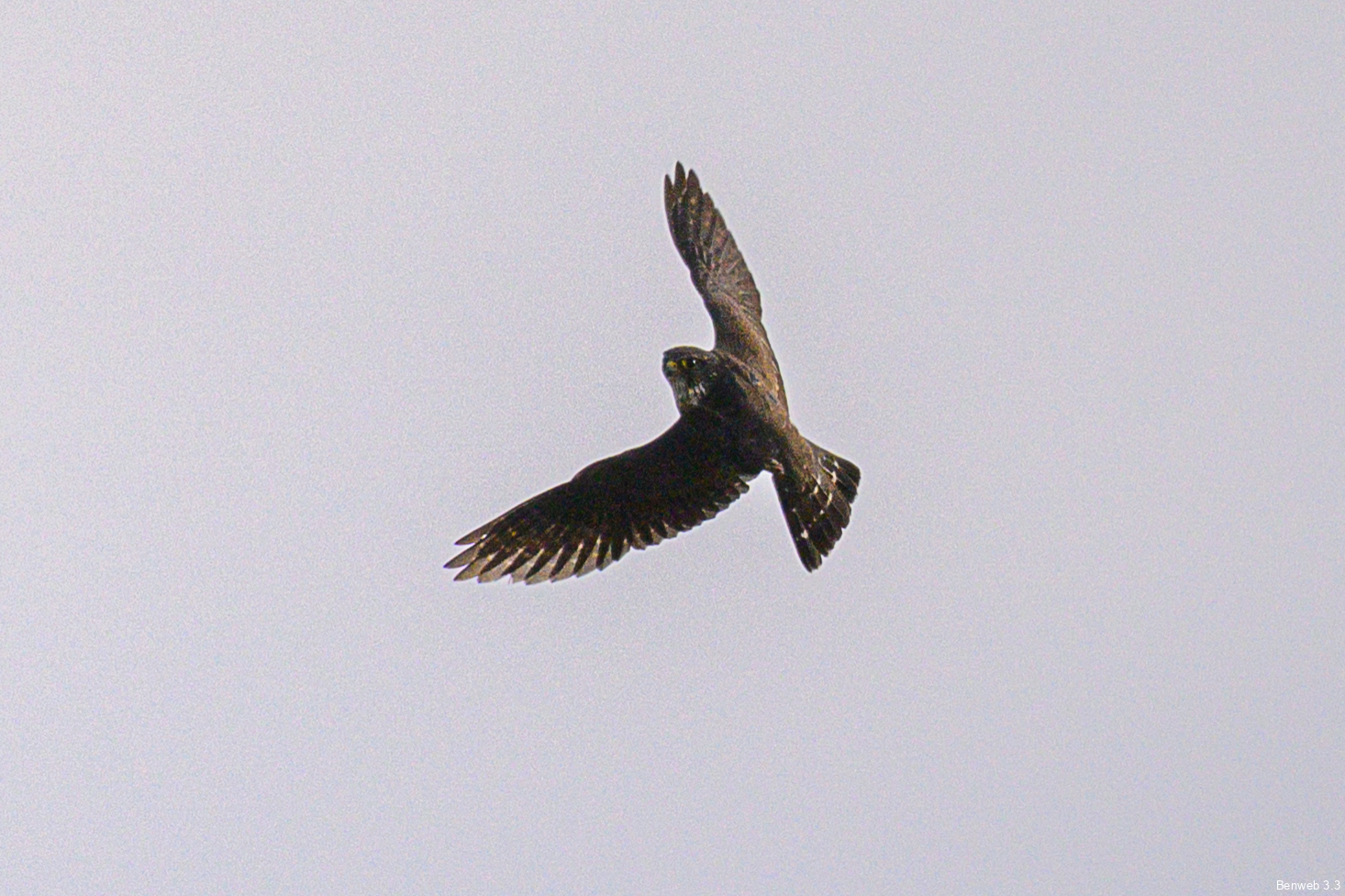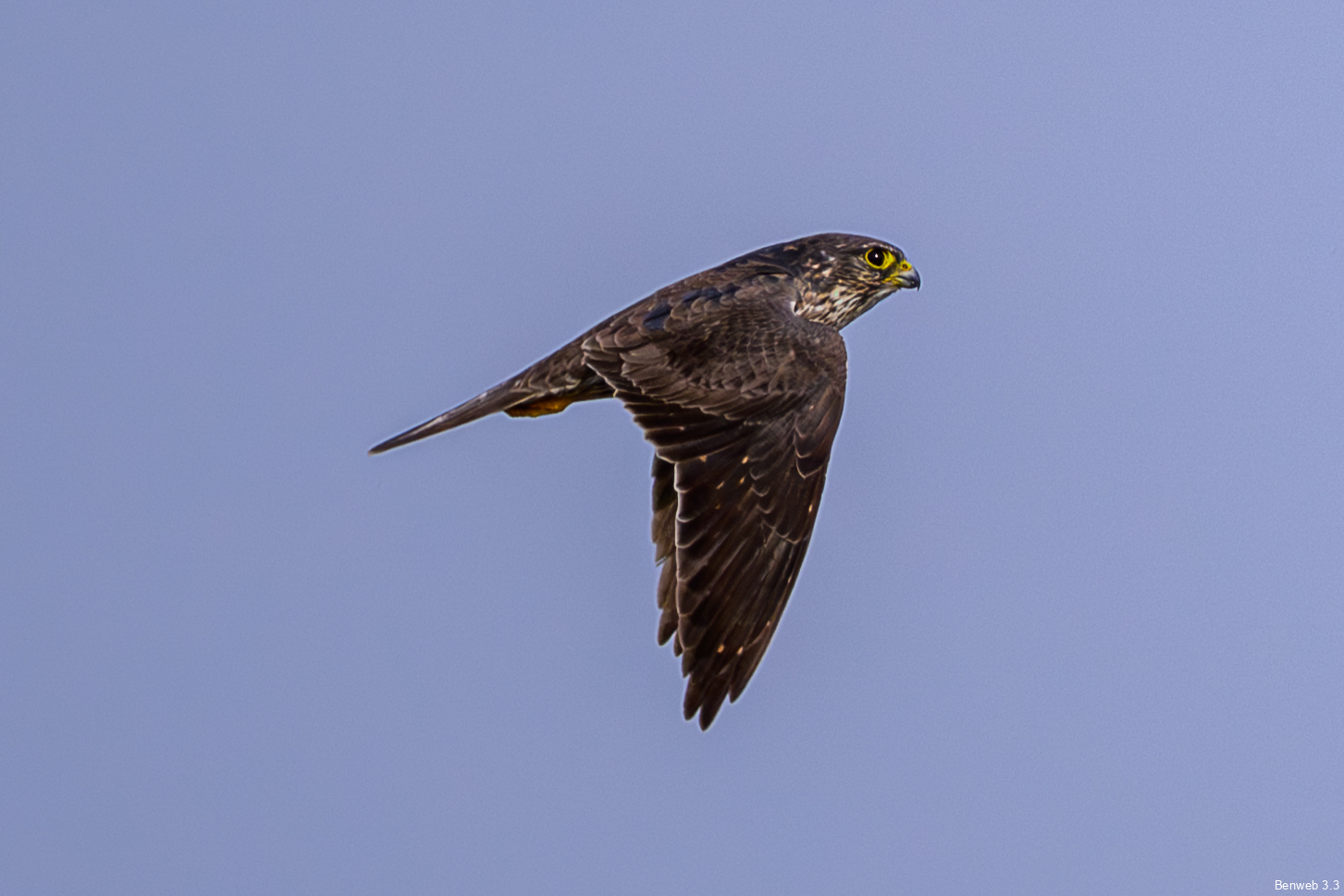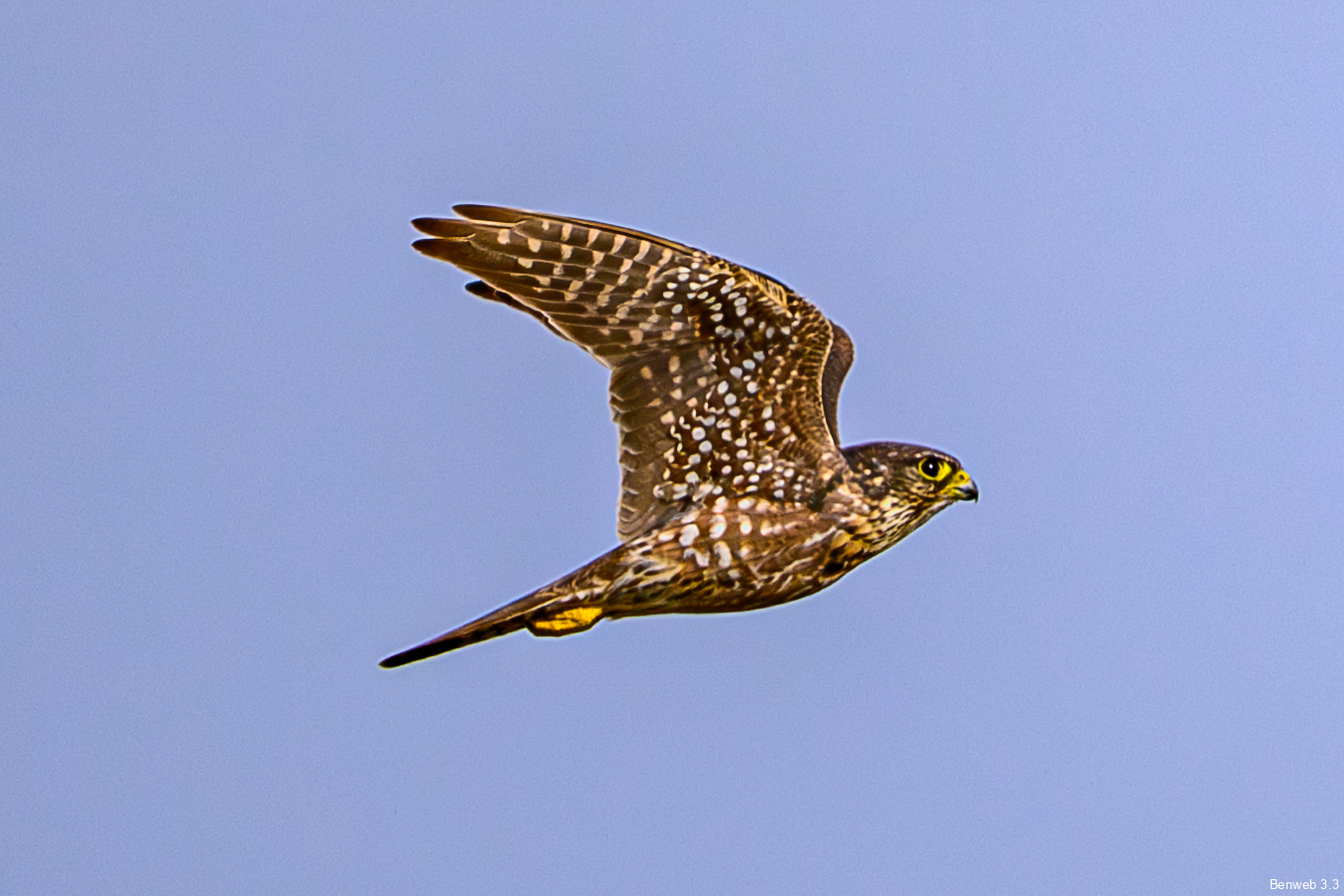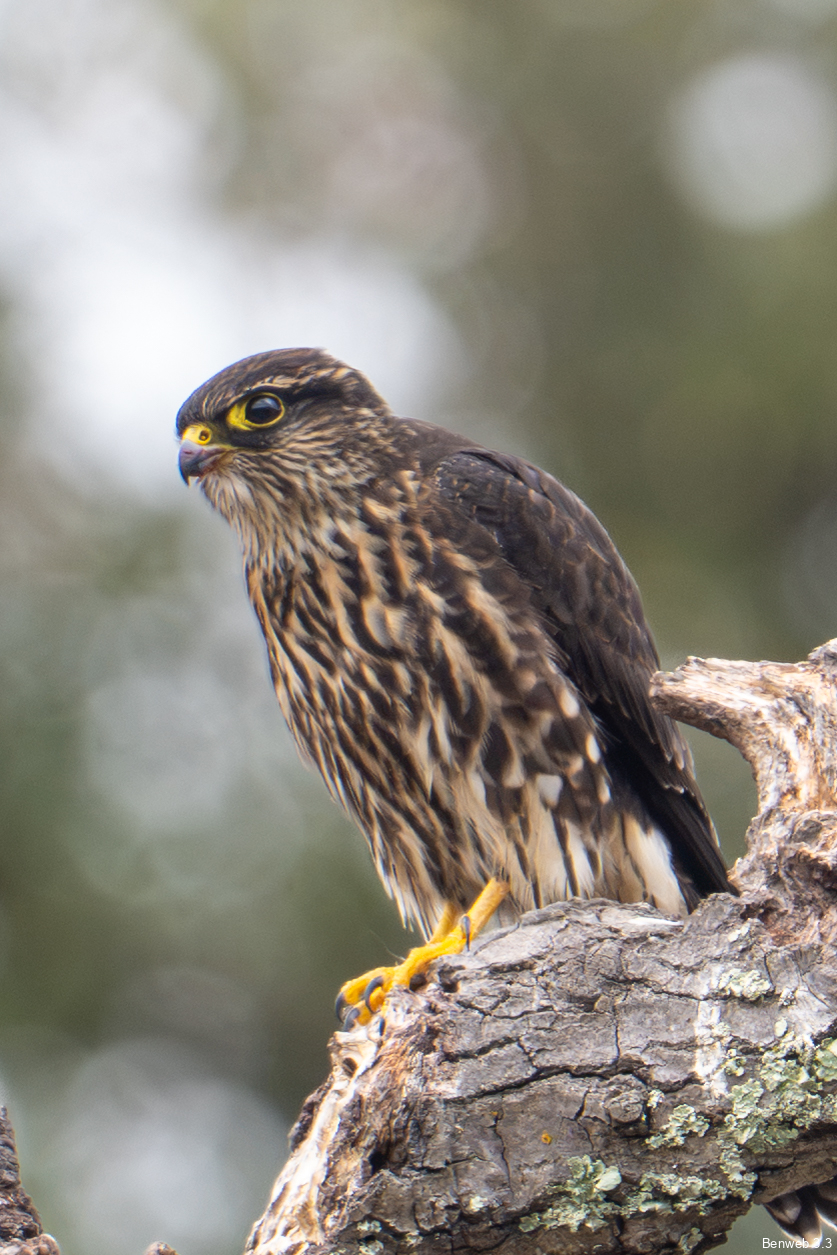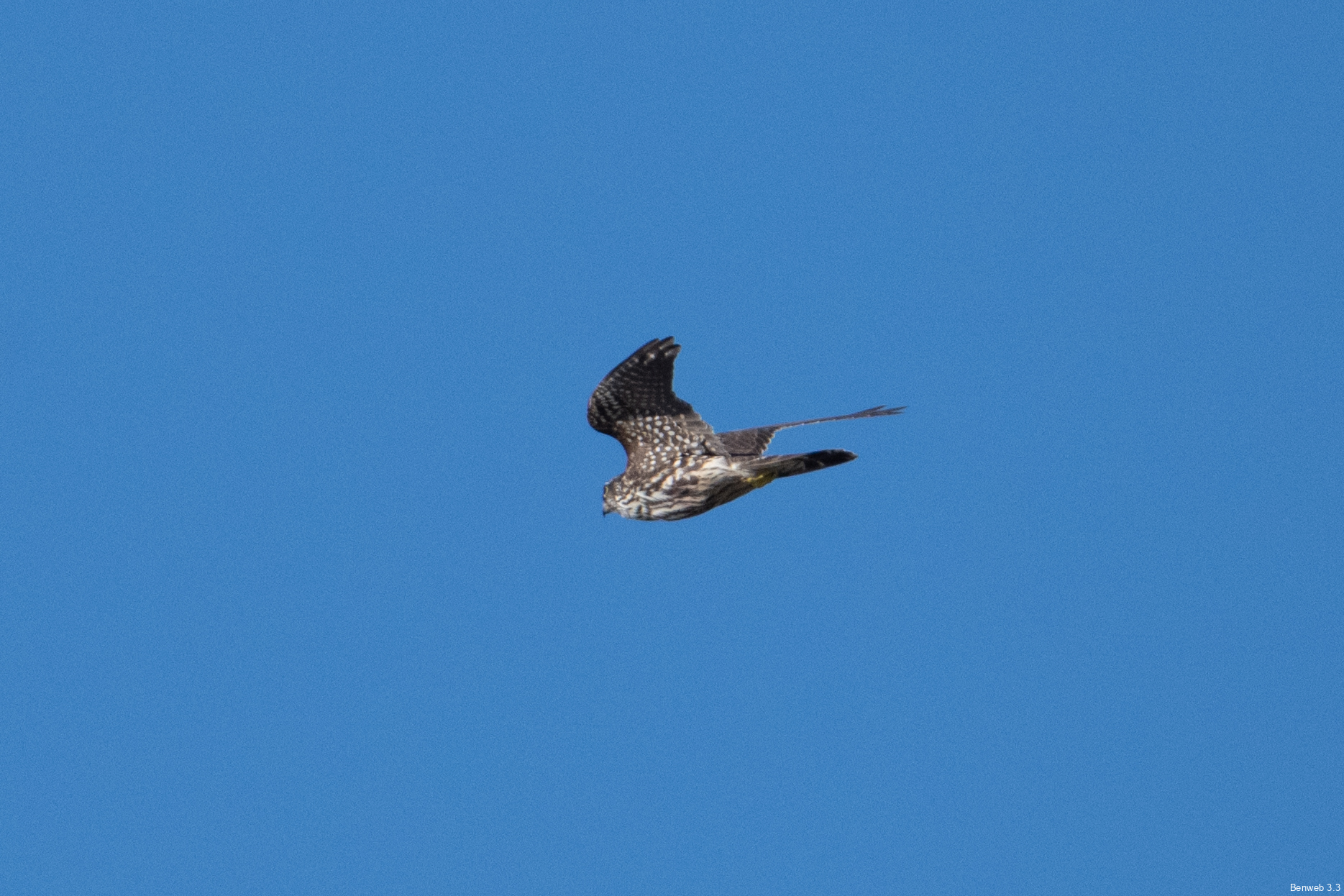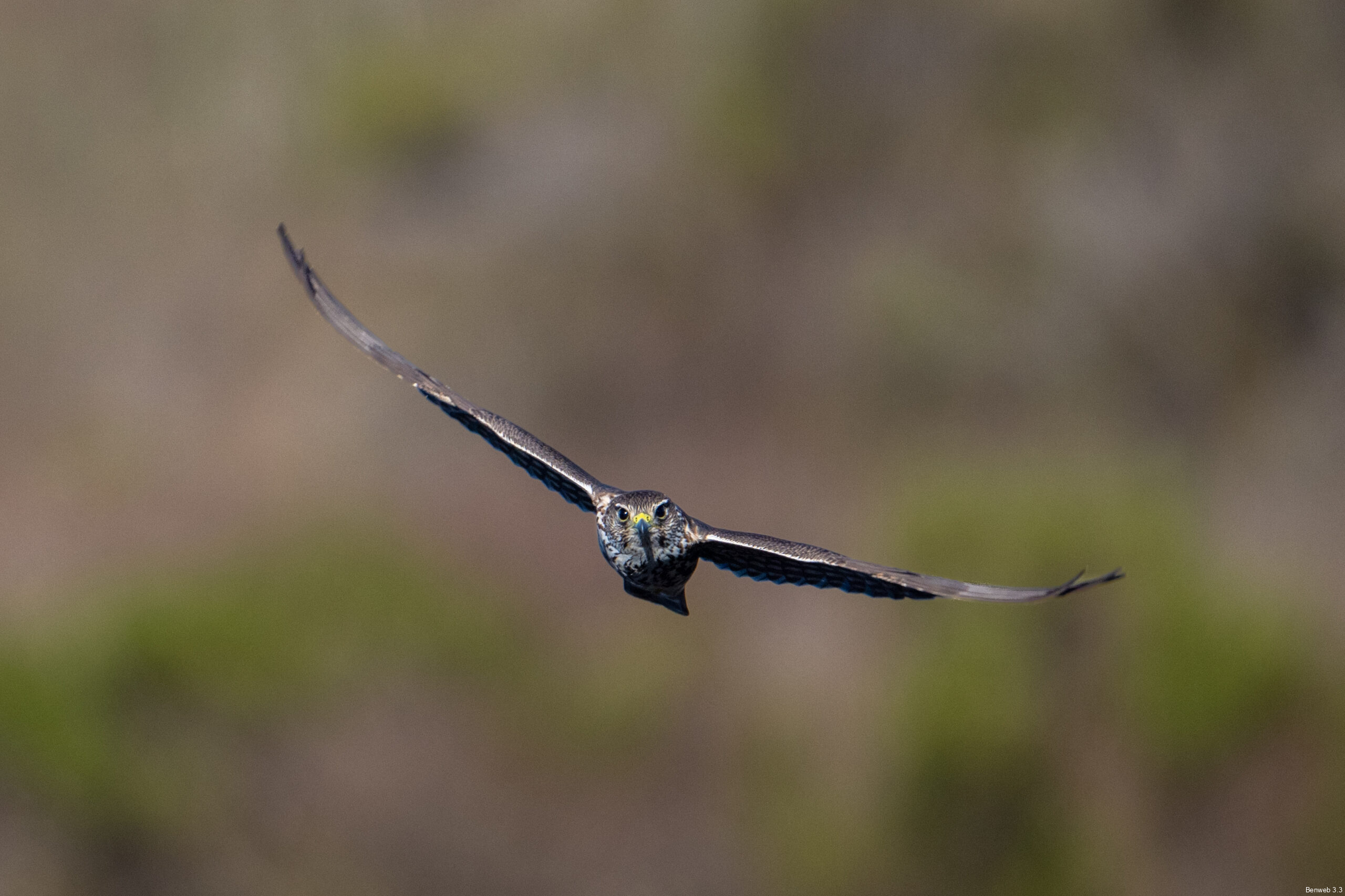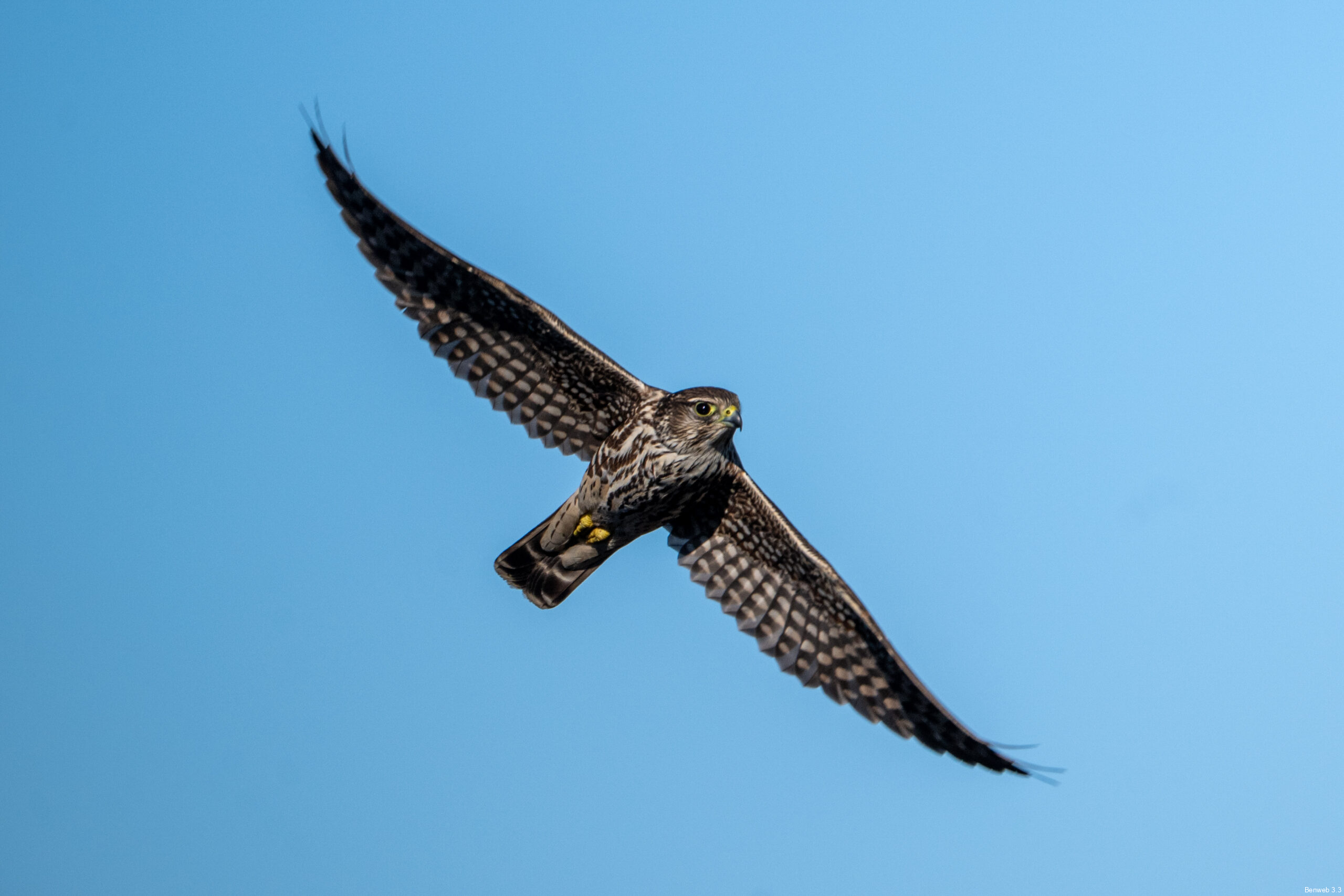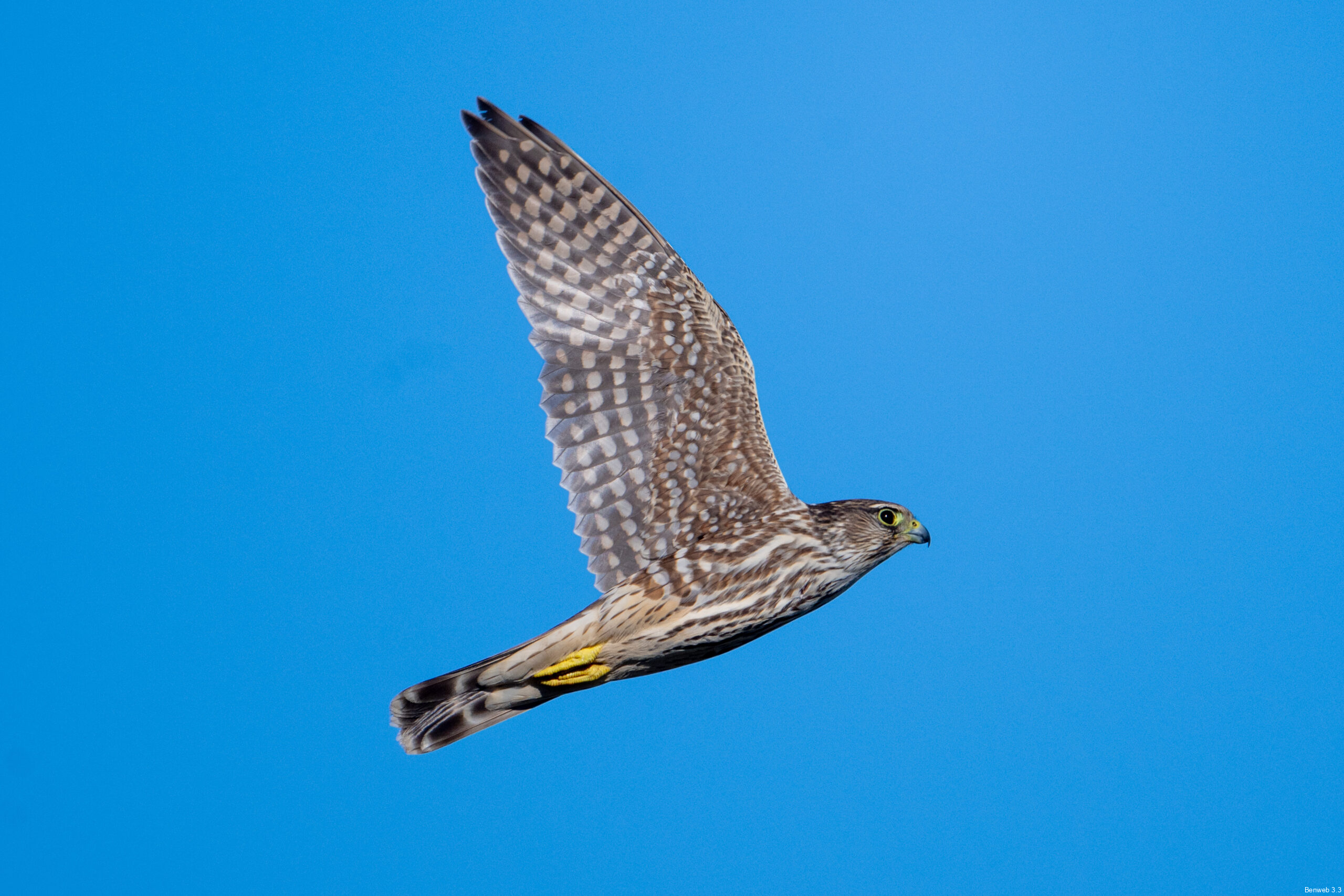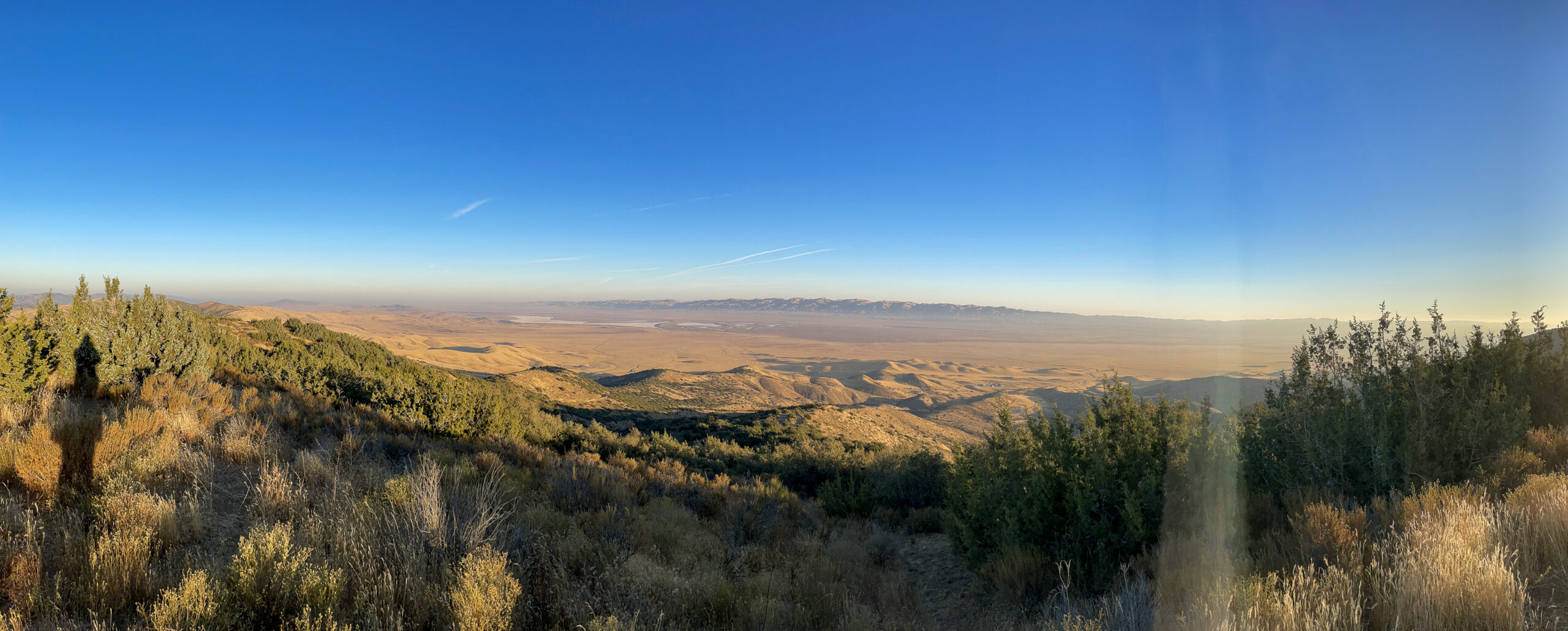
There’s been a Merlin at Atascadero Lake this month.
Not the Merlin, the legendary (and presumably fictional) magician of Arthurian legend (and the leader of the white council of wizards in Jim Butcher’s Dresden files).
A Merlin, Falco columbarius, a small falcon. It’s a bit larger than the American Kestrel (smallest falcon in North America), a bit smaller than the Peregrine and Prairie Falcons. (I’ve never seen the giant Gyrfalcon of the far north).
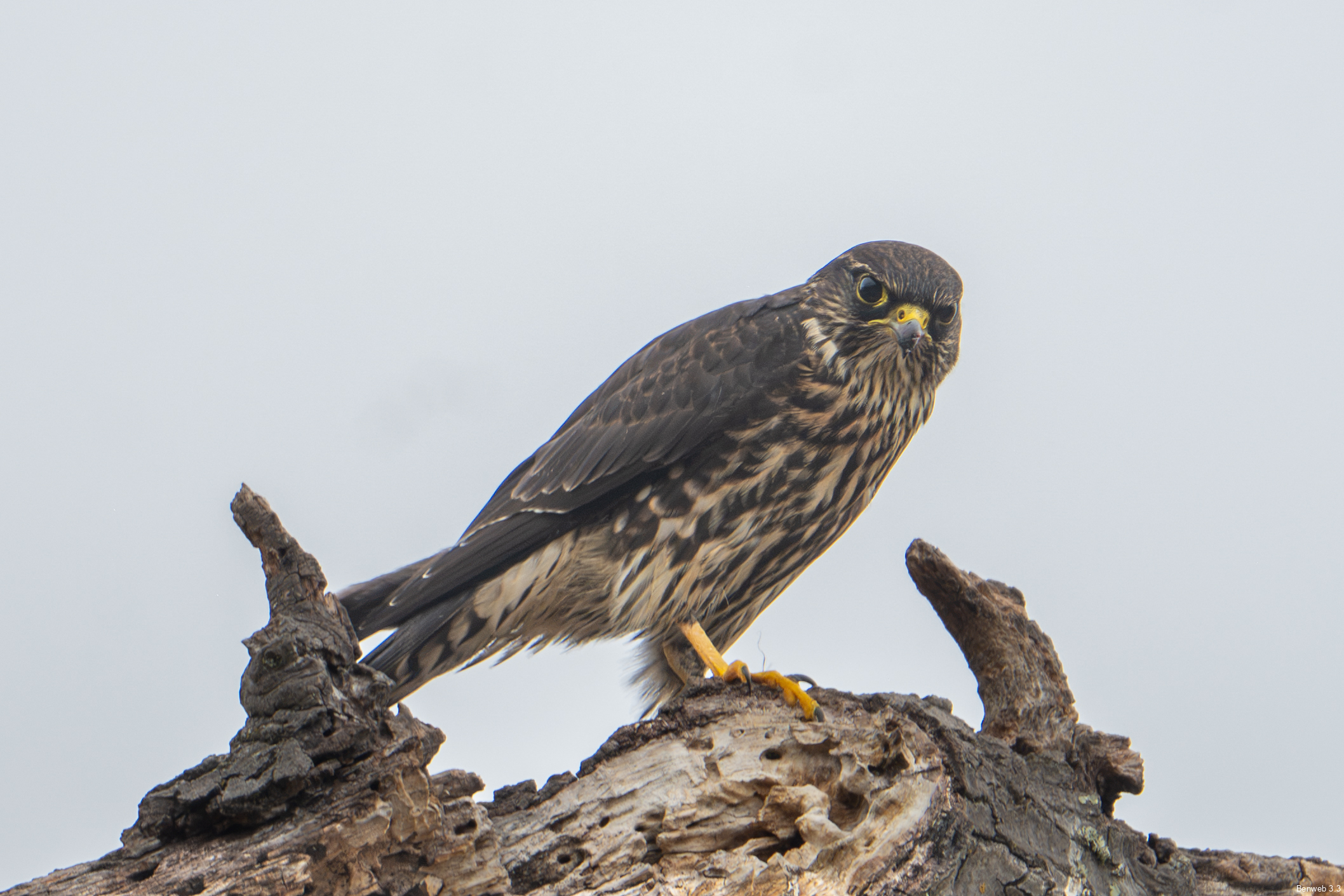
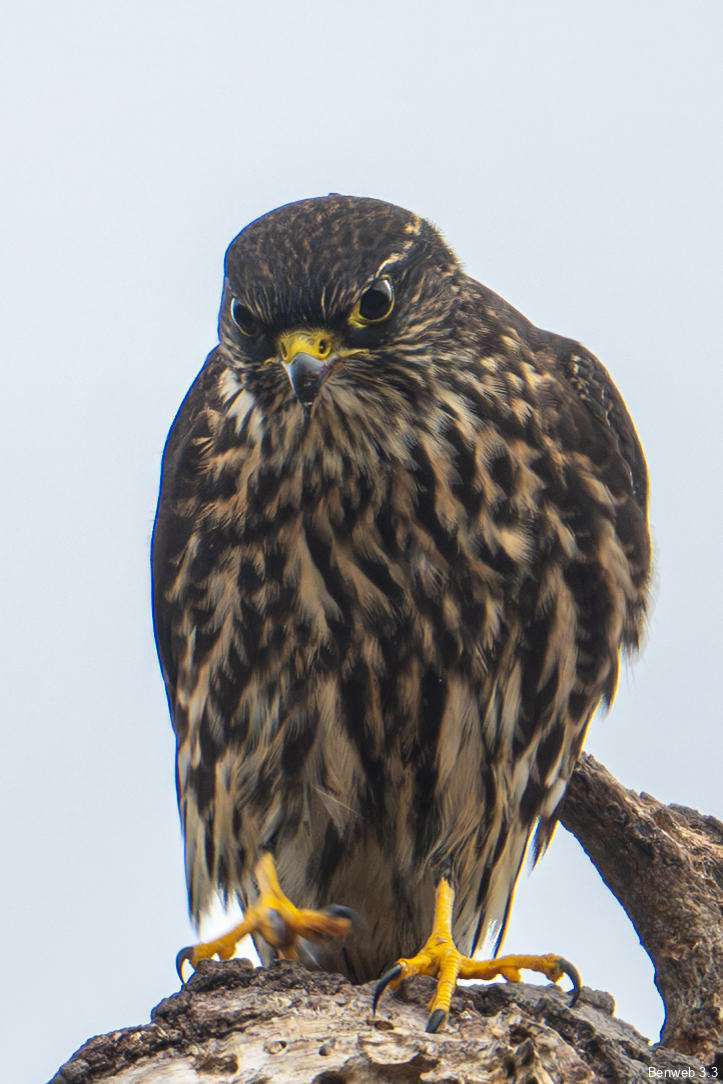
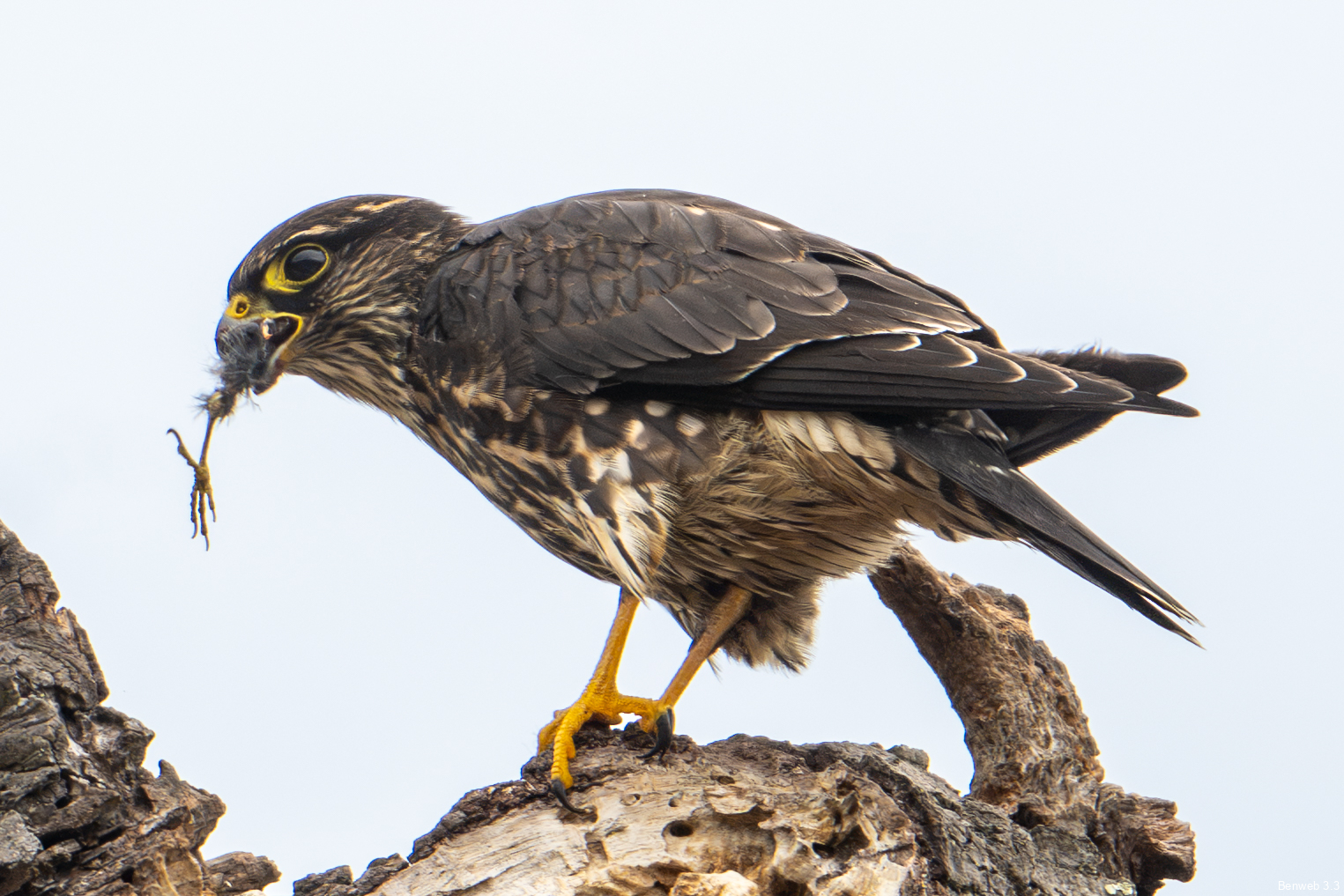
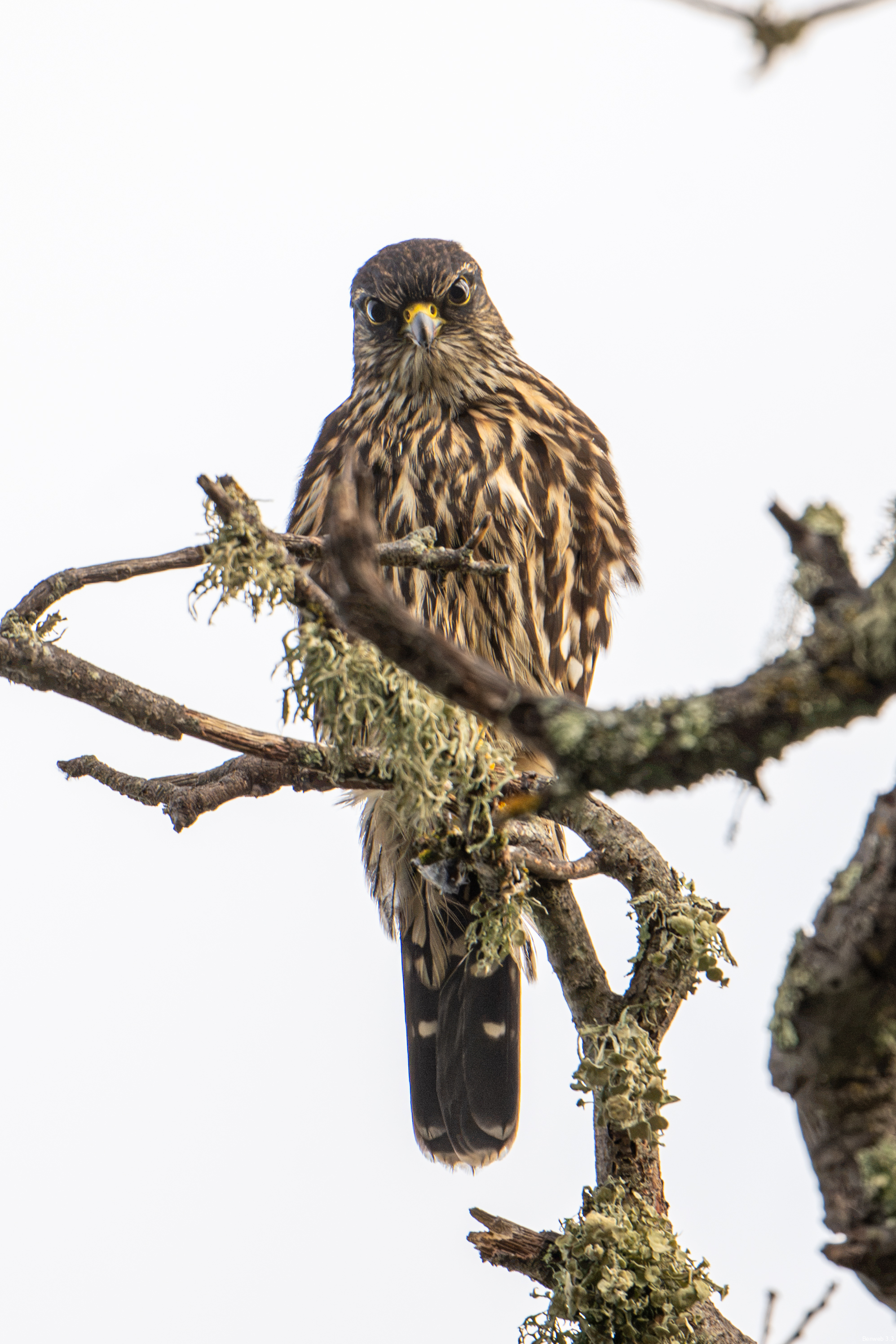
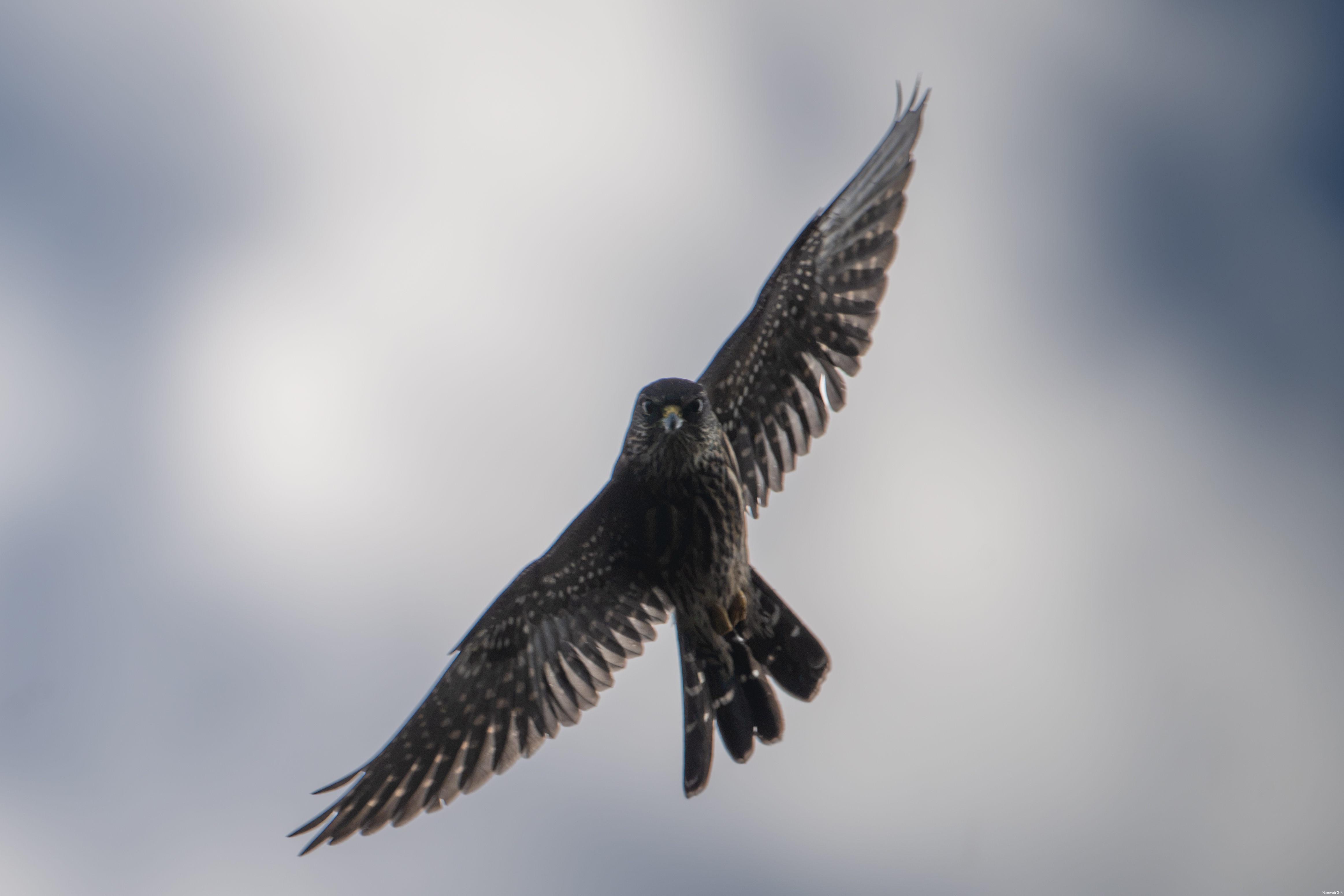
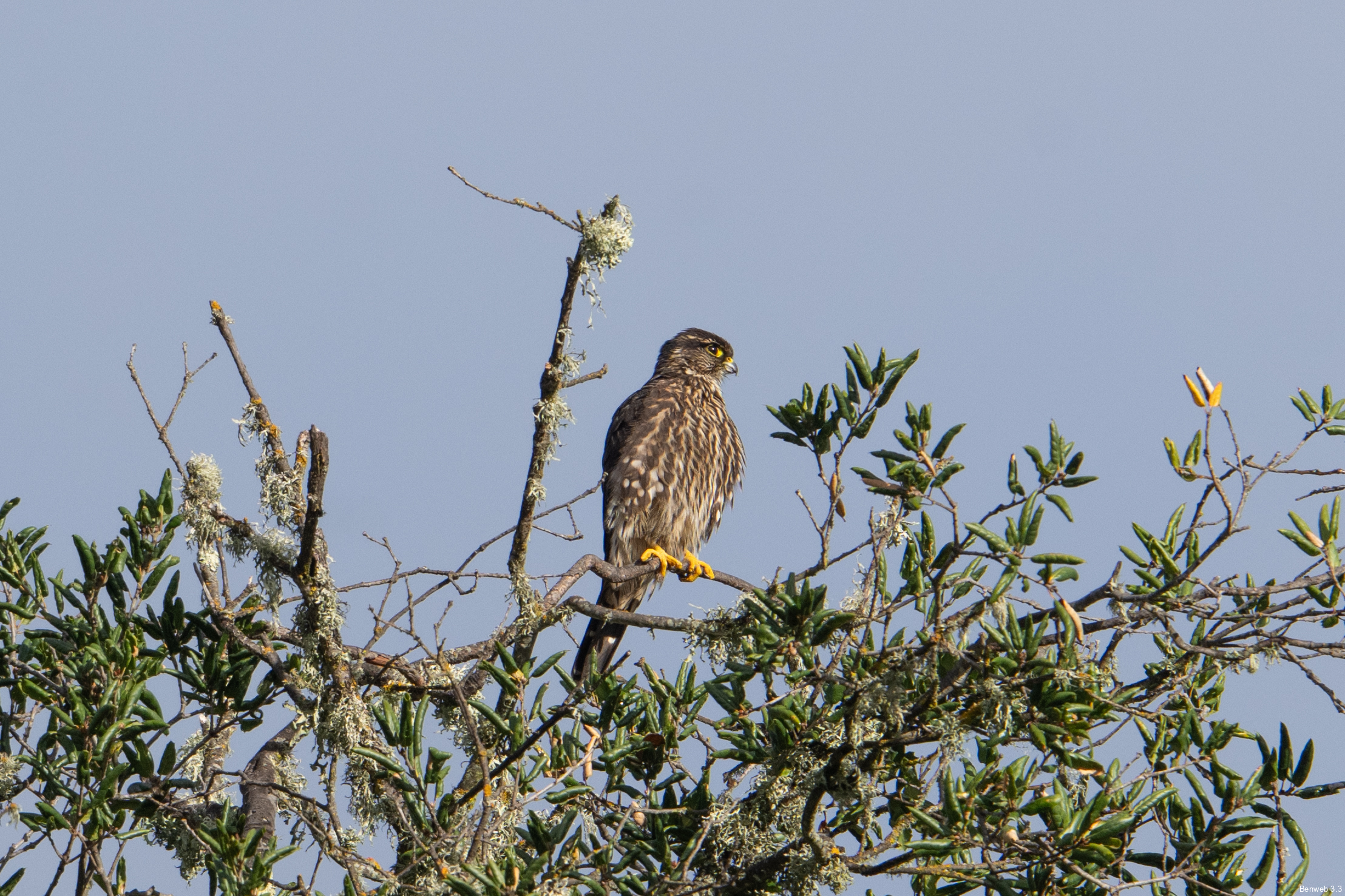
Like all falcons, the Merlin has long, pointed wings that it uses in powerful flight. (Hint: if it’s soaring or gliding frequently, it’s more likely a hawk than a falcon.) As Birds of the World puts it, “In flight gives an impression of larger size and power that belies its actual dimensions. Wingbeat during hunting flight is deep and powerful but much more rapid than either the Prairie or Peregrine Falcon.” The Merlin takes small birds directly out of the air. I have yet to see a successful capture, but earlier this month I came across the Atascadero Lake Merlin eating its breakfast, and since it was preoccupied with that, I was able to get some reasonable photos of it:
Merlins are found worldwide; there are three subspecies in North America and six across Eurasia. It occurs across North America but is relatively uncommon away from the coast (though it can turn up anywhere). The two western-breeding populations, Taiga and Black merlins, have different distributions in winter: Taiga, which breeds in subarctic forests, spreads out across the southern half of the continent and into northern South America; Black merlins, which breed around British Columbia, only disperse in a smallish radius around the Pacific Northwest.
I see these birds relatively infrequently in Atascadero. To give you an idea, as of Friday, November 13, I’ve submitted 318 complete and partial checklists from Atascadero Lake, dating back to April 2023 (I guess I didn’t submit eBird checklists from the many times I visited the lake before we moved here). I’ve had Merlin on only 7 checklists (2.2 percent). The first time was last November, 2025. Then twice in March 2026. And now four this month from November 4 to today.
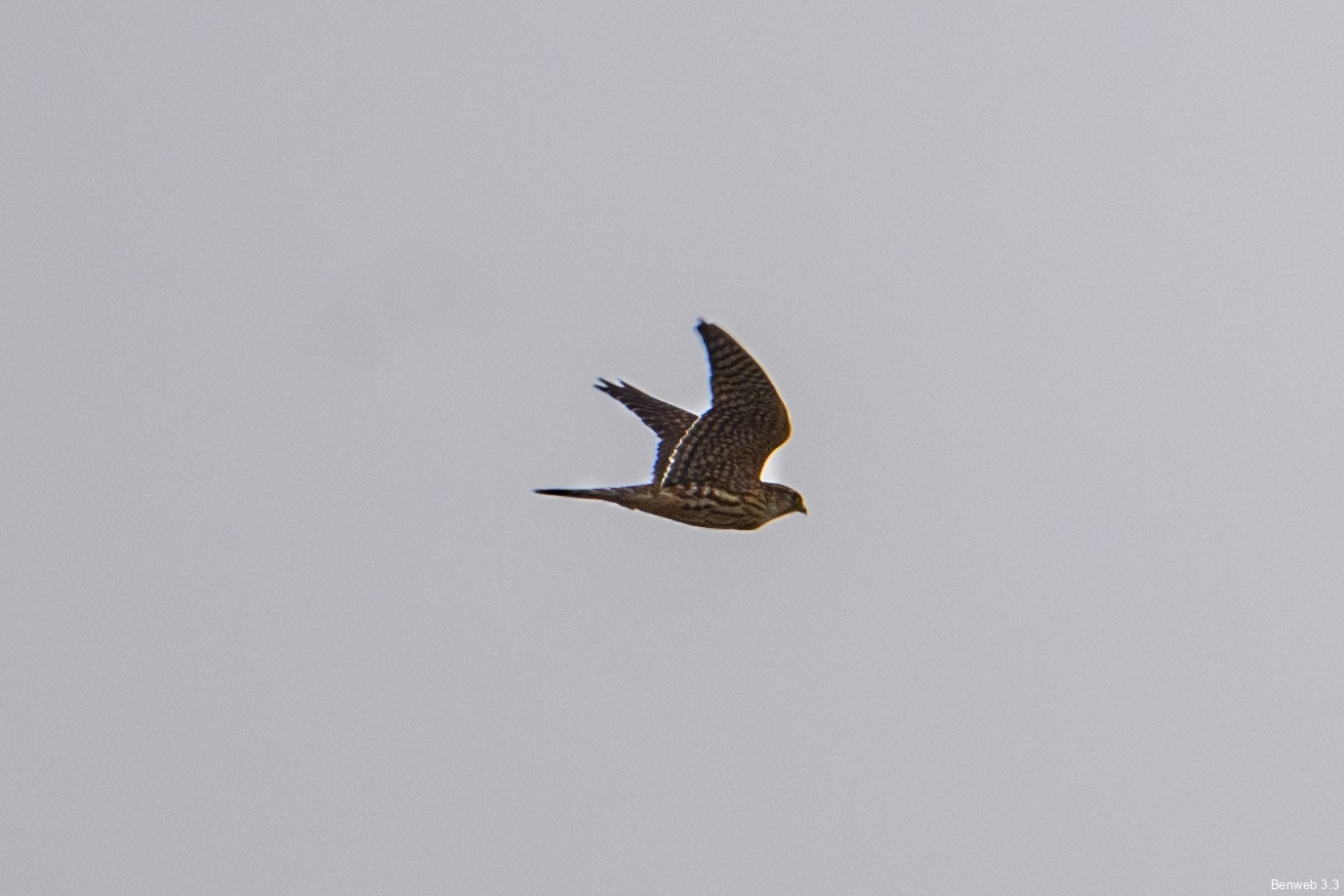
This morning, I found the bird perched high in an oak on the hillside overlooking the lake. It tolerated a relatively close approach, but once I passed a certain invisible line, it gave me the death stare and then circled out over me (into the sun, no less, so the photos are terrible), and then returned to the perch once I retreated downhill to the trail.
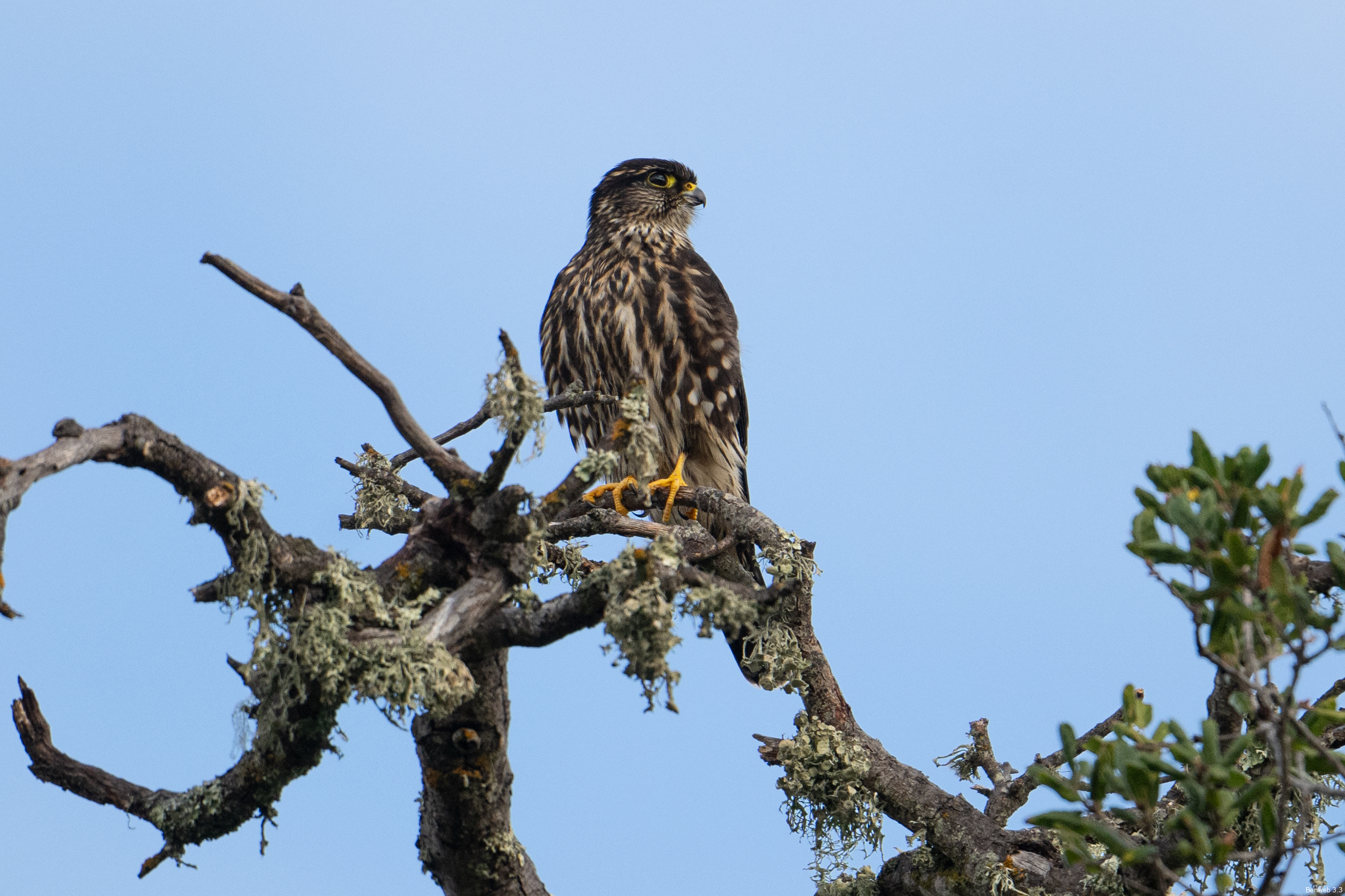
I hope this bird will stick around the lake for a good long while this fall. I’ll do my part by making sure I don’t get too close!
Here’s a little gallery of all the Merlin photos I’ve gotten over the past couple of years.