About the Site
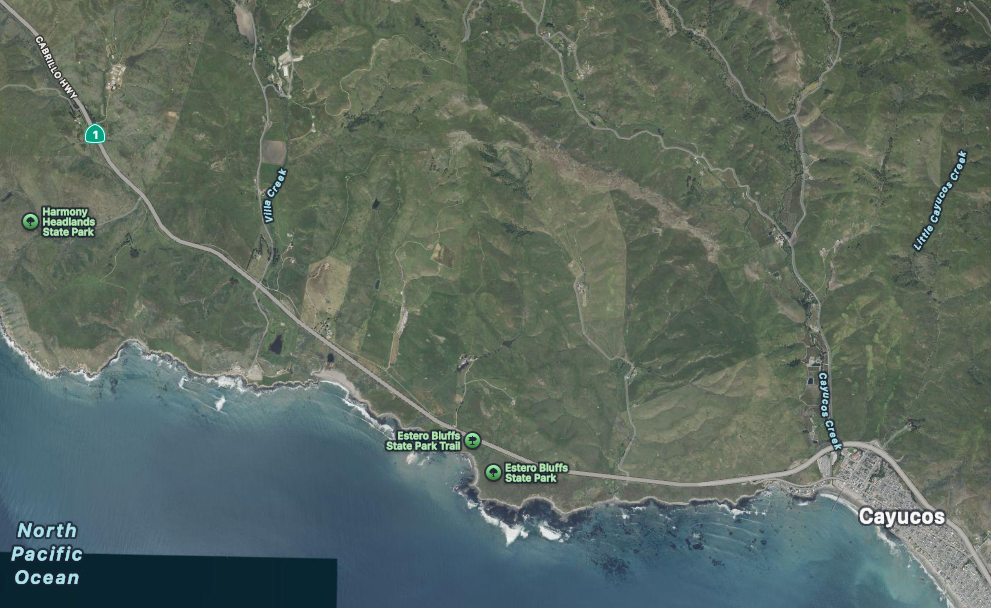
Villa Creek drains the Santa Lucia Mountains directly into the Pacific Ocean, due west of the town of Cayucos. It’s part of Estero Bluffs State Park, with Harmony Headlands State Park almost adjacent to the west. (An abandoned abalone farm lies between the two.) It sits at the bottom of a pass inland into the Santa Lucias that leads north to the small town of Harmony and the larger town of Cambria.
The site has a long history of human use. We know from records left by the Portola expedition back in the eighteenth century (1769) that at least seasonally the Chumash had a very large camp here, which passed through the site. Later on, there was an encampment of Chinese laborers who farmed seaweed here. The most recent land use was just up the hillside at an abalone farm that began in 1968 but has been abandoned since about 2020 (this fall the yak titʸu titʸu yak tiłhini, or YTT Northern Chumash Tribe purchased the land).
The interaction of the creek and the ocean along this high-energy coastline has built up an estuary, specifically a bar-built estuary. BBEs are dynamic systems typically formed through a combination of high stream flows and strong swells that keep the estuary mouth open in wintertime, followed by low stream flows and milder surf in the summer that causes a sand bar, and eventually a berm, to form at the mouth of the creek. (A sand bar is wet while a berm is dry.) When winter rolls around again, the berm is overtopped by the water that builds up behind it.
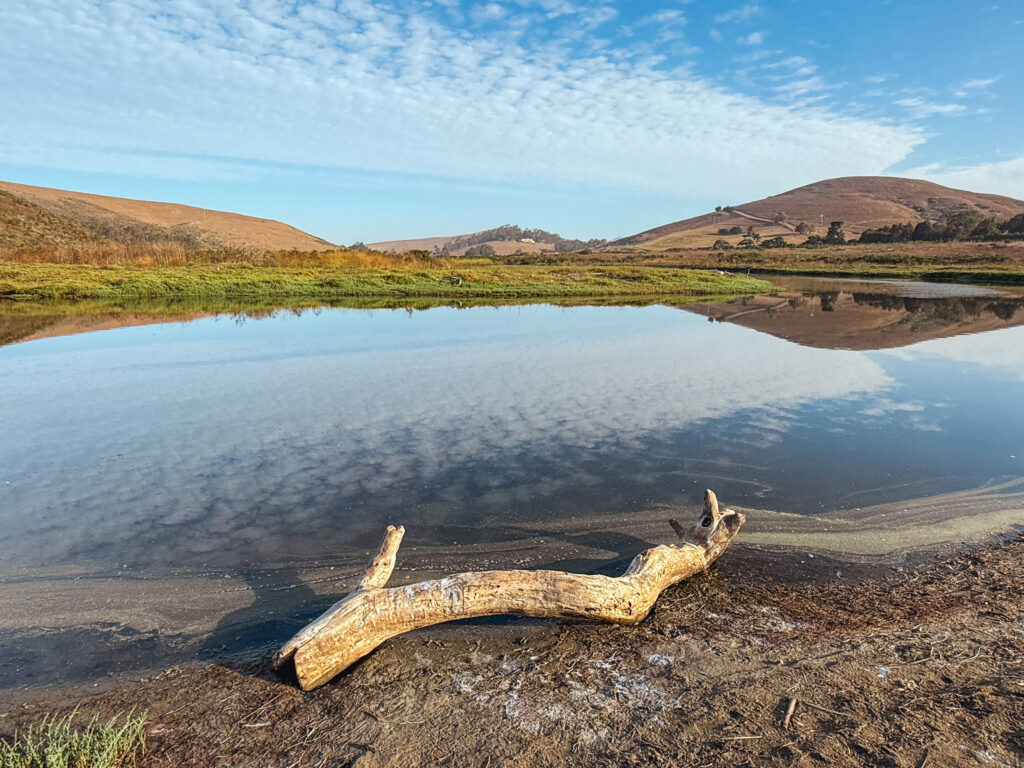
Over the course of the twentieth century, the wetlands north of the beach saw all kinds of disturbance: deliberate attempts to armor the southeastern side of the estuary with rip rap, a bermed road, and a bunch of fill dirt and debris was dumped on the eastern side of the marsh.
Restoration Efforts
But an exciting thing is beginning this fall (October 2026): the California State Parks and a couple of local conservation groups are restoring the greatly disturbed wetlands to a much more natural condition, hoping to improve habitat for some rare fish (and, coincidentally, for lots of bird species). According to the permit application, the project “aims to restore the estuary of Villa Creek by removing remnant anthropogenic features, improving intertidal connection, and enhancing native biodiversity.”
This basically involves removing many, many tons of dirt from the site to allow the creek to infiltrate a much wider area than it does currently. We’re really looking forward to it.
Birding at Villa Creek
With a lagoon behind the berm and the ocean on the other side, even before this restoration project the Villa Creek estuary is a great spot to find both wading birds in the lagoon and shorebirds on the beach. And, of course, the birds have wings: it’s not rare to find shorebirds in the lagoon and a snowy egret or great blue heron on the beach. You’ll even see Great Egrets fairly far offshore, standing on the kelp beds looking for a meal.
The beach is one of the wider, sandier ones in the Estero Bluffs park area; it’s a little “pocket cove” (a curved beach tightly packed between two rocky headlands). There are sea stacks offshore a bit further east (the coastline here goes east-west, not north-south), plenty of intertidal areas (think tide pools), and lots of room to roam around.
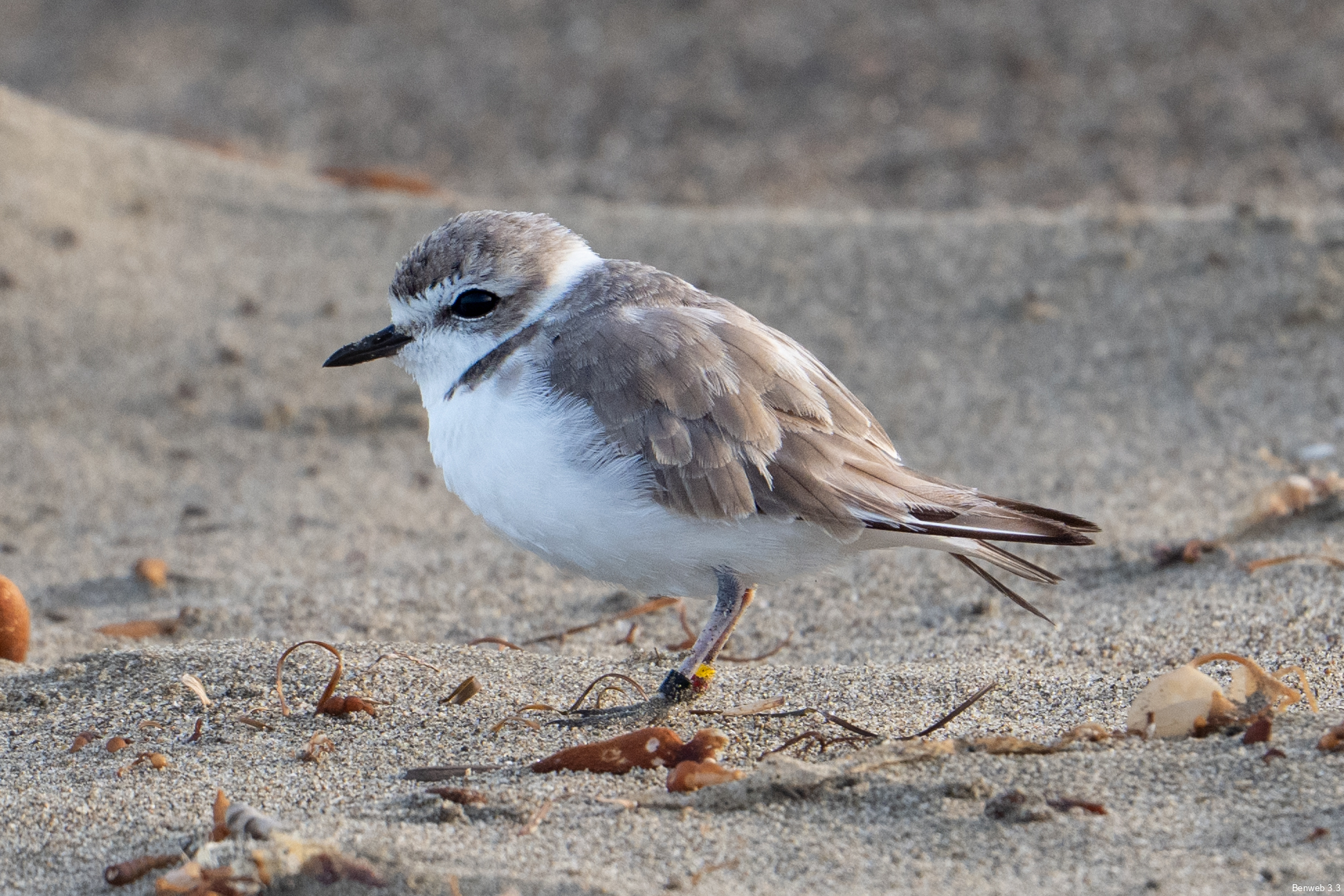
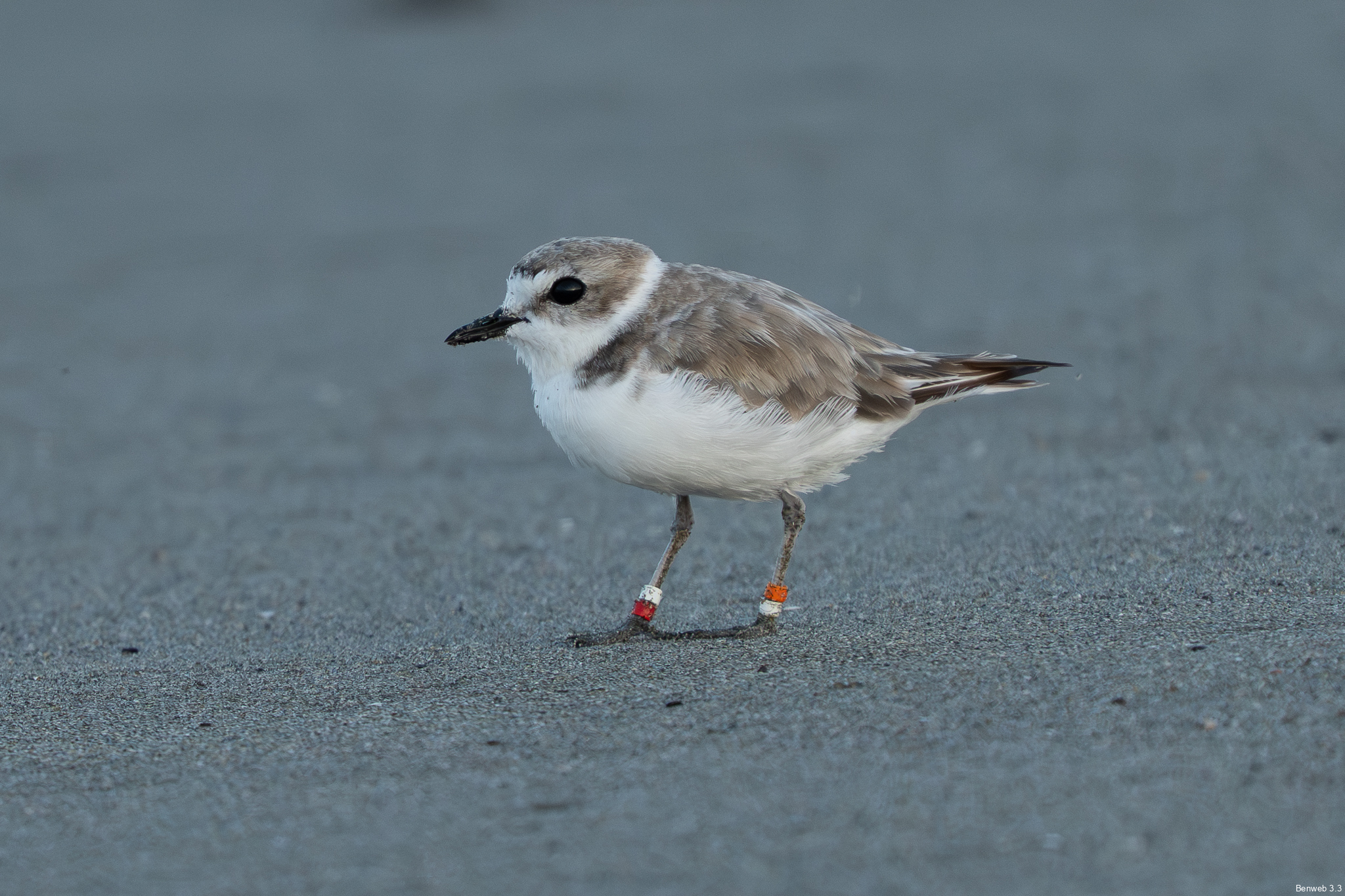
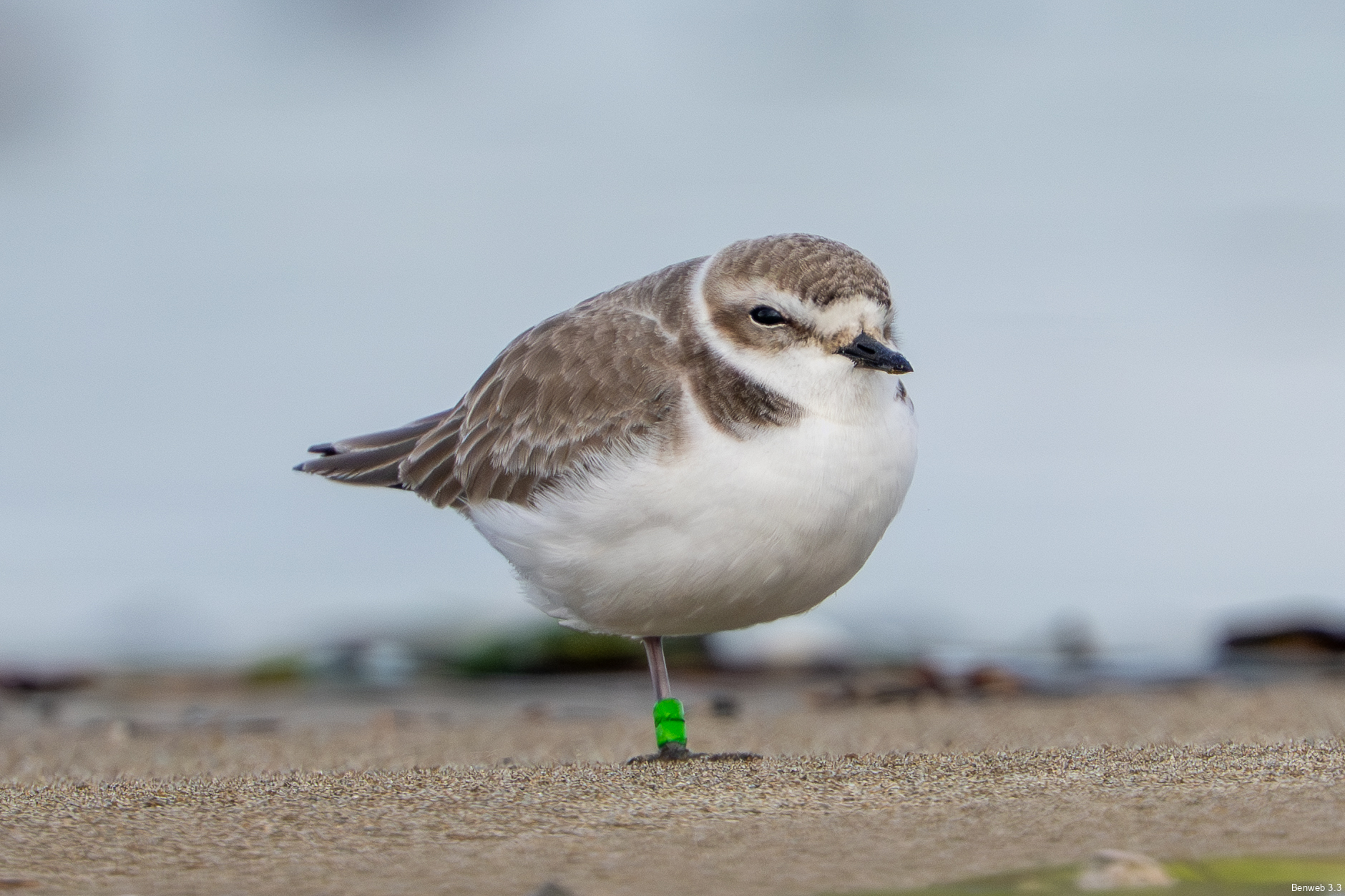
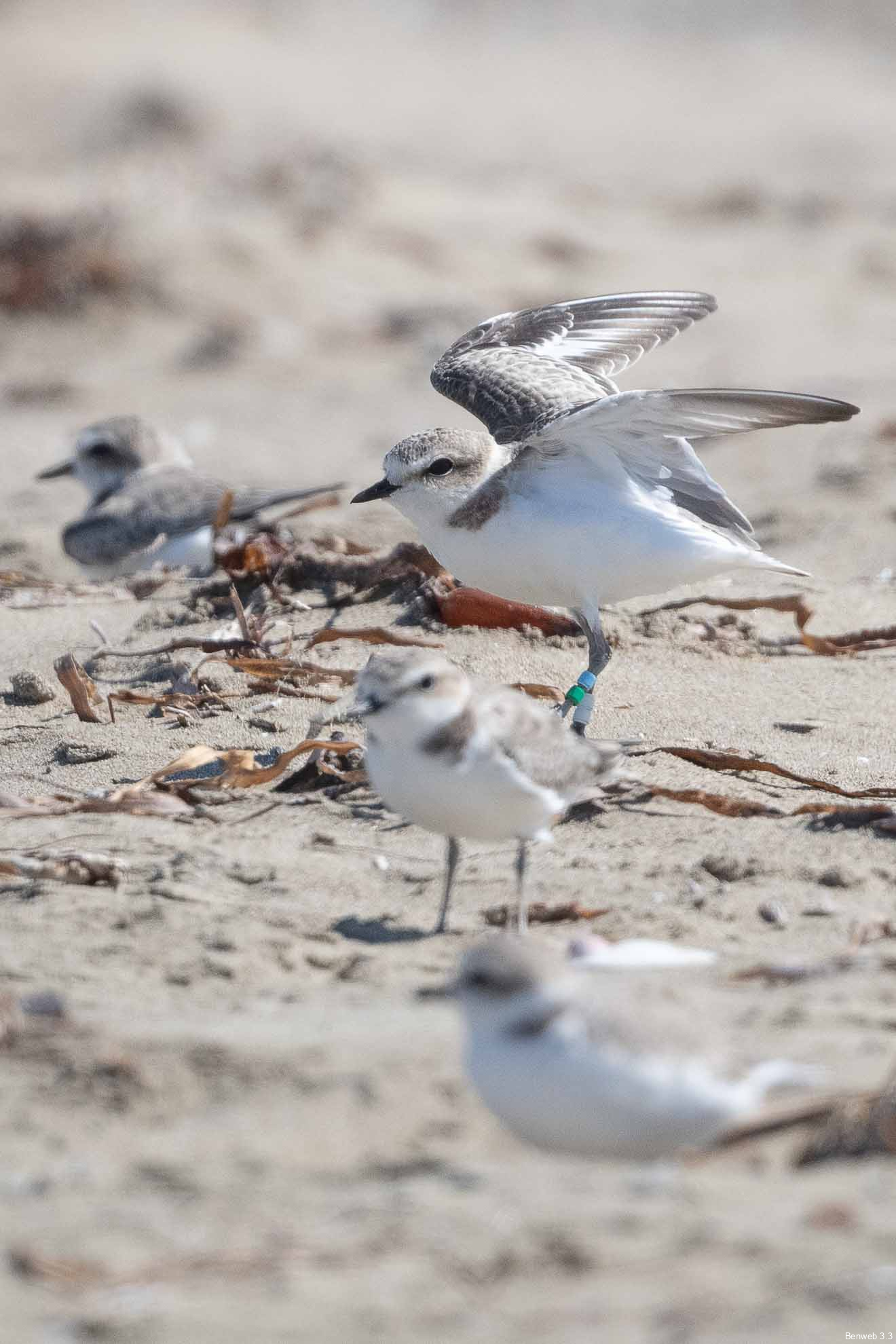
The main year-round attraction here is the Western Snowy Plover, a fluffy little shorebird that’s the subject of sustained conservation efforts. They are cute little devils. We saw at least 30 of them when we went early on a Saturday morning in July; in the fall we regularly see 50 or more. Back in July, I was able to get a reasonable photo of one that had bands on its legs, and I was curious to see whether we could learn anything of its life history. Turns out it’s a two-year-old bird. She was banded as a chick down at Rancho Guadalupe Dunes, in northern Santa Barbara County back in 2024. In 2025 she was reported here at Villa Creek, and she returned for at least a little while this summer.
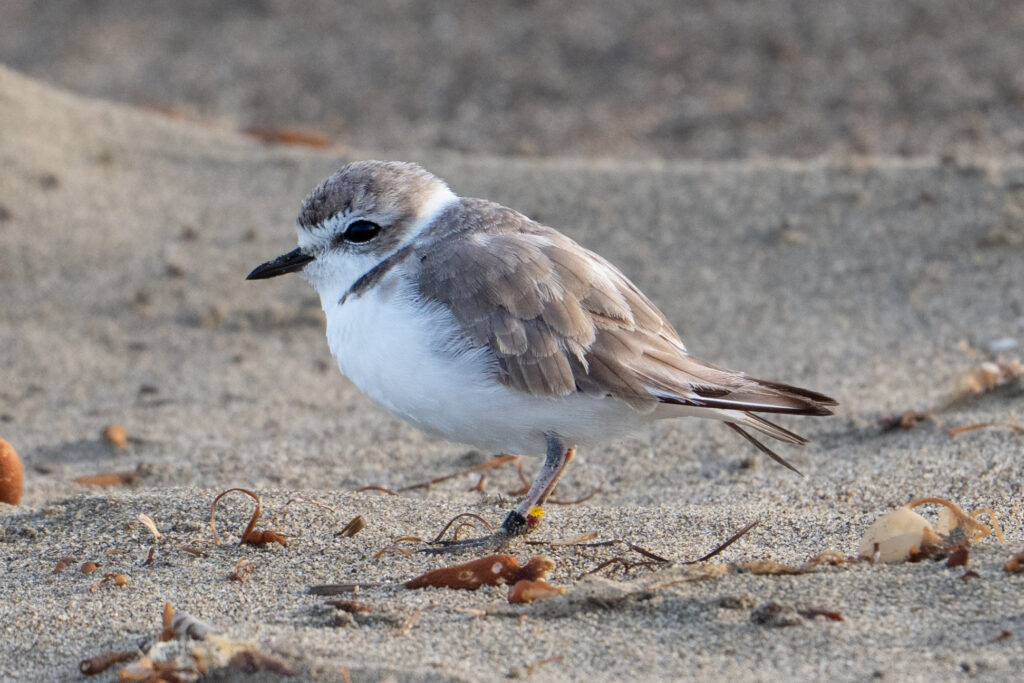
The Snowy Plovers are so abundant that I’ve pretty much stopped taking pictures of them unless they’re wearing their leg bands:
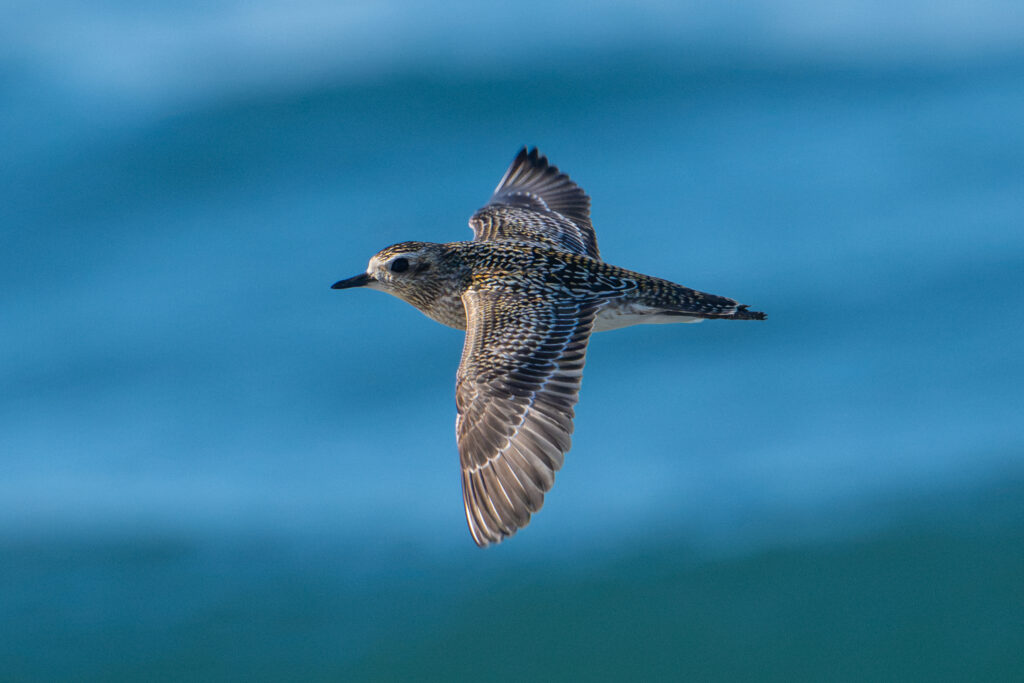
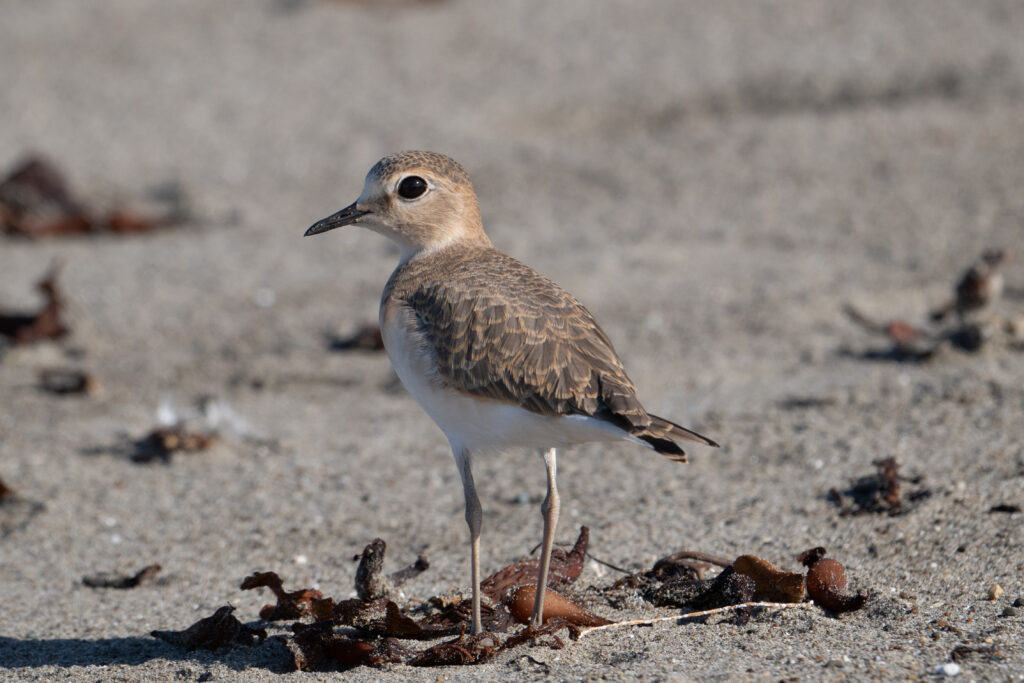
But the reason the Villa Creek estuary is so attractive to birders is that so many different habitats come together in such a small area: you’ve got the freshwater creek, the brackish lagoon, the wave-swept beach, the rocky headlands, the grasslands behind the creek, the hills behind those. Lots and lots of potential for birds here, including (at the right time of year) Reddish Egret, Neotropic Cormorant, Pacific Golden-Plover, Mountain Plover, Bald Eagle, Golden Eagle, Northern Harrier, and many more.
I’ve even seen a small flock of Cackling Geese here.

And the best part about it is its relatively remote location. The strand in Morro Bay is overrun with dog walkers, sand bikers, and various other recreation goers. Which is fine, but it’s frustrating to be scoping out a flock of gulls or terns and have people continually running through the flock and putting them in the air right as you’re finding the odd bird in the flock. Villa Creek is one of many good places to go here on the SLO coast.