It’s rough being an amateur nature photographer. There are so many stunning images of beautiful animals online, each of which is the result of hours and hours of people out in the field honing their craft, waiting for the right conditions to line up: the perfect light, the drive/hike/wade through habitats local or unfamiliar, the slow, meticulous approach to the animal allowing them to become comfortable with your presence (or using a blind), and then waiting, waiting, waiting to capture that moment when the animal and the wind and the light line up just right, allowing for that perfect shot.
All of that time, all of that effort, gets distilled down into a few million pixels and offered up to the eyes of the unsuspecting shutterbug who then thinks, “Hey, I can do that!”
And it’s true. You can! You just have to work really, really hard.
My choice of animal is birds, and my choice of location is constrained by the fact that I have kids in school and a day job: after the morning school dropoff and before I install myself at my desk, I stop by the local lake. On weekends, I head over to the coast, or up into the mountains or, if I’m really lucky, out to the water treatment plant.
At most of those locations, at least during the spring and summer, there will be swallows around: small, fast birds with long wings, more or less of a long tail (some species have longer tails than others), and generally tube-shaped bodies. (The tail, along with various other cues, distinguishes the swallows from the other small aerial insectivorous bird, the swift. Swifts have practically no tail.) Usually these birds will be seen zipping around overhead in pursuit of their flying insect prey, wings outstretched in a slow turn or swept back next to the body in a burst of speed. Sometimes high overhead, sometimes low.
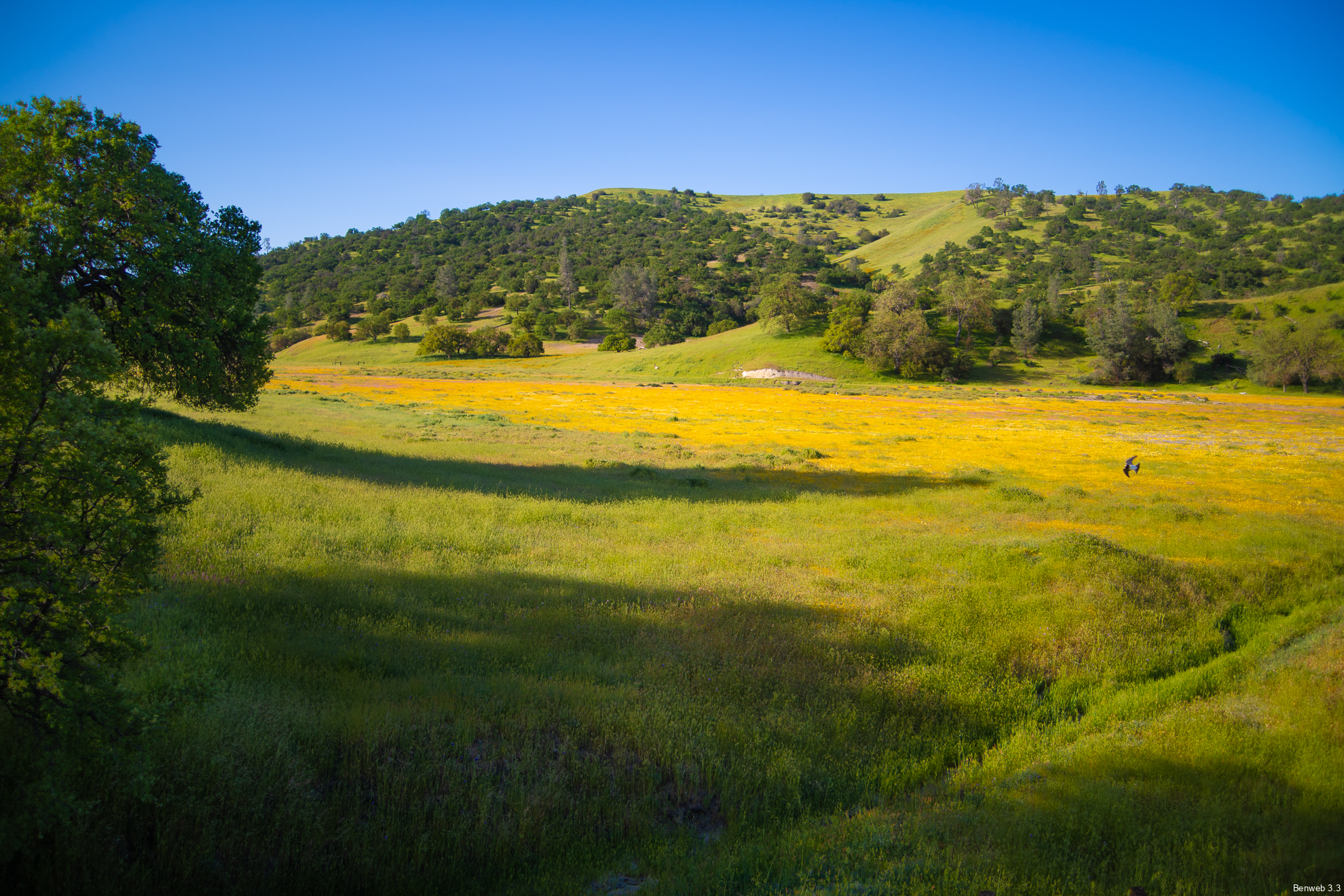
Meadow off Hwy 58 near Santa Margarita, April 23, 2023
I feel the need to mention once again, in case the title of this essay didn’t convey it strongly enough the first time: swallows are small. And they are fast. That makes for an incredibly difficult exercise in bird-in-flight photography. You need a long, heavy lens to bring them close enough to you; you have to whip that lens around quickly but smoothly, so you can track the tiny little images in your viewfinder; and then you just have to keep shooting.
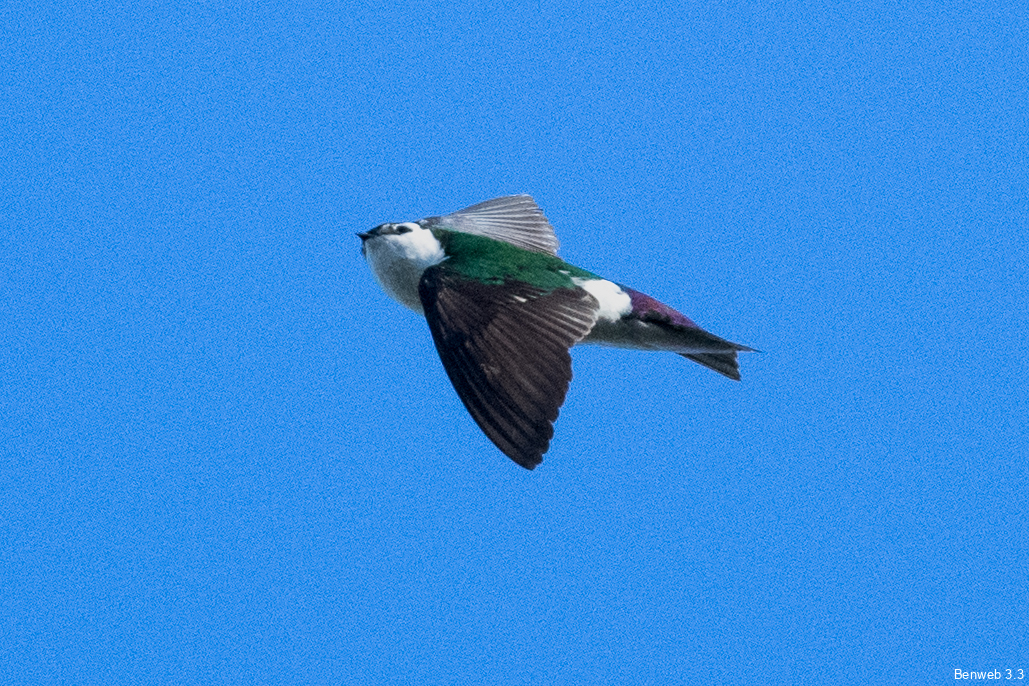
With birds this small and fast, sometimes all you can do is spray and pray. You might get lucky, like I did with this Violet-green Swallow back in April of 2023 in my front yard:
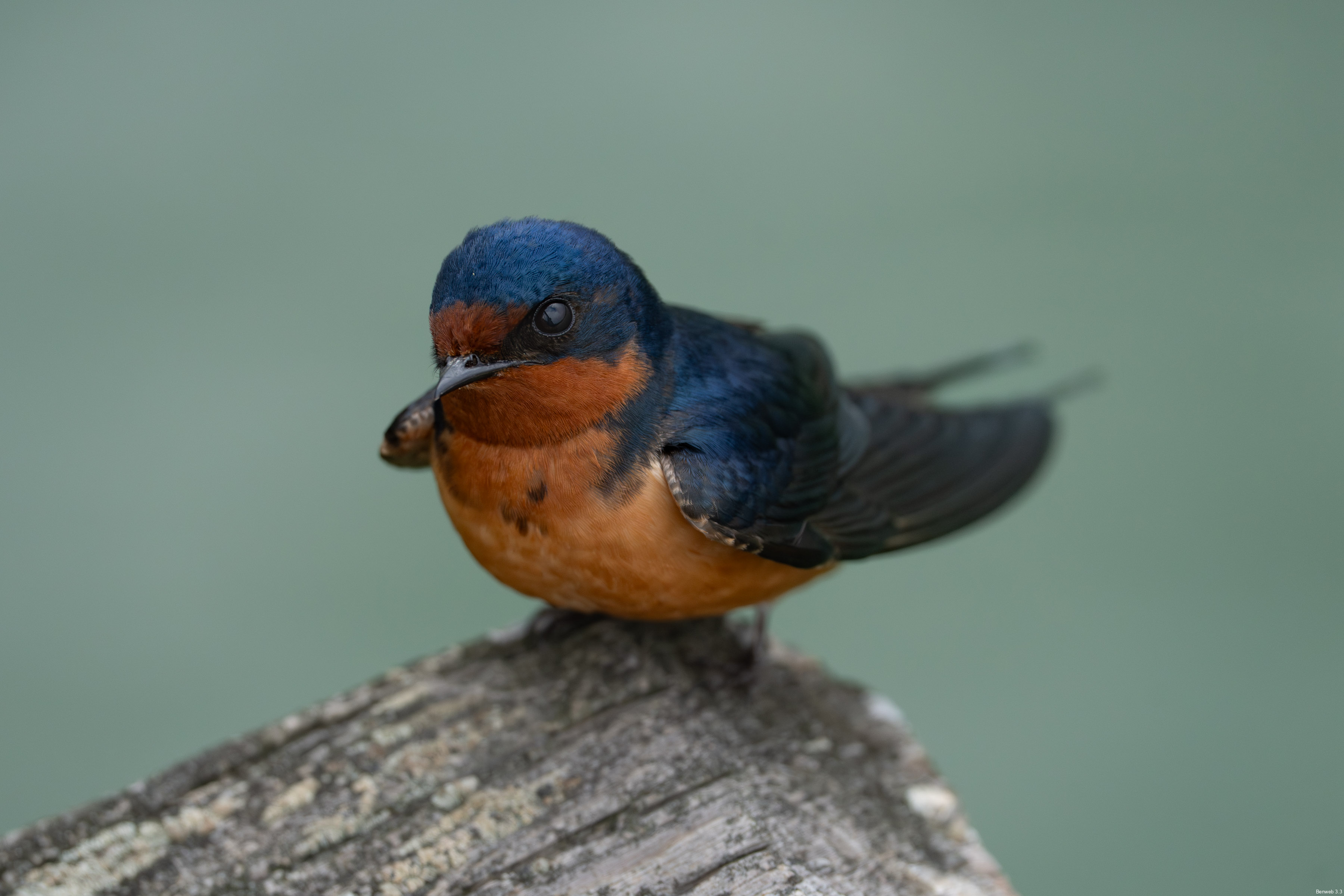
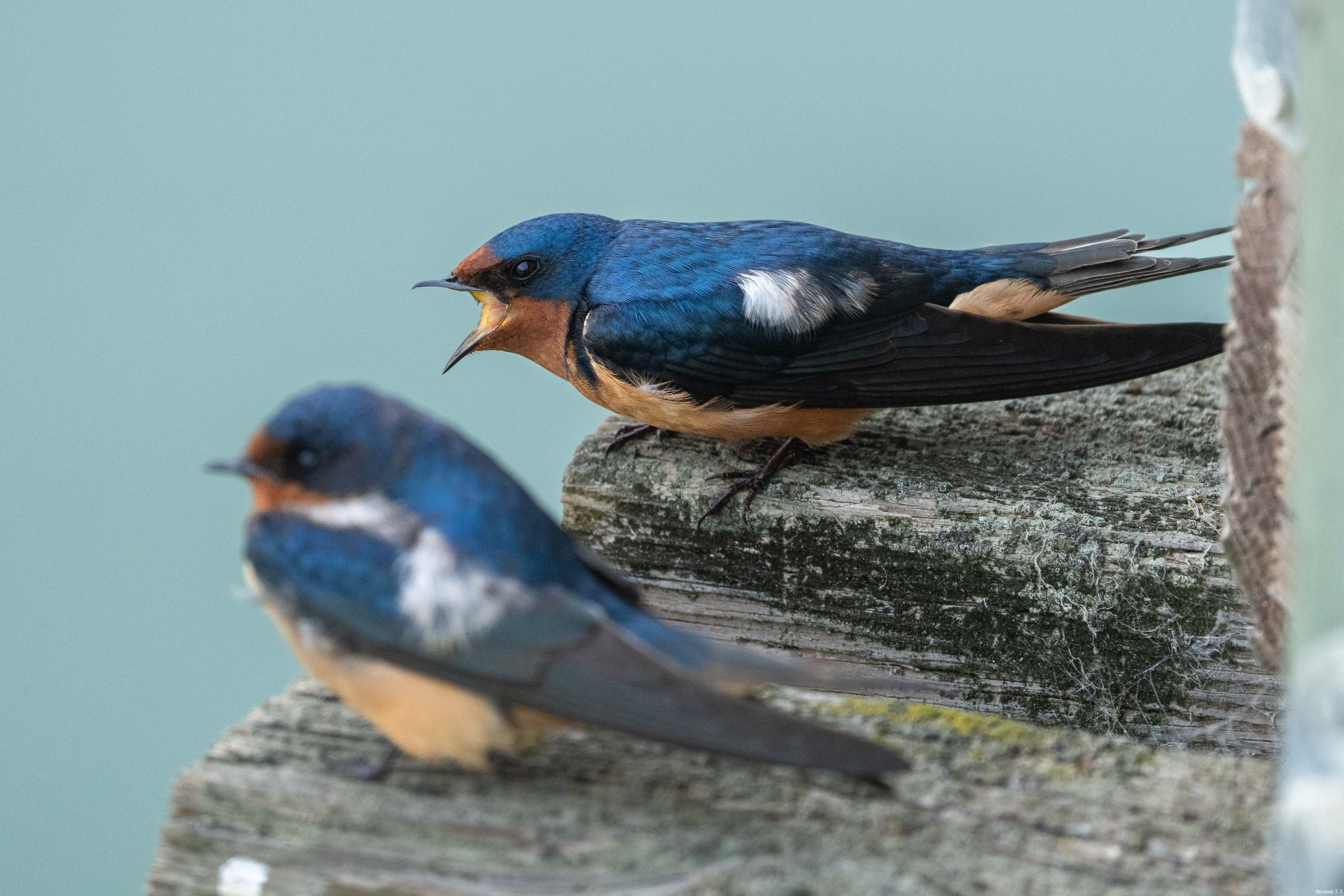
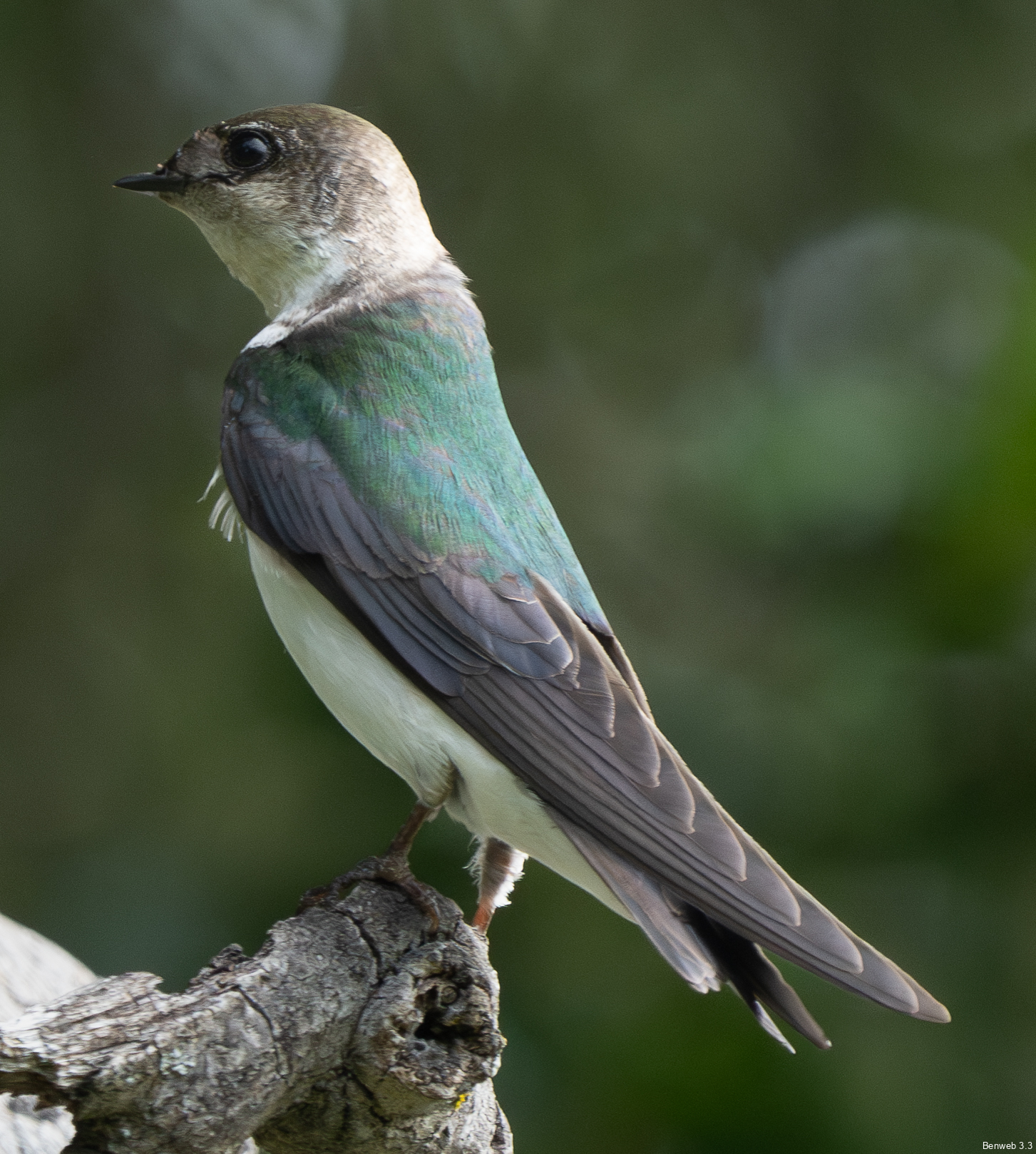
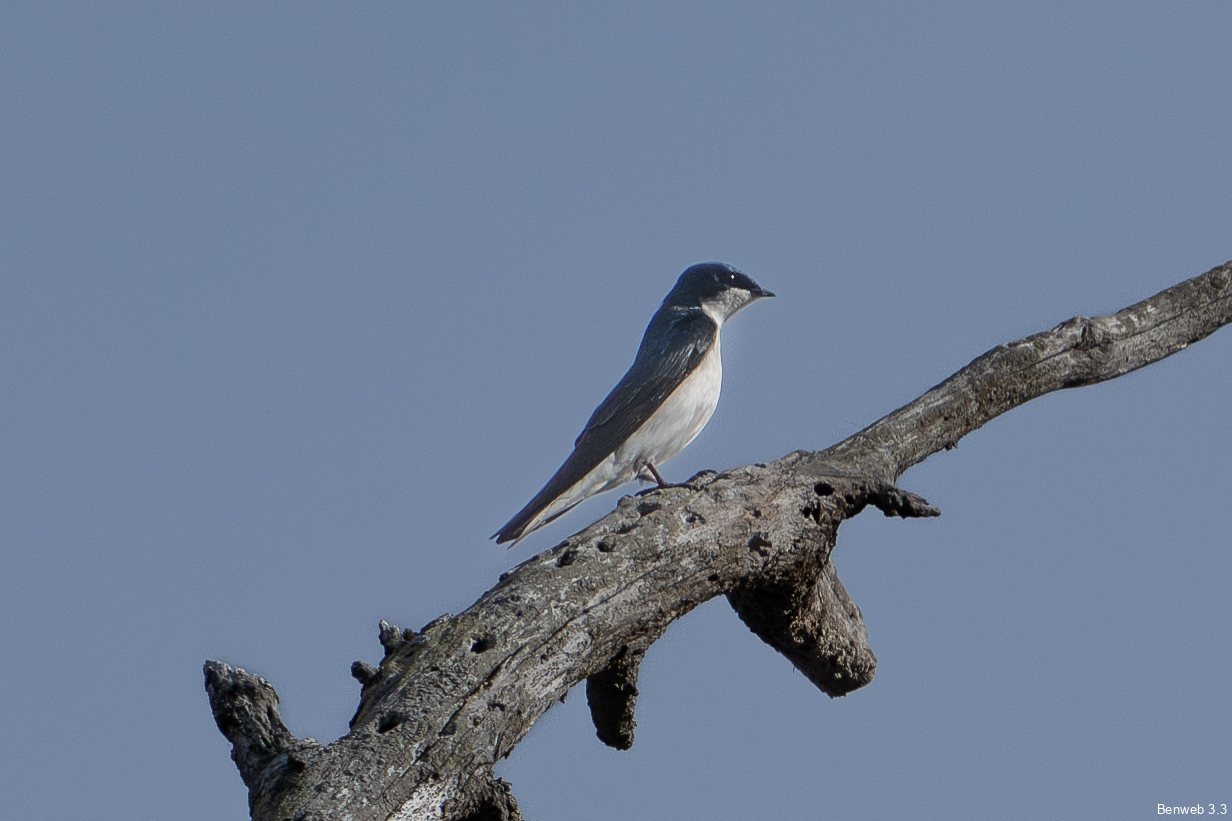
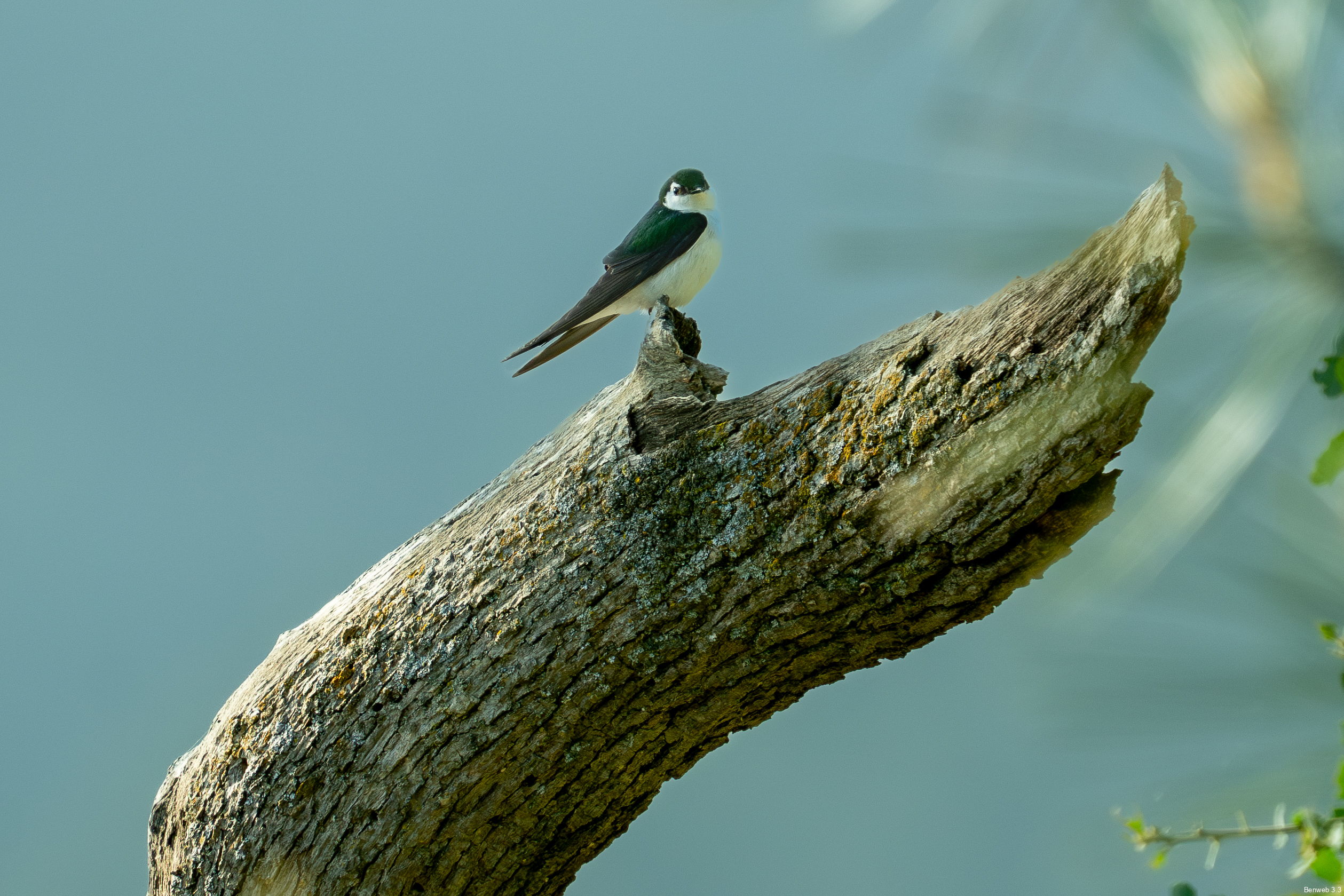
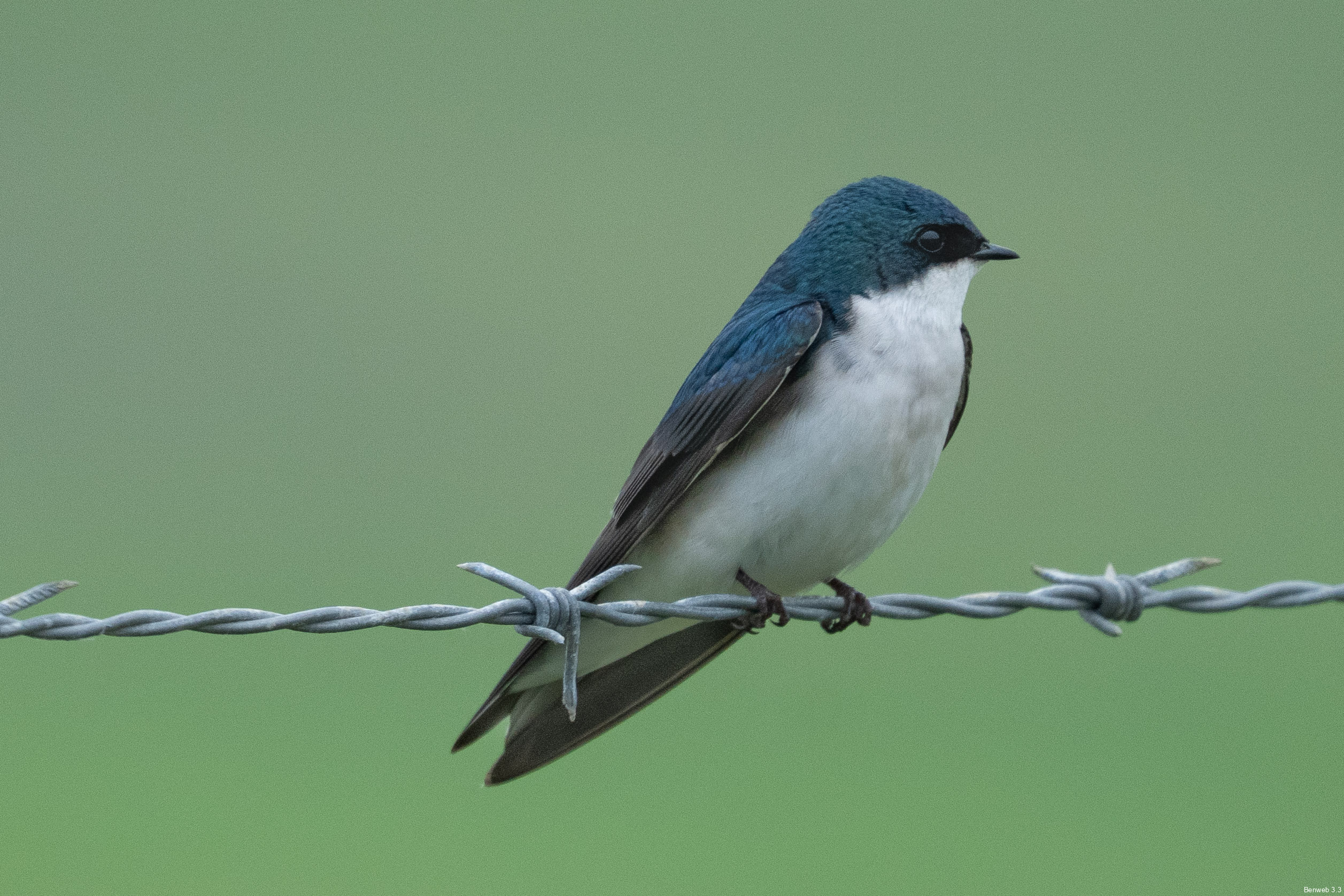
Or you might get really lucky and happen upon them when they’re resting, like I’ve been able to do in a few places (Sweet Springs in Los Osos, the side of Turri Road, Lake Cachuma in Santa Barbara County, or down at Oso Flaco Lake, the birdiest hotspot in San Luis Obispo County):
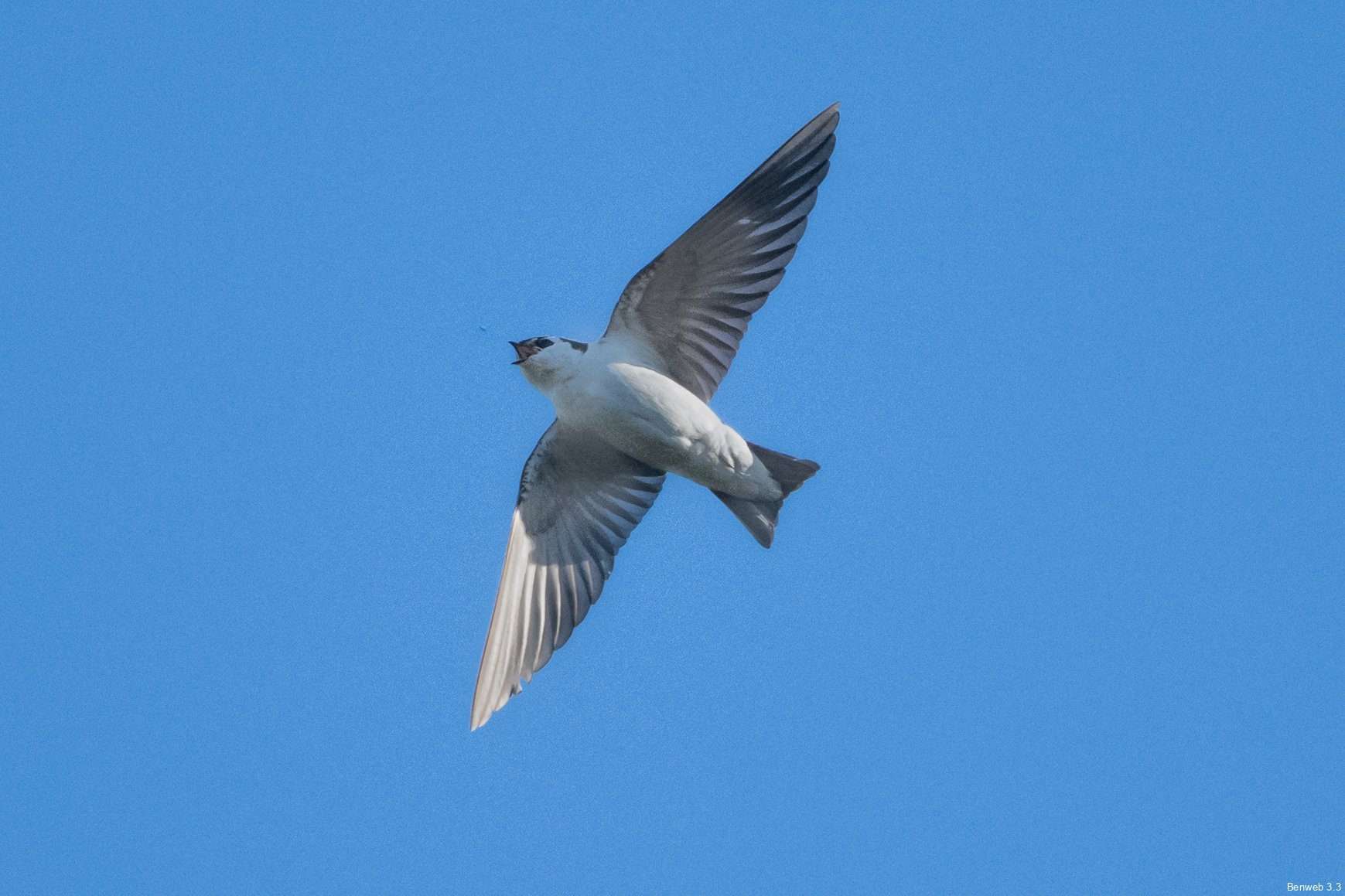
But flight shots are the pinnacle of my ambition. I’ve been shooting swallows zooming over my local areas (the lake, my front yard, etc.) for years now. Almost every day from February through October, I have a shot at these birds. (Groan.) And now finally–finally–I’ve taken a shot of a Violet-green Swallow that I’m almost satisfied with. I was at my usual spot, Atascadero Lake, and for once the insect swarms that the birds feed on were down relatively low over the lake, so the birds were also down low, making them a bit easier to see (but MUCH harder to track as they zoom by so close to the camera).
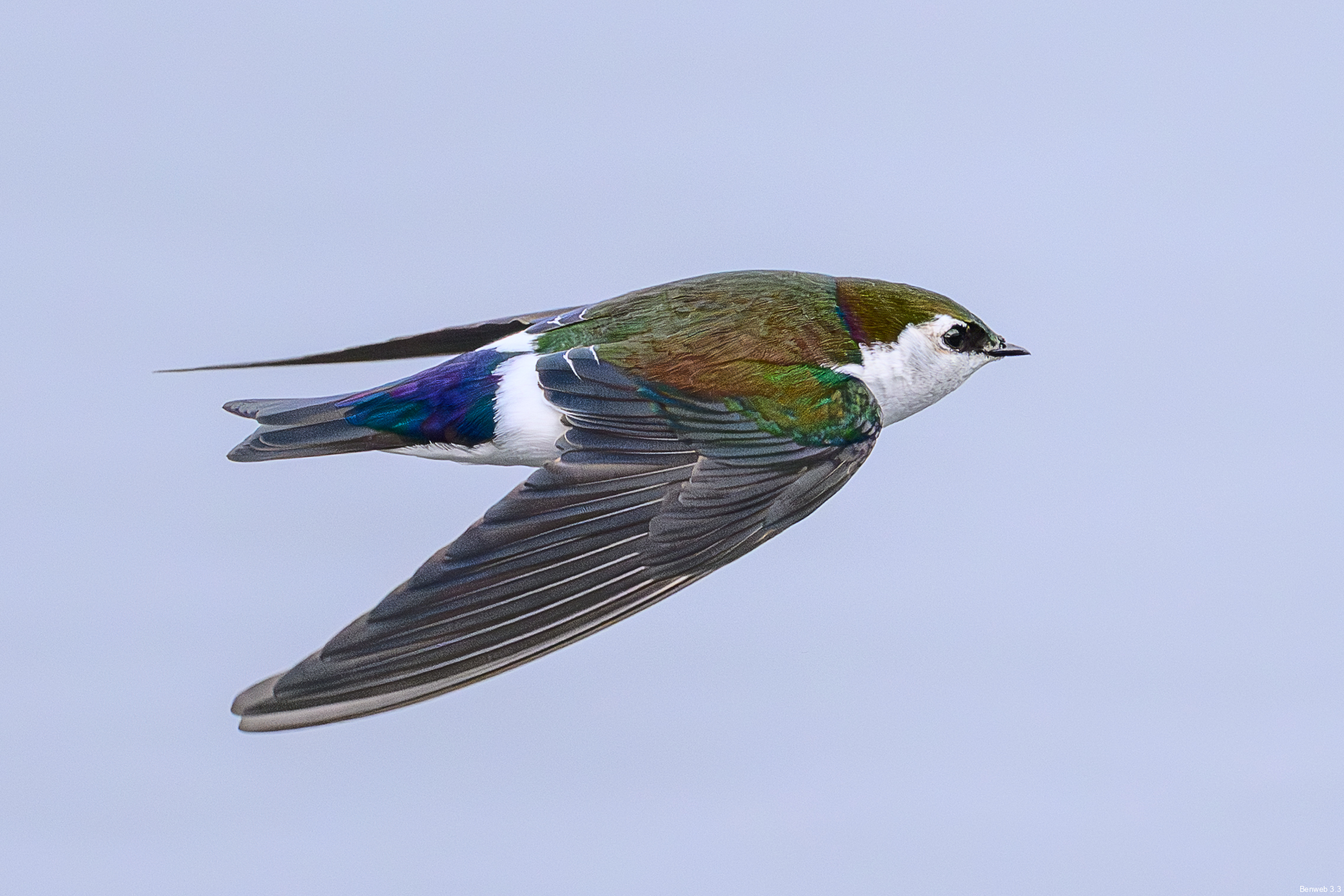
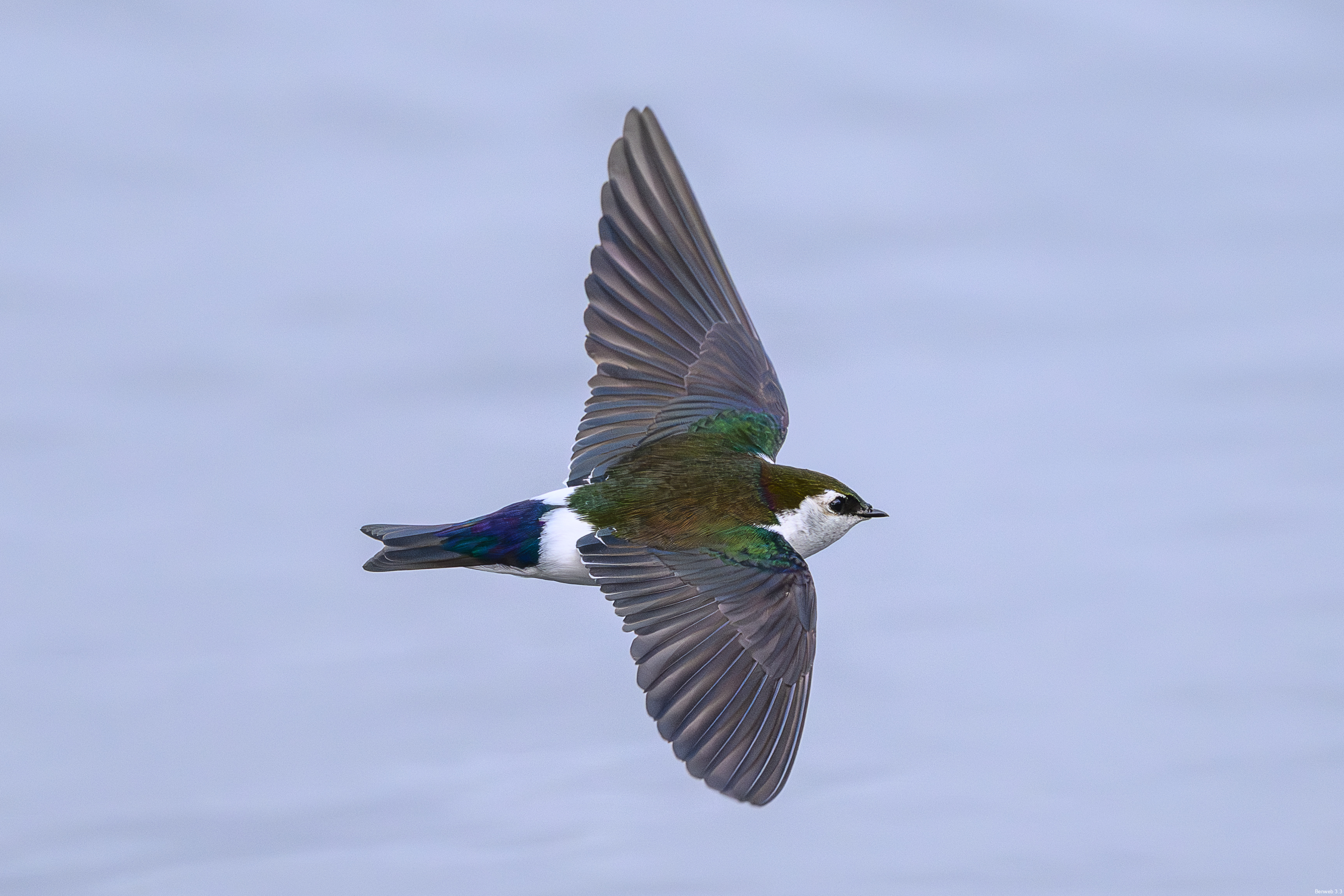
I’m only almost satisfied with this shot, because while the bird is in the frame and in focus, the background isn’t very pretty, and the action is reduced down to almost portrait style. There’s no behavior other than the spread wings indicating flight. But there’s always next time…
And in fact, a couple of months after I got that shot of a lone VGSW zipping over the lake, I was able to capture a flight sequence that had both a VGSW and a Tree Swallow feeding low over the lake, and apparently the Tree Swallow had encroached on the Violet-green’s preferred flight path (or so I imagine), resulting in some interesting behavior being captured as well:
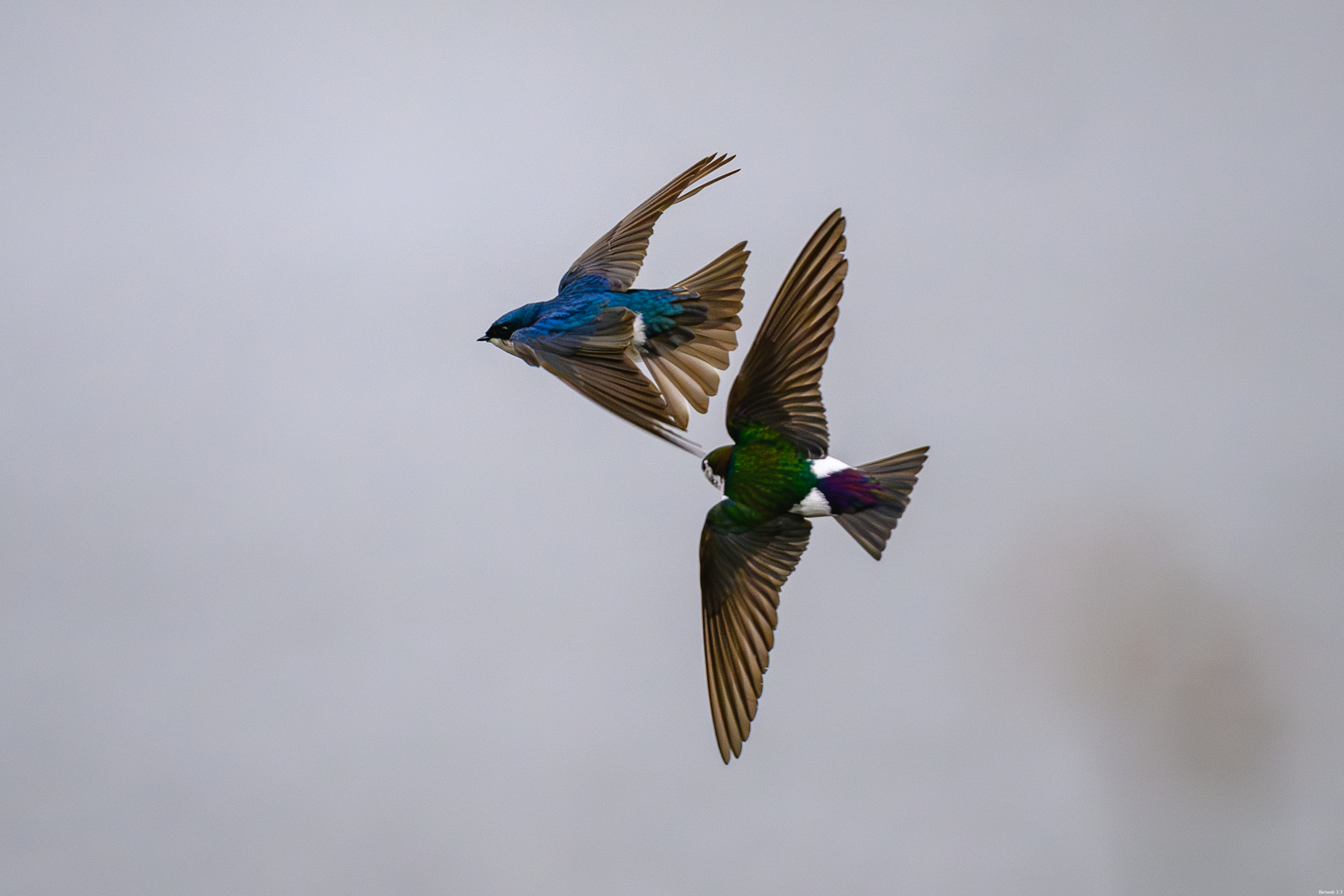
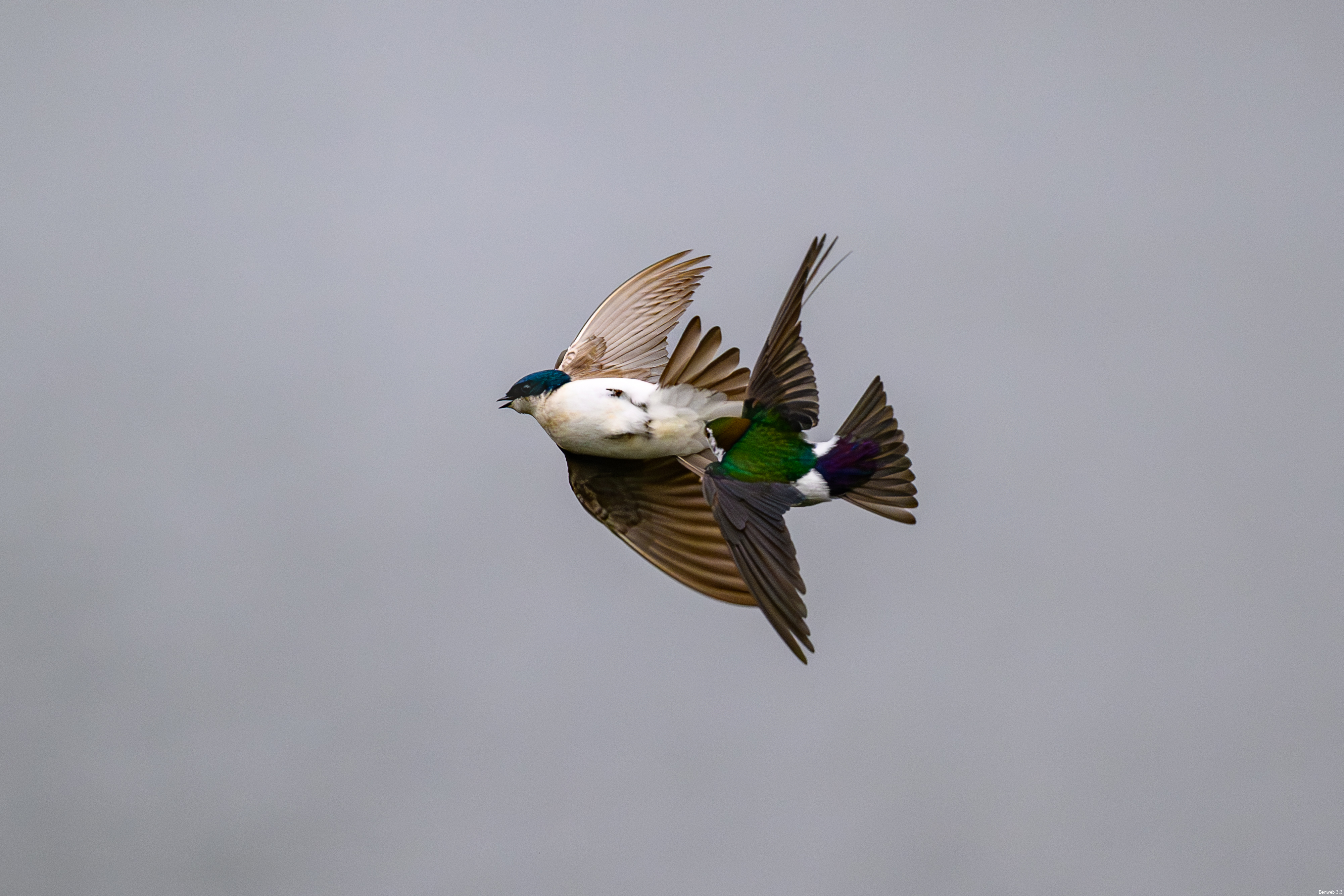
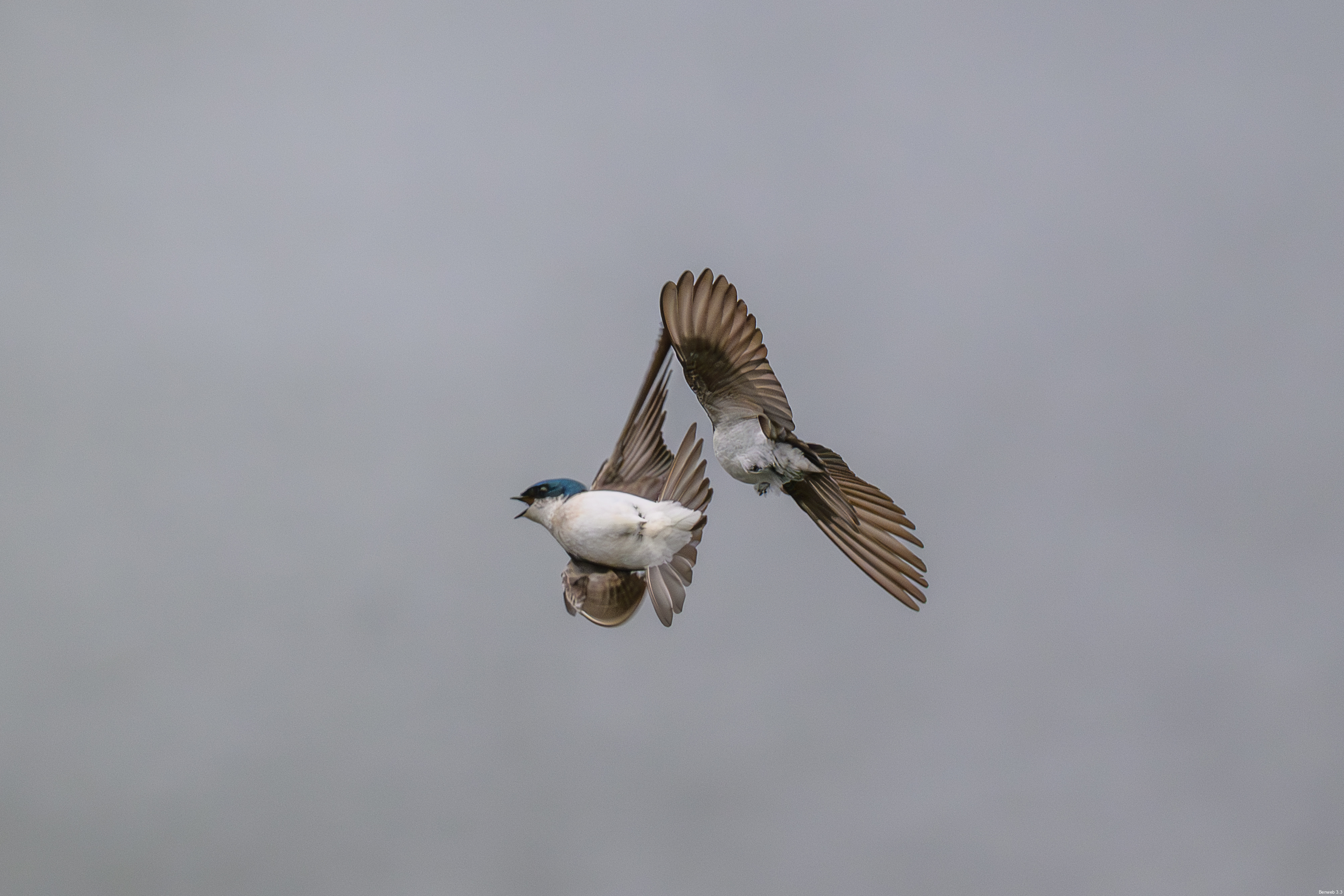
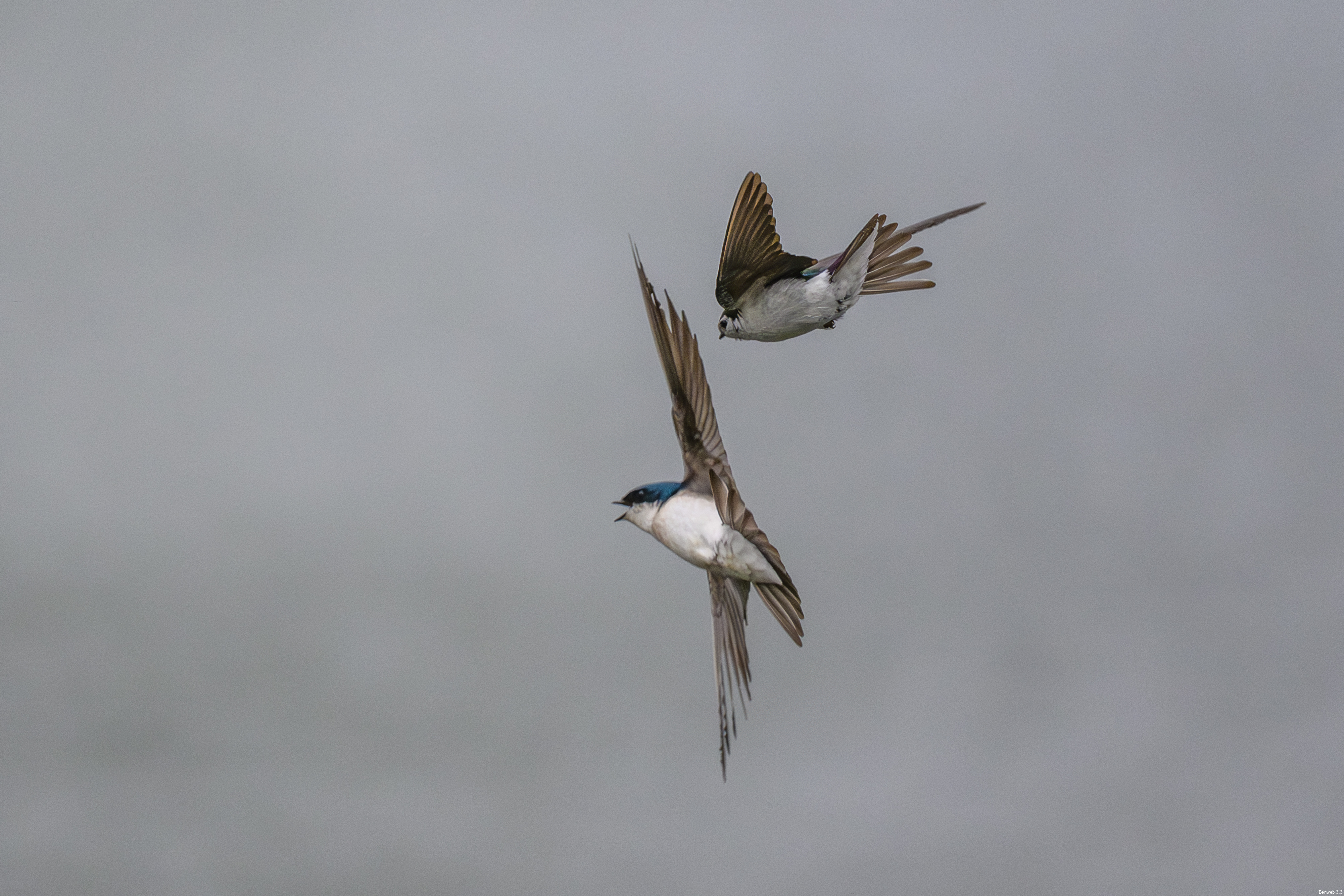
I love how vivid the colors of the birds are in this image: the, well, the violet-green back of the one, and the brilliant blue of the Tree Swallow. I also like that one of the better field marks for distinguishing them in flight shows up well: the white on the rump of the VGSW goes all the way across the back, while that of the TRSW is limited to the sides of the back; its rump is the same color as its back.
These two species are often compared out here in the west where they are both readily found. The species account for Violet-green Swallow in Birds of the World opens with a quote from William Leon Dawson, written for the 1923 edition of Birds of California, in which he takes up the comparison, at least obliquely:
If we lavished any superlatives on the Tree Swallow—and our memory misgives us that we did—we regret it now. Not but that the Tree Swallow is strictly deserving—oh, a very deserving bird—but we needed all our superlatives for present use, and one hates to repeat. What shall we do for the Violet-green Swallows? Simply this: we will call them children of heaven.
It’s hard to top that! The species name, Tachycineta thalassina, is interesting.
- Tachy, of course, means “fast” (think tachycardia, elevated heart beat). Cineta means “to sing,” while kinetic, of course, means movement. I’ve heard their twittering overhead, and, sure, it is fast. Not sure it’s faster than that of other swallows, though. (Think of Keats: “gathering swallows twitter in the skies.”)
- Thalassina has to do with the sea. Some sources claim it means “sea-green,” which, hey, why not? It is the Violet-green swallow, after all. If Homer can call the sea “wine dark,” we can call it green.
So it’s either a fast-singing sea-green bird or a fast-moving one. I’ll let you decide which one is more accurate. I know which one I (and my camera) think it is…