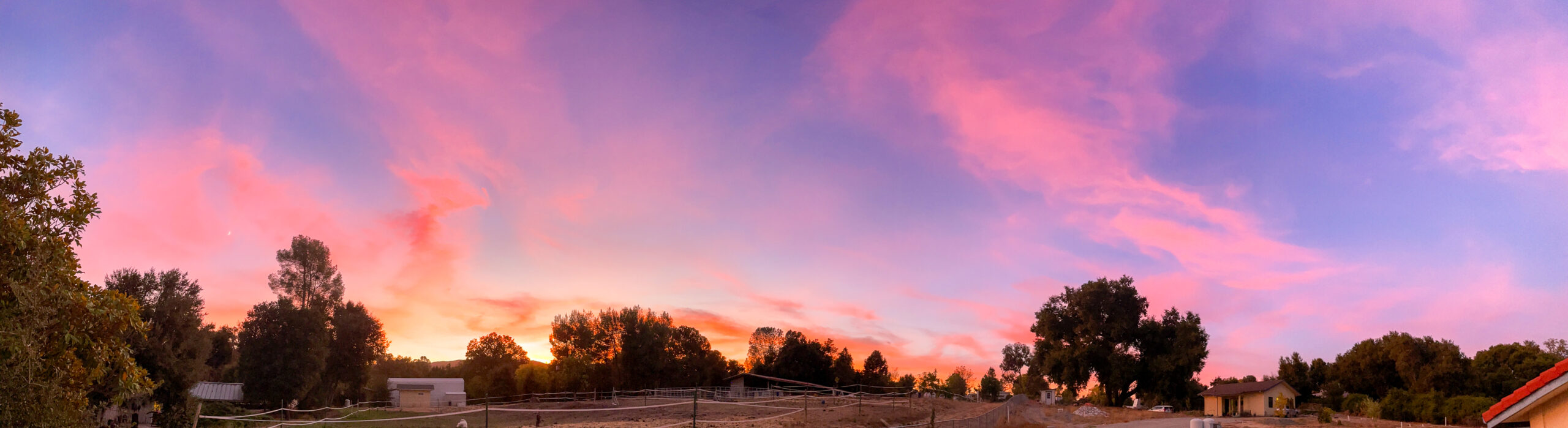
Central California’s coastal region has a wealth of places to go birding: beaches, mountains, inland valleys, etc. However, there aren’t many publicly accessible National Wildlife Refuges. (Well, that’s not entirely true: there is one that I’ve visited several times before but I didn’t even realize it was a refuge, because access is only via a very long hike in: Guadalupe-Nipomo Dunes NWR. It’s a true refuge: no direct vehicle access, just walk-in visits along a mile-long trail from Oso Flaco Lake Natural Area followed by another mile-long hike south along the beach. I’ve birded Oso Flaco lake and beach several times, but I’ve never gone the extra mile south along the beach to get to the refuge proper.)
The closest NWRs in the sense I’m used to, where you can drive in and then either drive or walk around, are way over in the San Joaquin Valley, a couple of hours’ drive away: Kern and Pixley relatively near to San Luis Obispo County, and Merced and San Luis NWRs, about three hours away up in Merced County.
And that’s where I went one weekend in February: the Merced National Wildlife Refuge. I was attracted by the promise of thousands of snow geese and sandhill crane, along with reasonably close views of many species of waterfowl. And the refuge does not disappoint!
I drove up around noon on Saturday so I could have the afternoon and sunset at the refuge, and then I’d be able to arrive early Sunday morning for the main event: an all-day excursion searching for birds. During the afternoon of my arrival, I drove around the auto-tour route to try to familiarize myself with the locations:
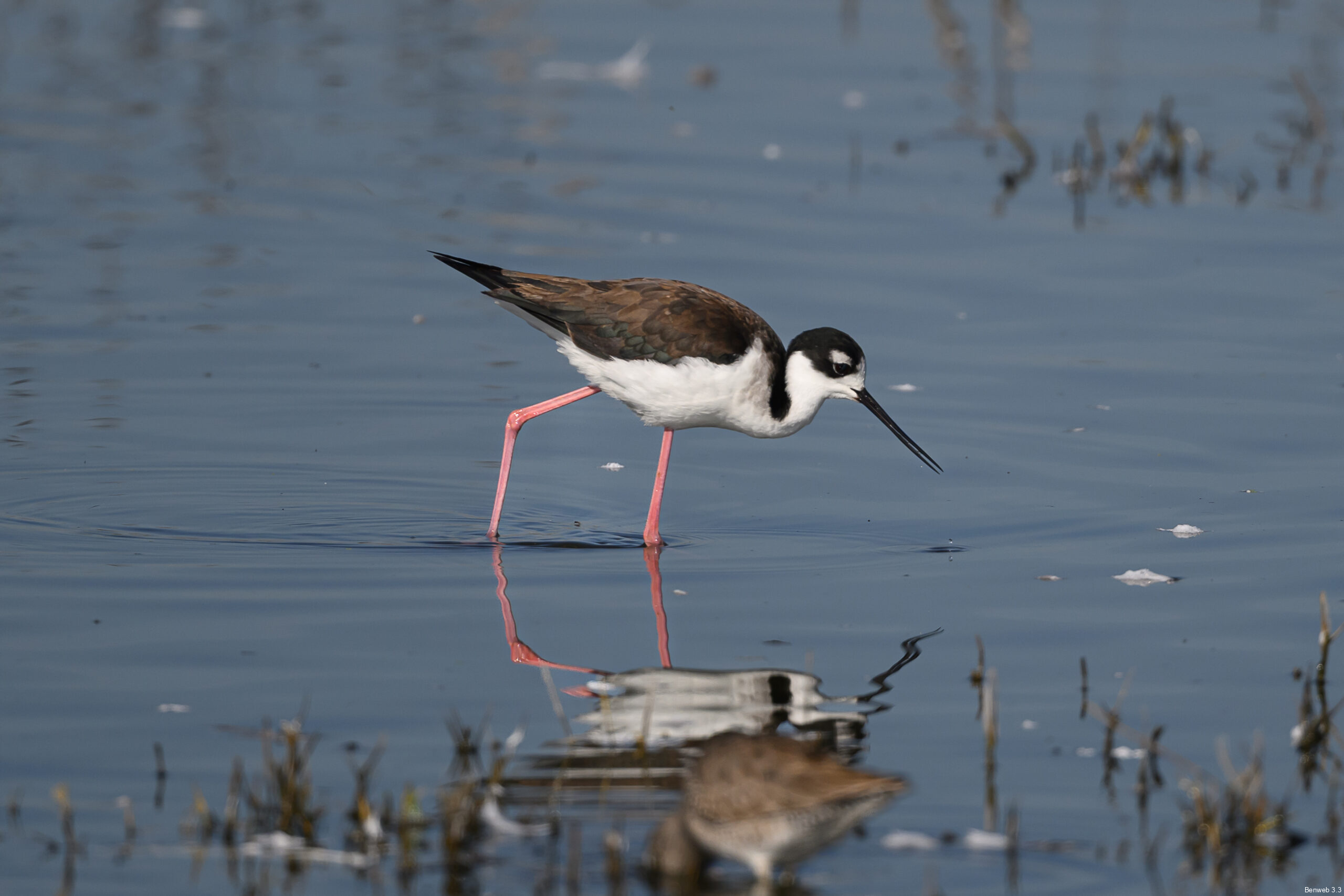
- Big impoundments with Black-necked Stilt, Wilson’s Snipe, and nearly a dozen species of ducks. Check!
- Parking area for the photography blind, one car allowed at a time, no other pedestrians when occupied. Check!
- Parking area for the Bittern Marsh Trail, where you can get out and walk around some tree-lined ponds and explore another observation pier. Check!
By chance, as I was on the very last leg of the route, getting ready to return to the entrance/exit, an enormous flyout occurred: hundreds of thousands of snow geese, greater white-fronted geese, and Ross’s geese flew over my head to find a different resting spot for the night. It was one of the most amazing wildlife spectacles I’ve ever seen. The hasty iPhone video I shot really doesn’t do it justice, but I do provide an embed below. (PS: I have no control over the list of suggested/related videos that appears in the embedded video; I don’t know what the algorithm will serve you, but it doesn’t serve me anything I’m even remotely interested in. Random talk show comedy, some ASMR videos, etc.)
After the geese flew out, I did as well, to the hotel I’d reserved in the nearby city of Merced to rest and refuel after the long drive.
The next morning I arrived at the refuge before dawn, with only one other car ahead of me at the locked gate. Within a very few minutes, and still well before sunrise, the gate rolled open (presumably it’s on a timer), and I drove to the parking area at the entrance to wander up onto the observation deck and look out over the predawn marsh:
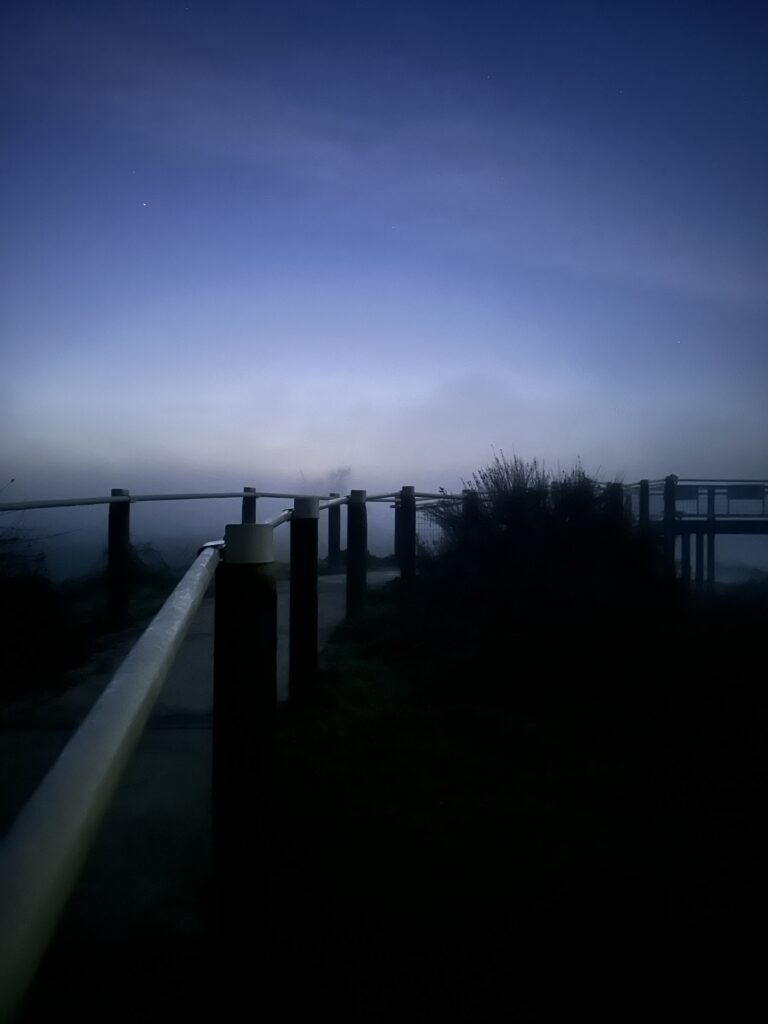
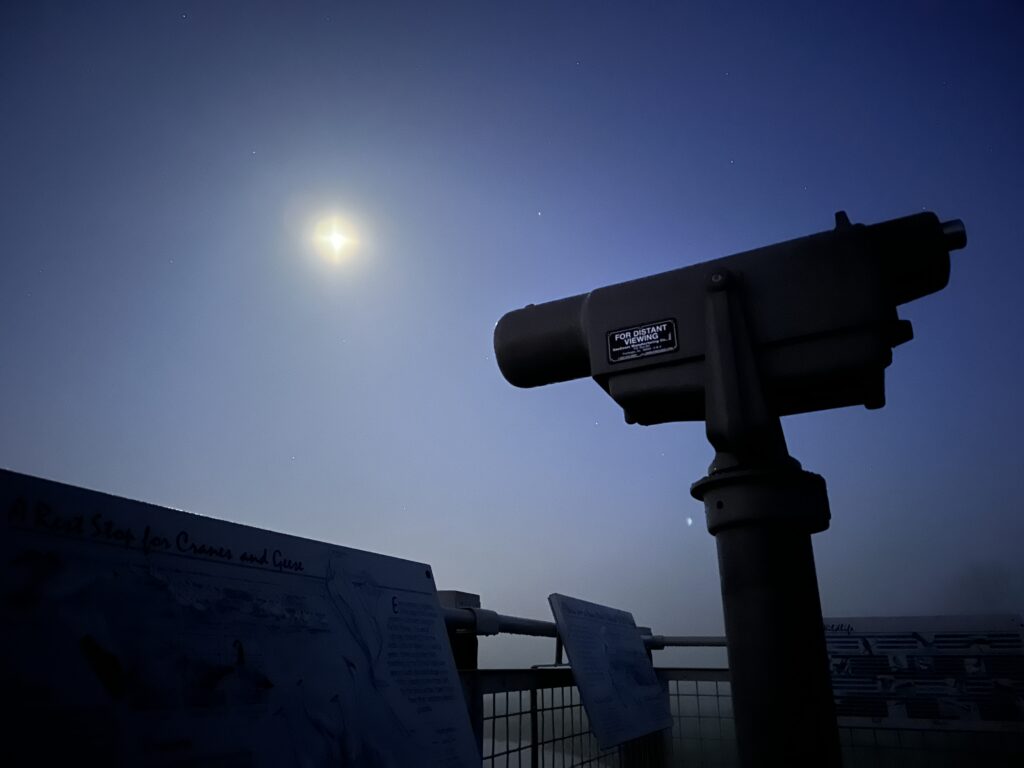
The peace and serenity of the entrance area was broken only by the sounds of nature: the grunting and croaking of the coots, the chipping of the snipe, the squawking of the geese, and the rattling call of the cranes. It was foggy/cloudy, but the moon was visible from time to time, and I expected the fog to clear shortly after sunrise. (Sadly, I was a bit optimistic; it took several hours before the sun broke through.)
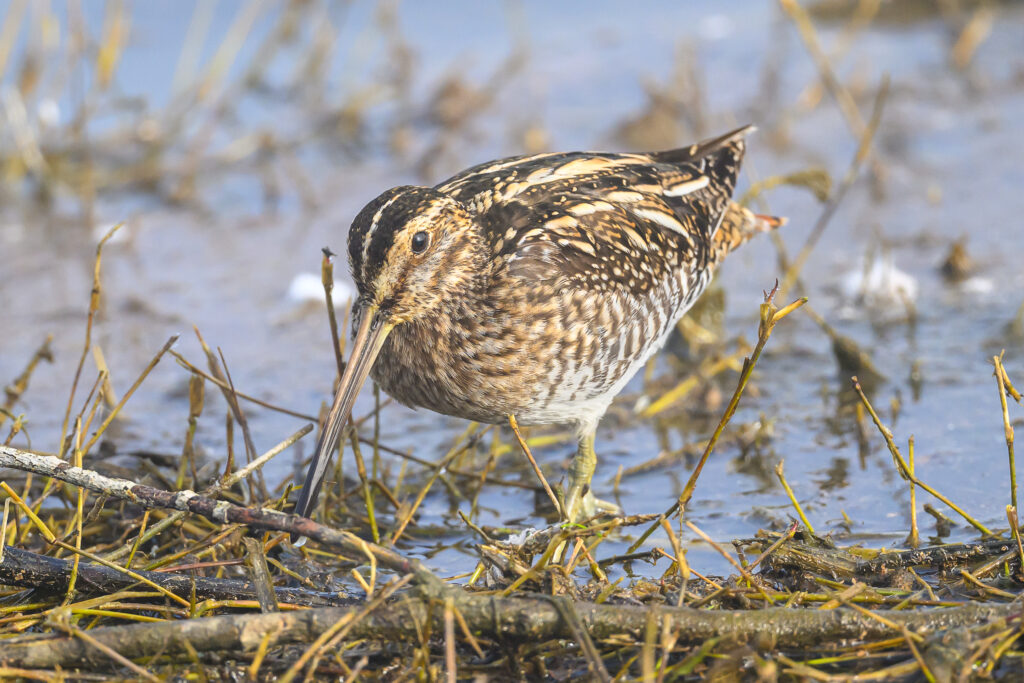
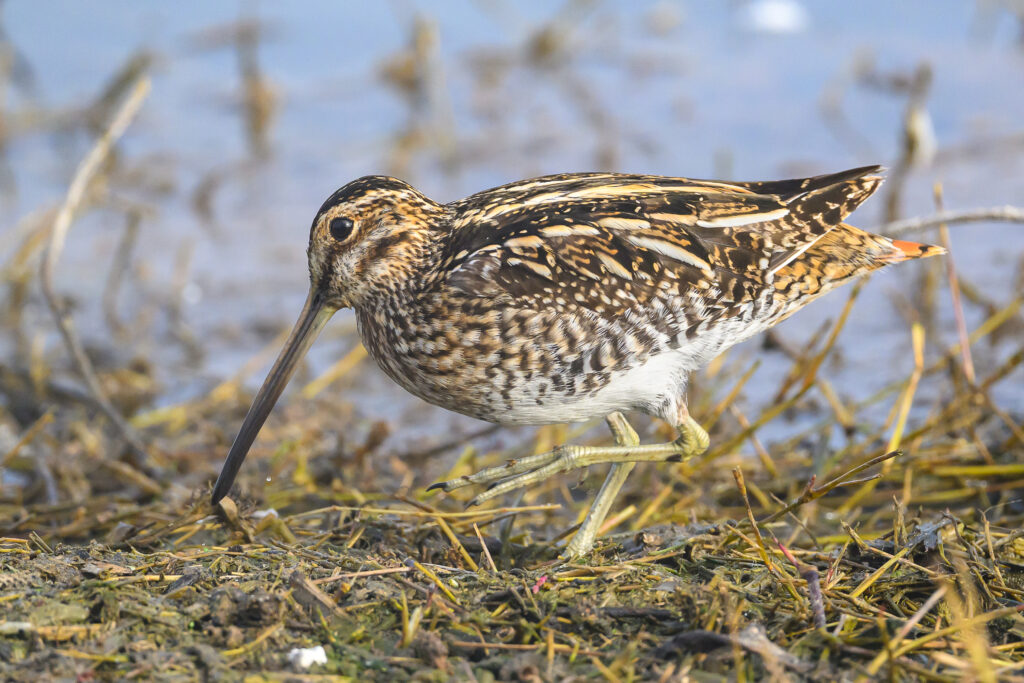
As far as birds go, the refuge is hard to top. I don’t think I’ve ever seen more snipe in one place in my life as I did on this trip. Little gatherings of 5, 6, 10 birds in one place. And as long as I stayed in my car (you’re not allowed to get out during the auto route except at designated areas), they allowed astonishingly close approach. Despite this ease of access to the birds, it’s still a bit of a challenge to capture good images of snipe: if you’re at one of the places where you can walk around, you can’t approach closely–I flushed probably fifteen of them from invisible parts of the shoreline at my feet while walking back from the photography blind. And when you’re in your car, even though the birds are barely fifteen feet away, you can’t get out of the car to get that great low-to-the-ground angle that makes for a truly engaging picture. Here are the best two car shots I managed:
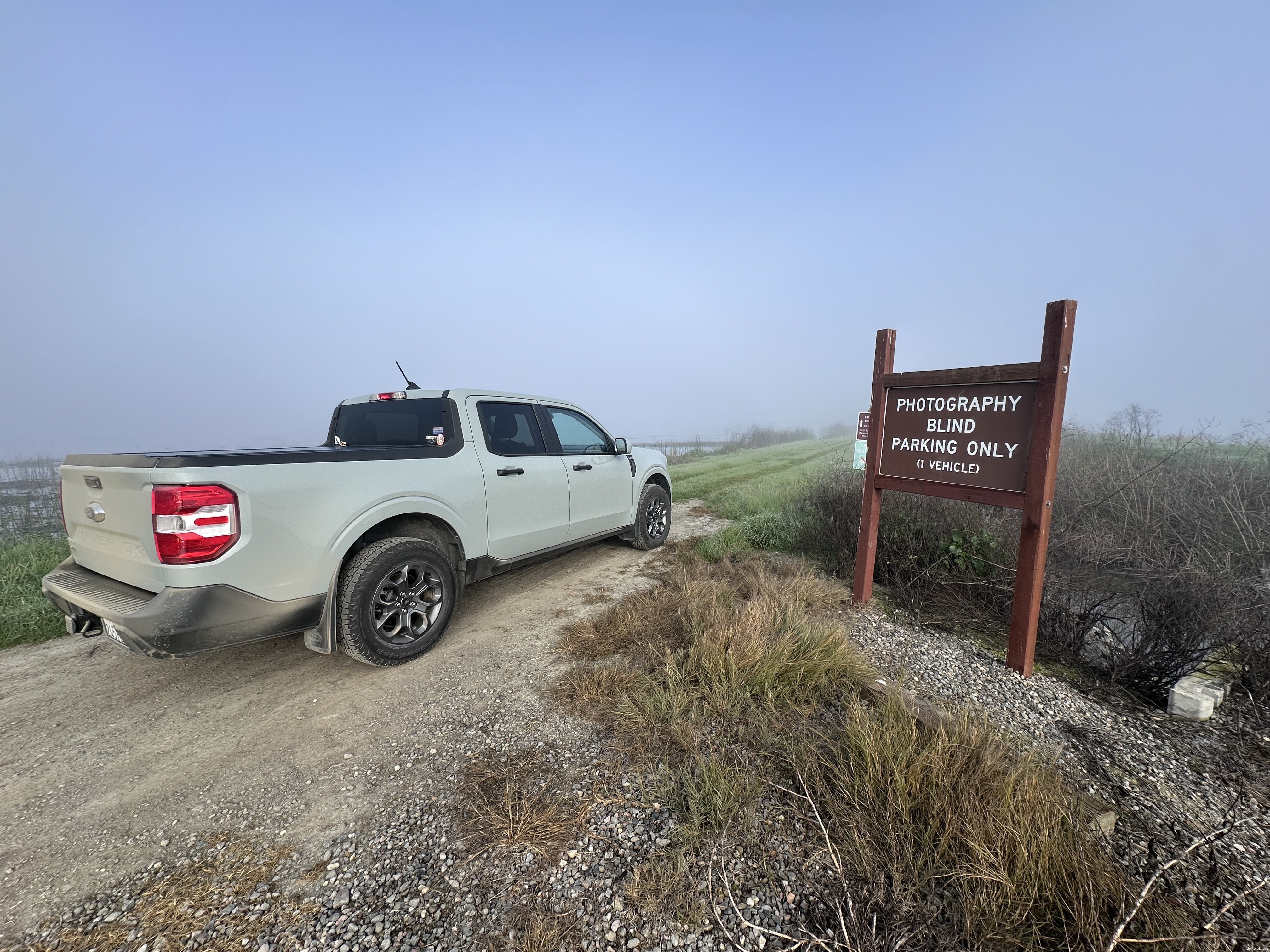
The refuge does offer photographers the opportunity to get close to the birds while not in a vehicle: there’s a photography blind about halfway around the loop, with a little parking area for one vehicle and just a short hike out along the embankment to the hide. The sign at the parking area is pretty clear: access is limited to the one parking spot, and pedestrian access is not allowed if the parking area is occupied. After all, if someone’s in the blind waiting for the birds to not be spooked, having people walking on the embankment would just flush the birds. That’s a recipe for an unhappy photographer. (Ask me how I know.)
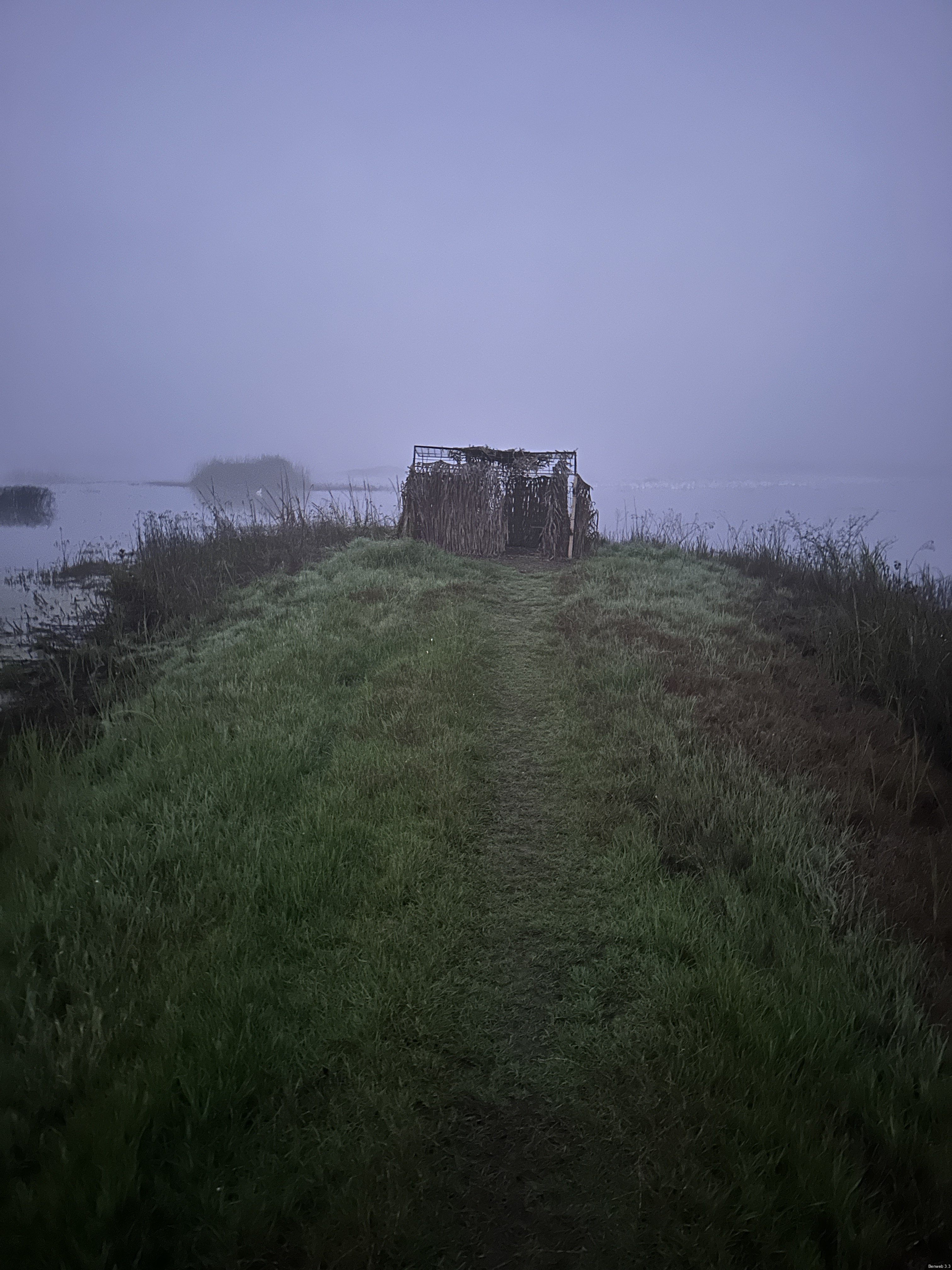
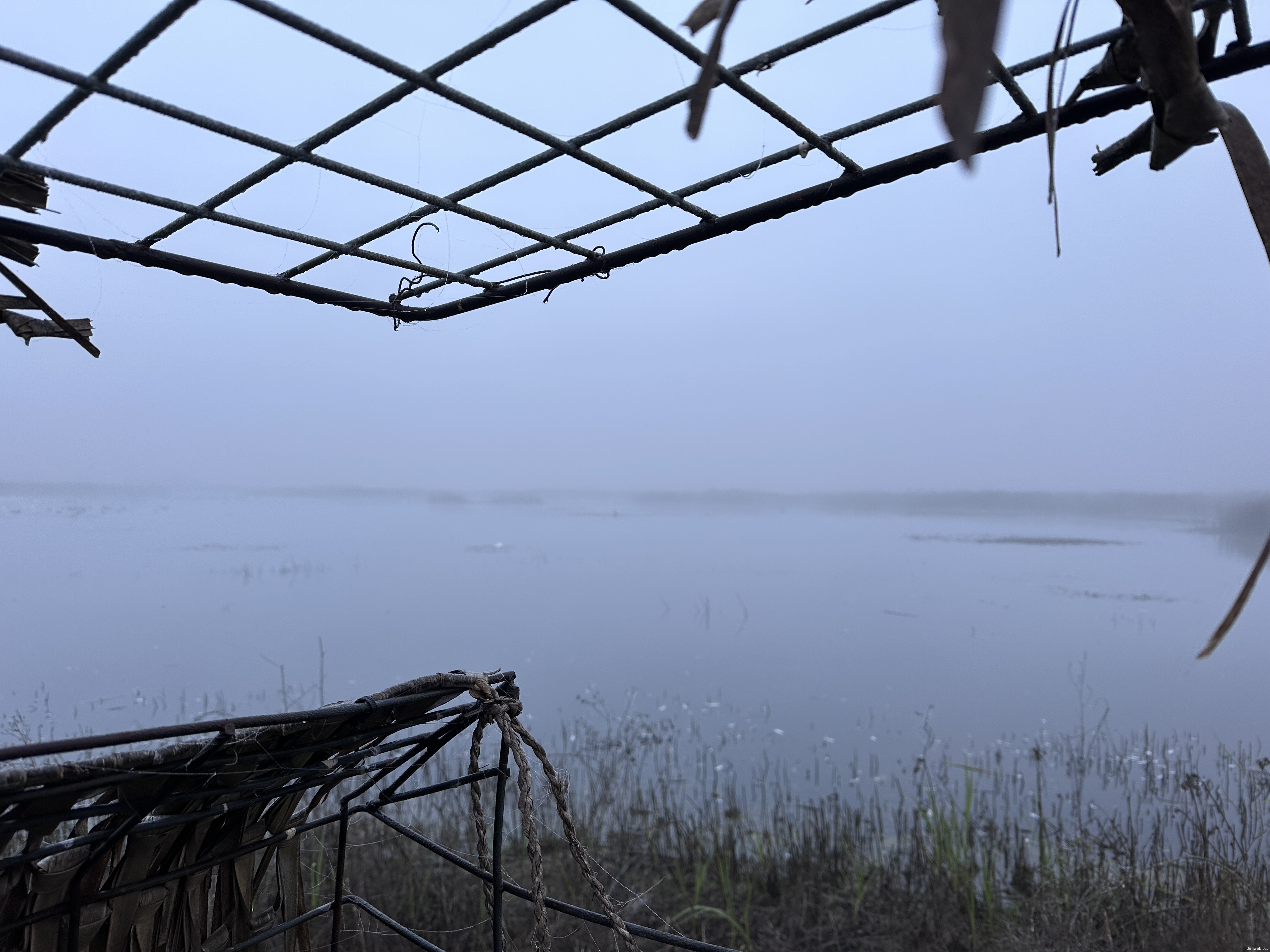
In case you were thinking it, I can confirm: yes, after I arrived at the blind before sunrise, I waited a couple of hours in the fog for the birds to approach. And about an hour and a half after I was all settled in and the birds were getting close, a pair of yahoos wandered along the embankment, flushing all the snow geese and other waterfowl, completely tanking all the time I’d invested in the blind . Truly stunning display of courtesy. Sigh.
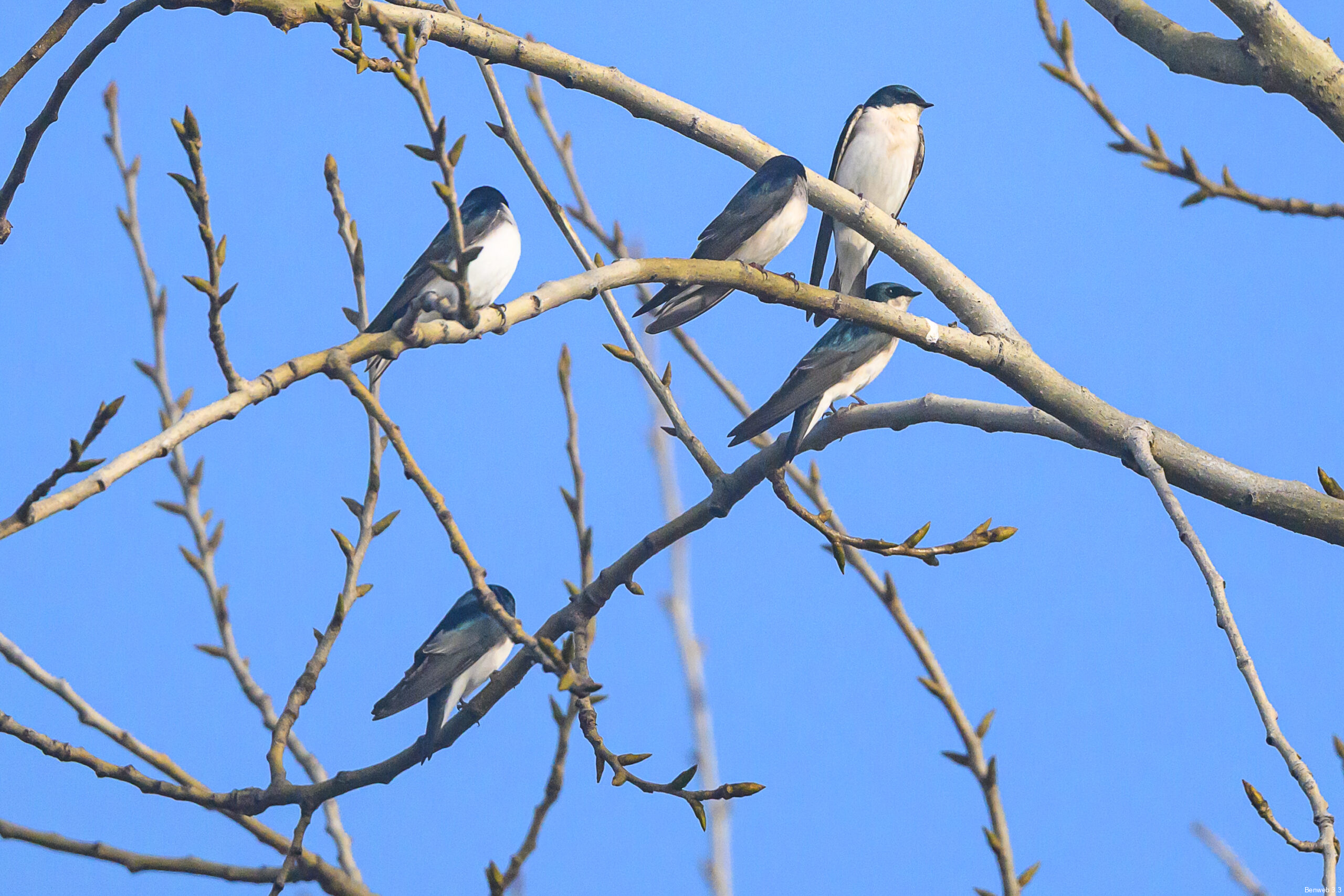
About three-quarters of the way around the rectangular route, there’s a major stop where you ARE allowed to get out and walk: the Bittern Marsh Trail. There’s an observation deck to look out over the impoundment on one side, and on the other there’s a trail around a marsh (as the name of the stop implies). I saw all kinds of cool birds there: Tree Swallows roosting and flying, a Great Horned Owl roosting, and (way too far away for anything but figuring out what they were) a huge flock of dowitchers flushed up into the air by a marauding Peregrine.
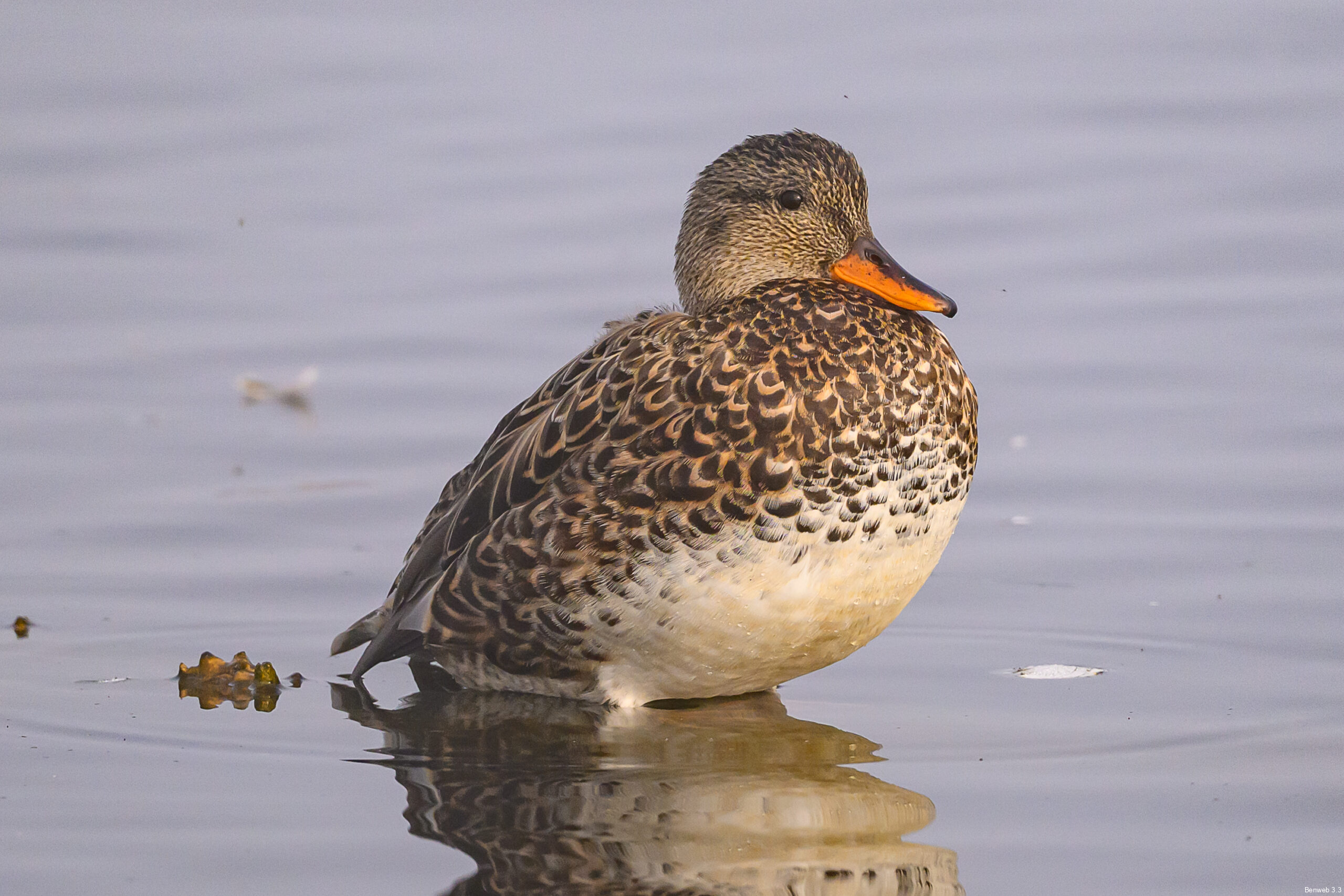
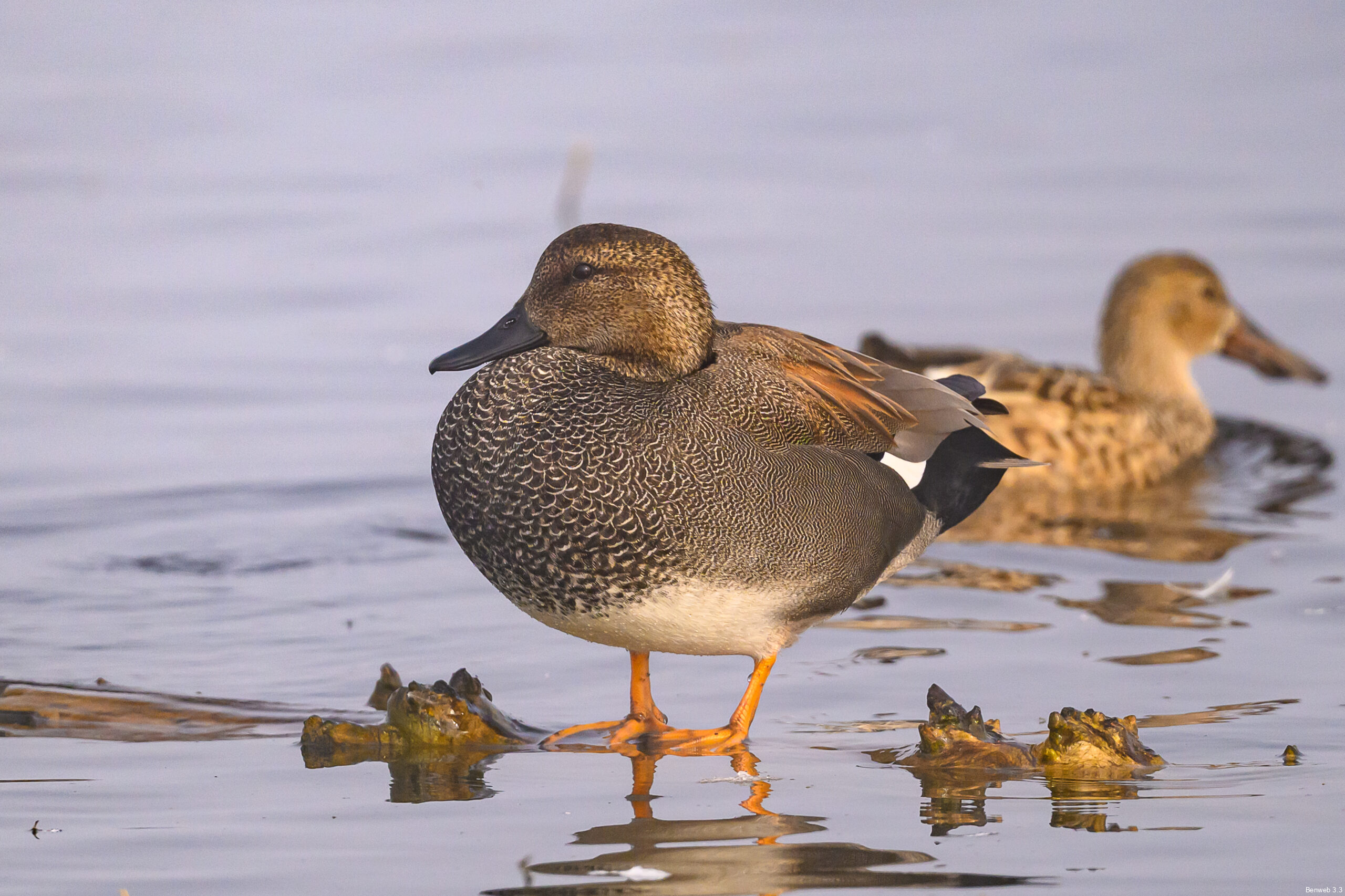
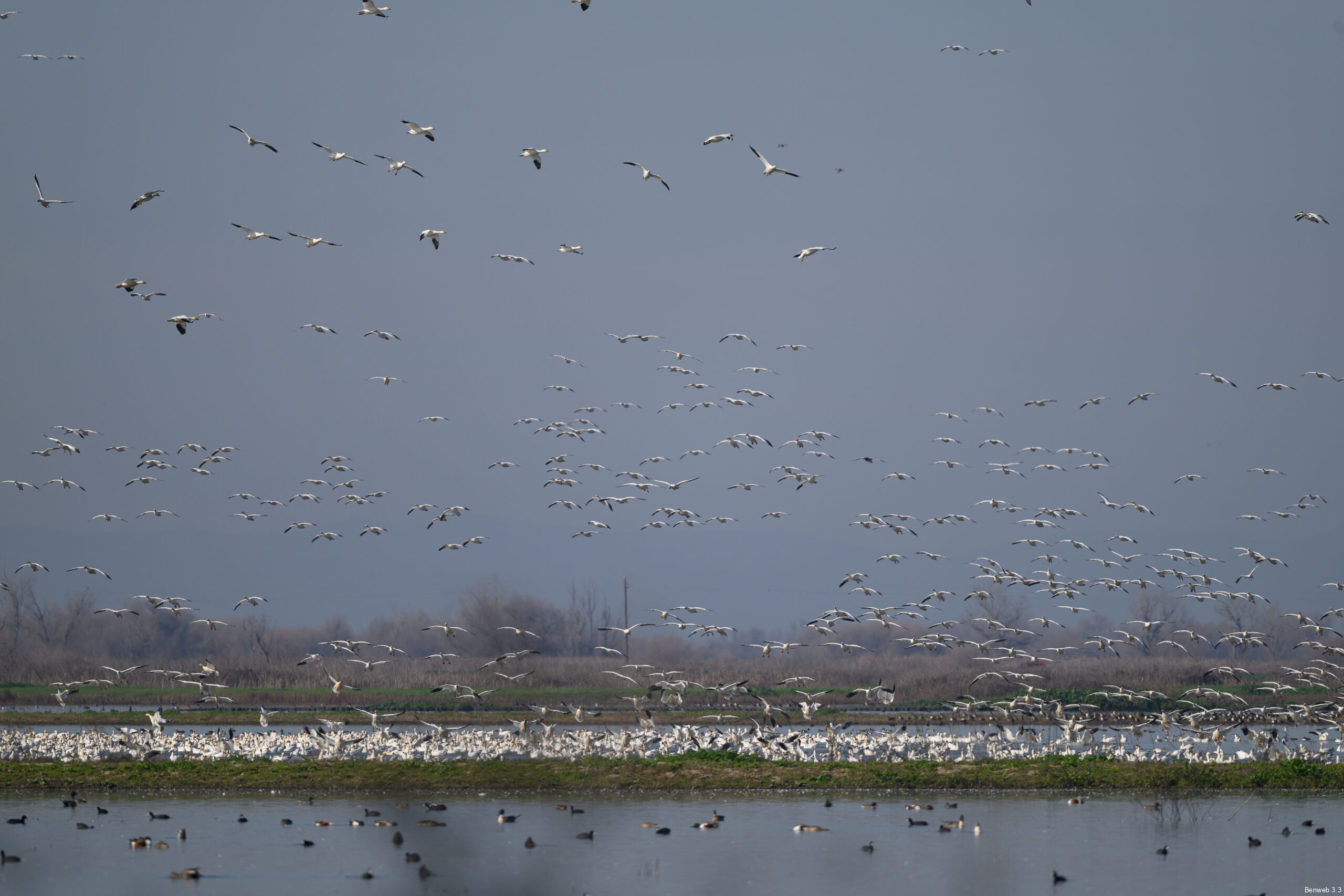
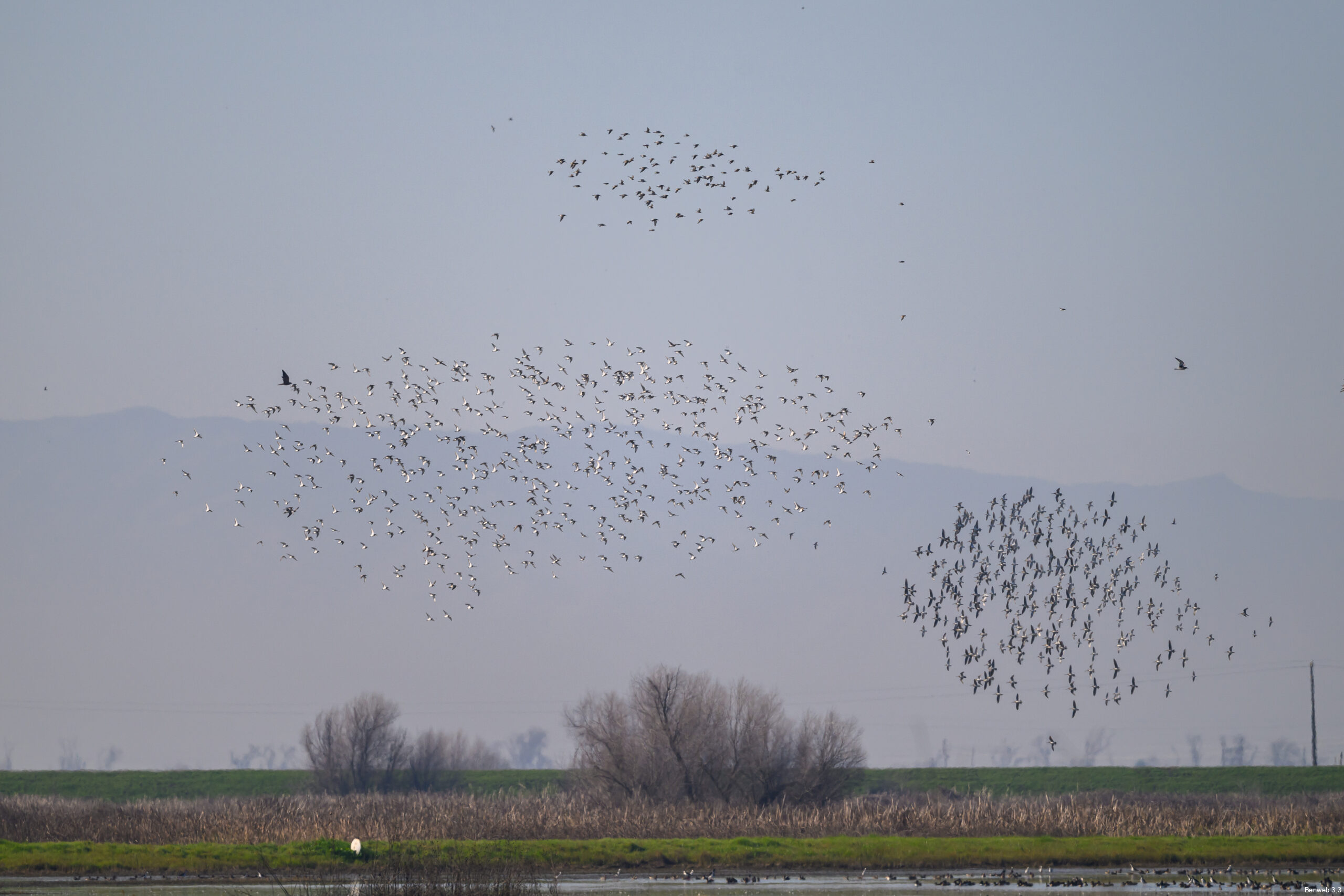
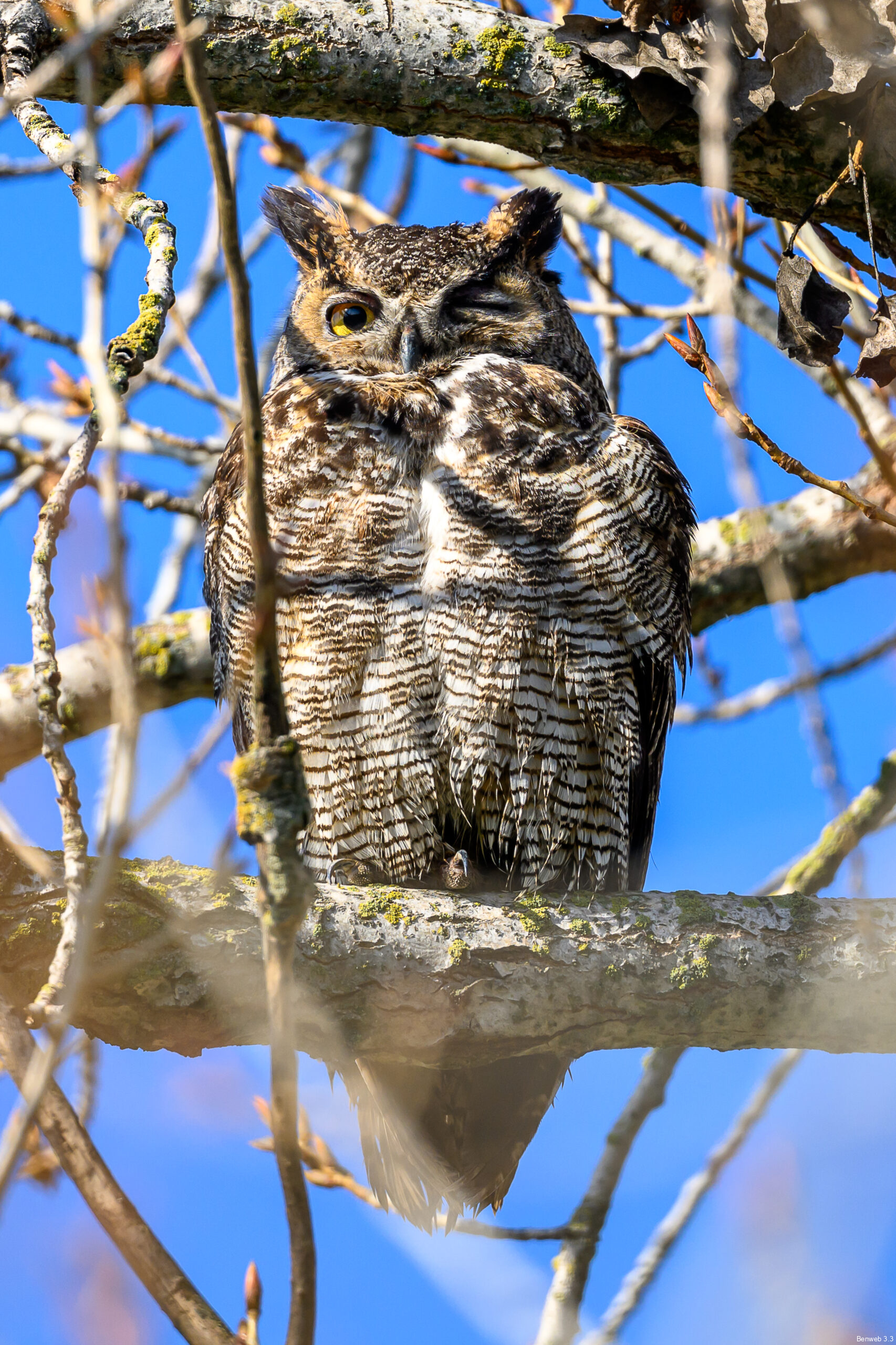
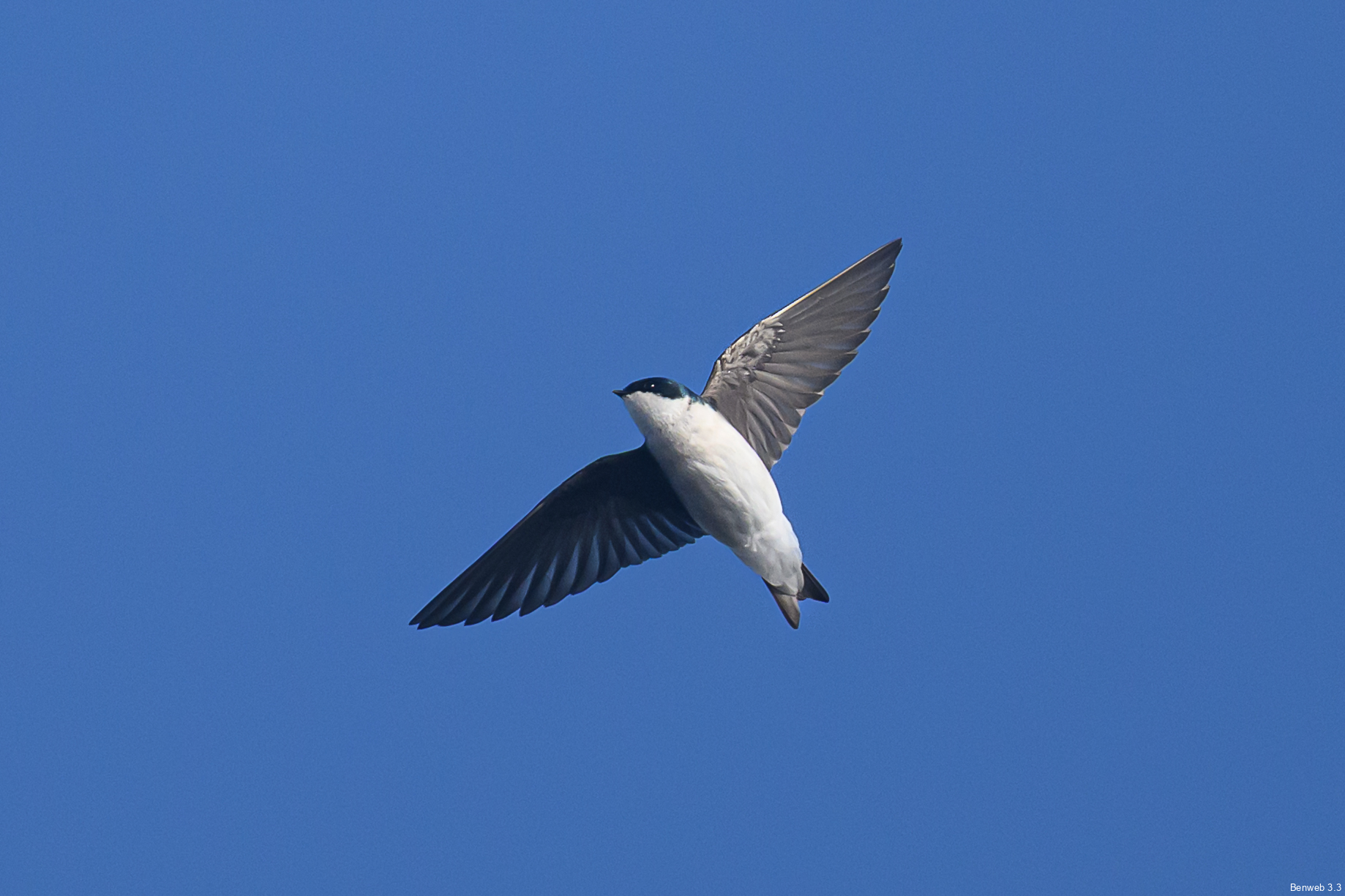
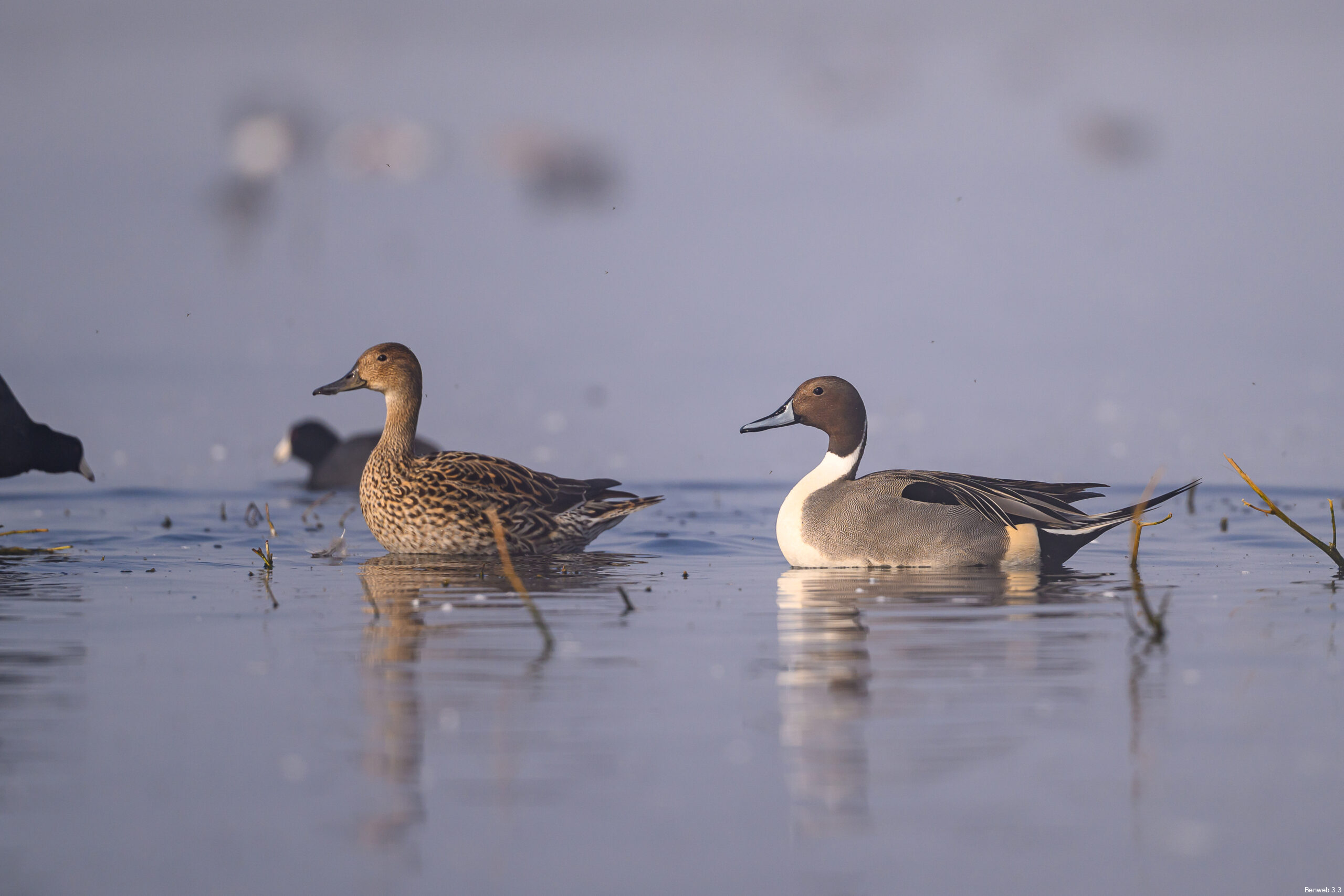
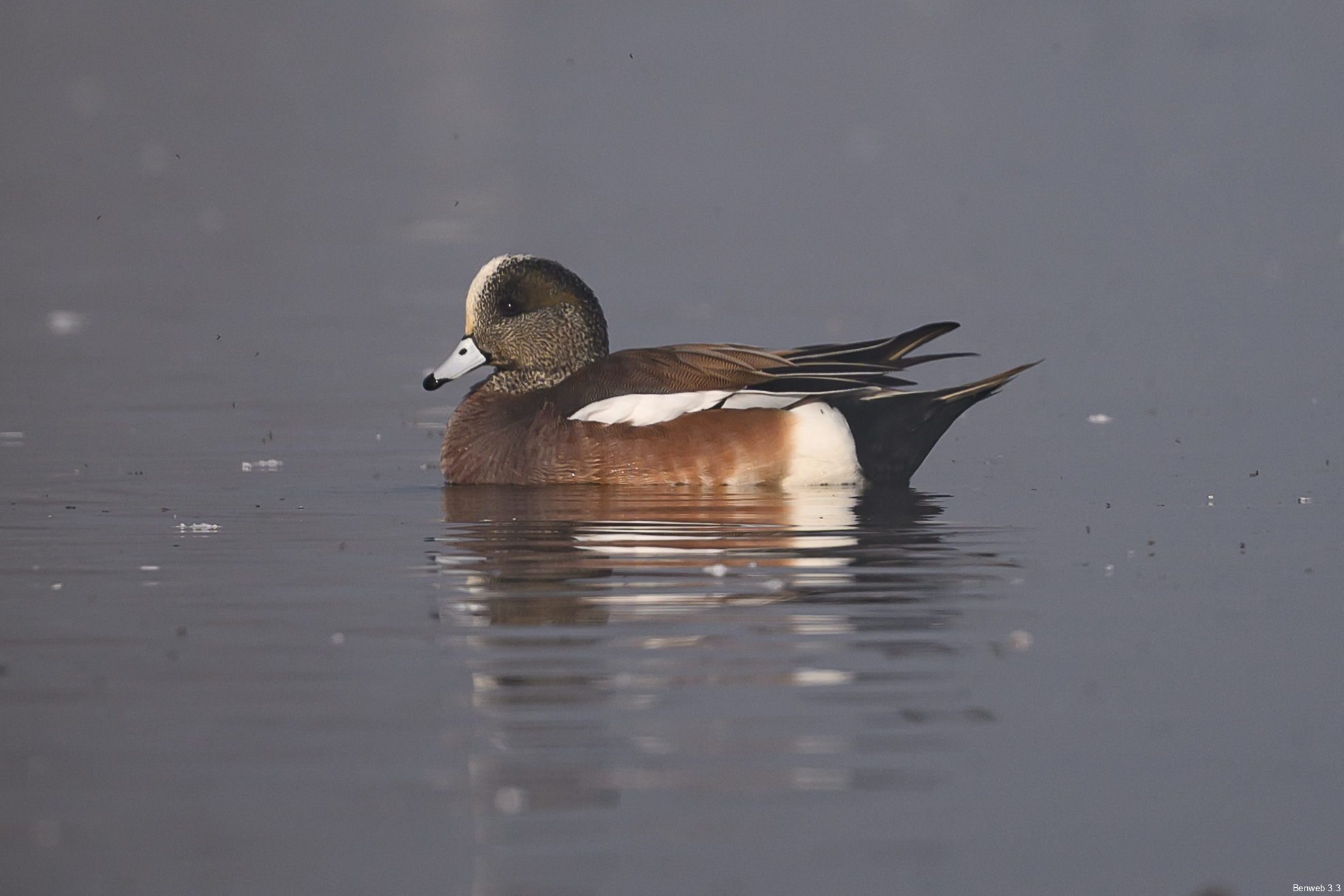
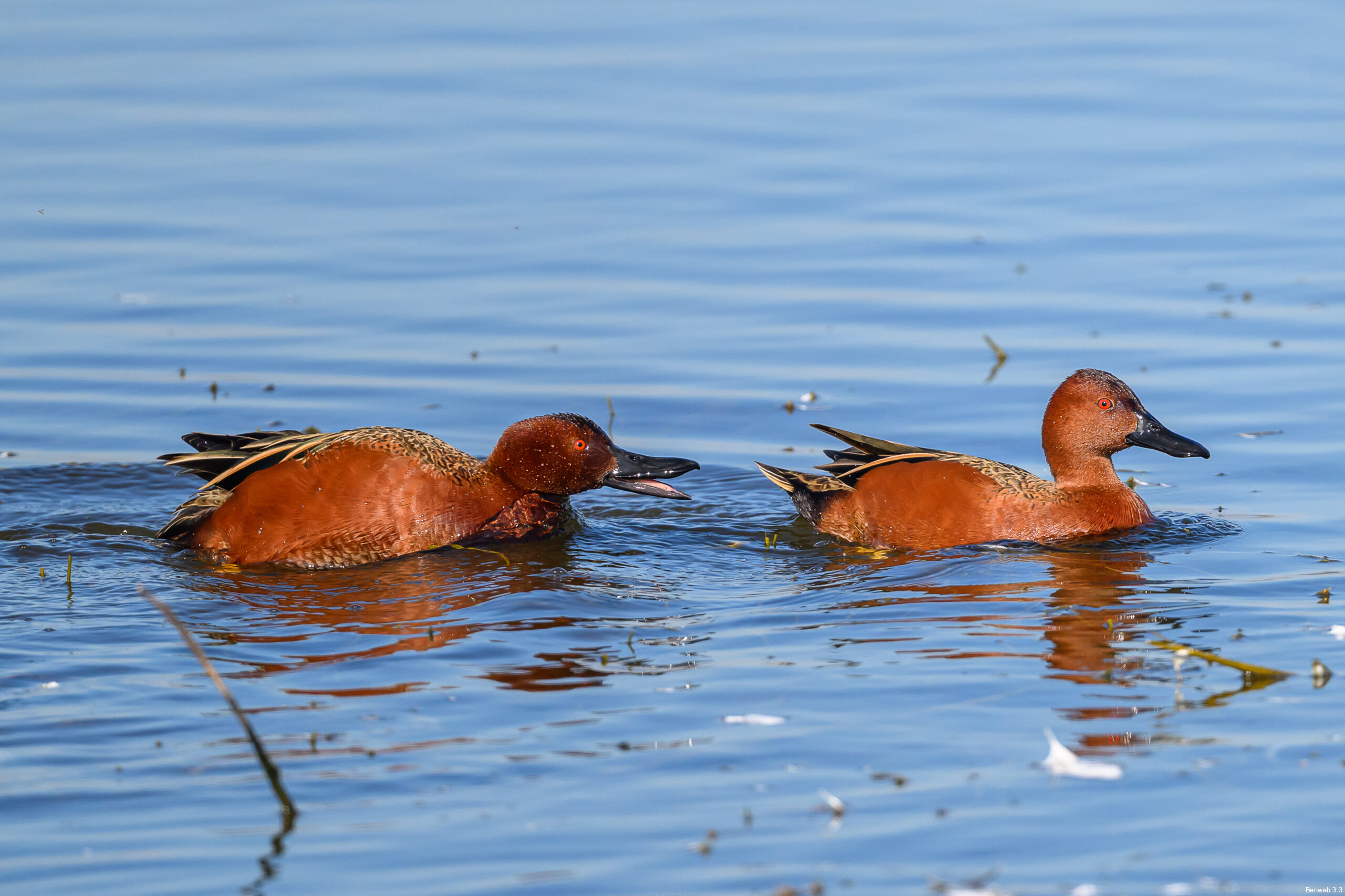
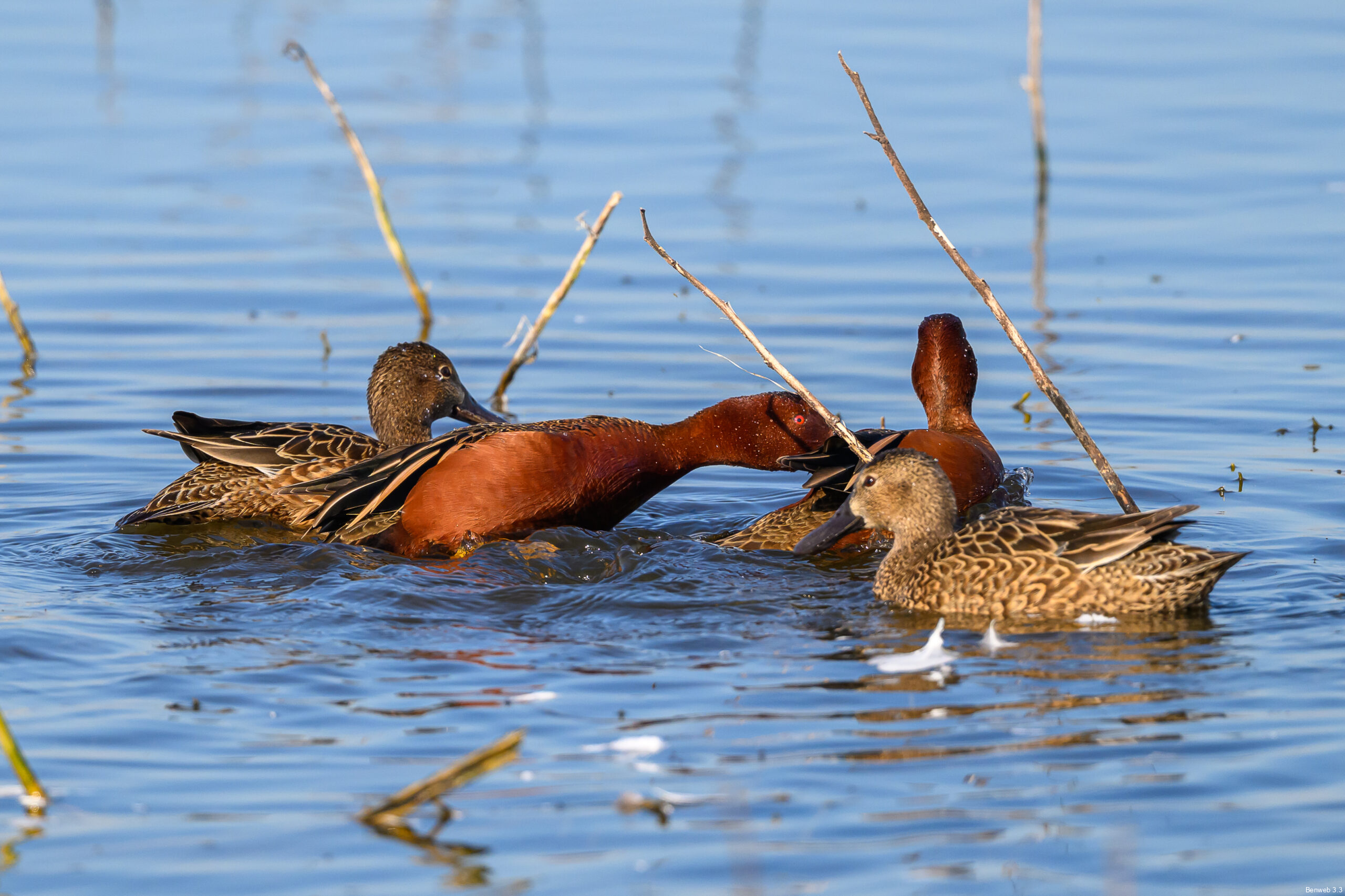
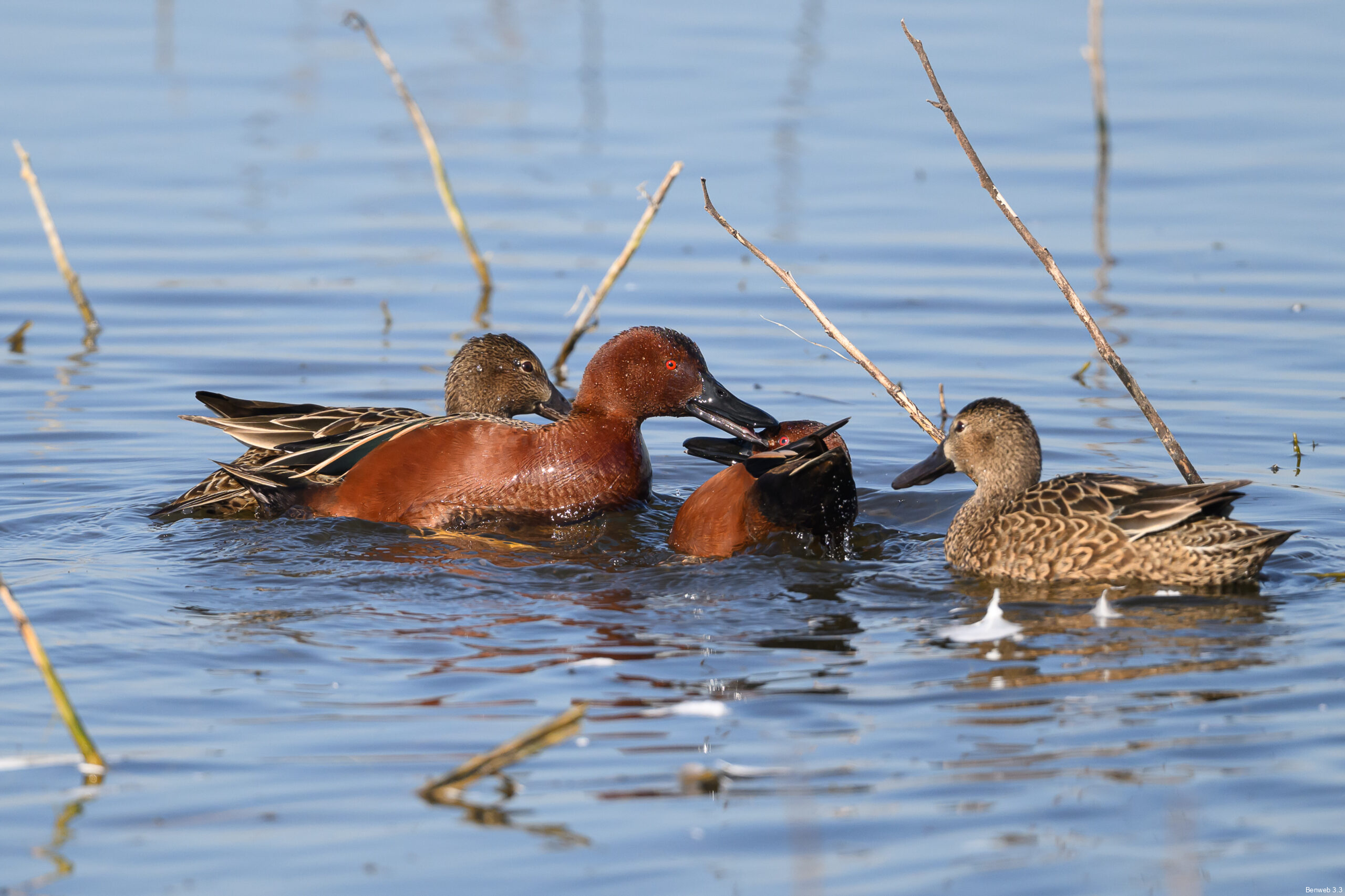
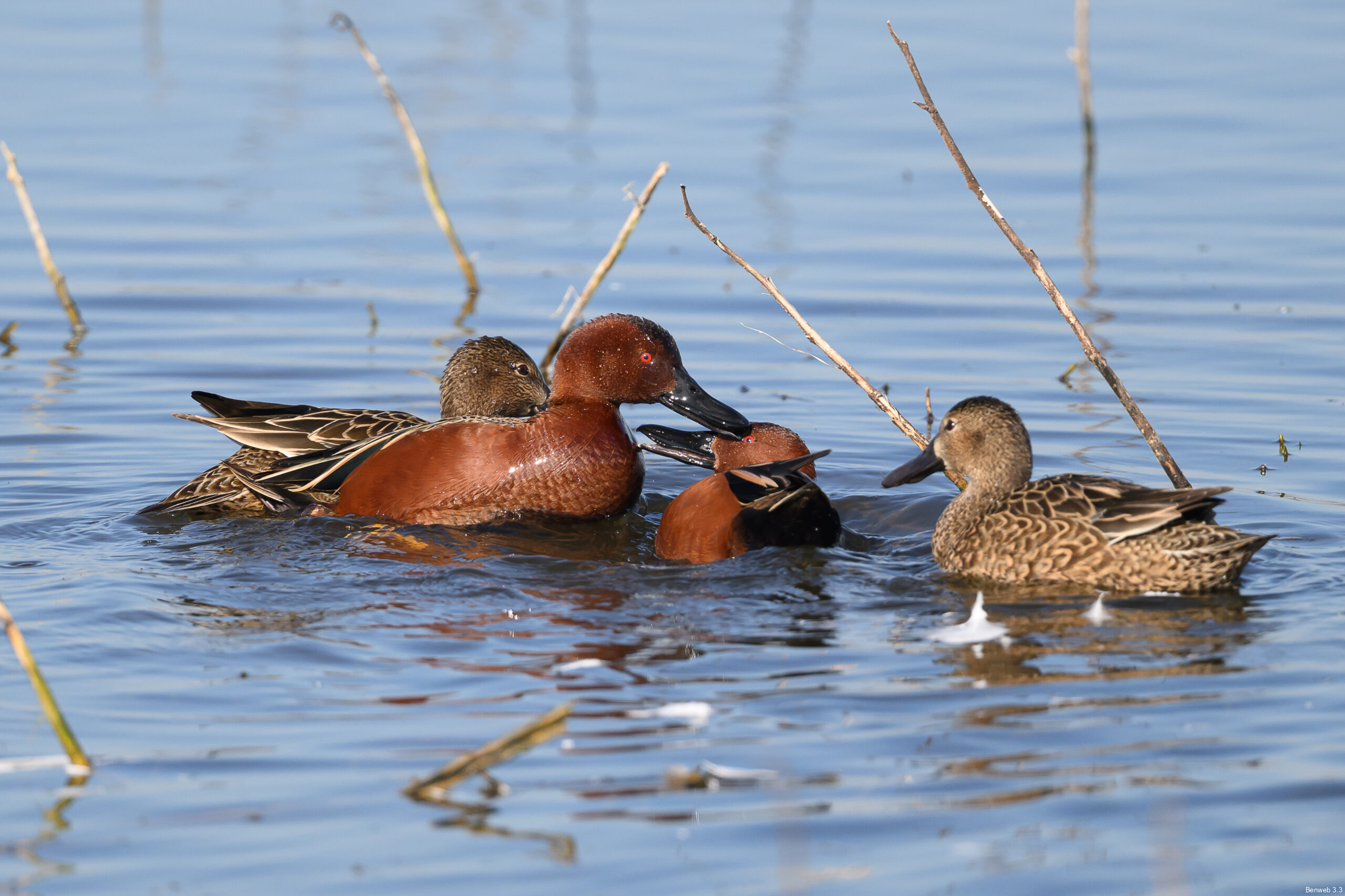
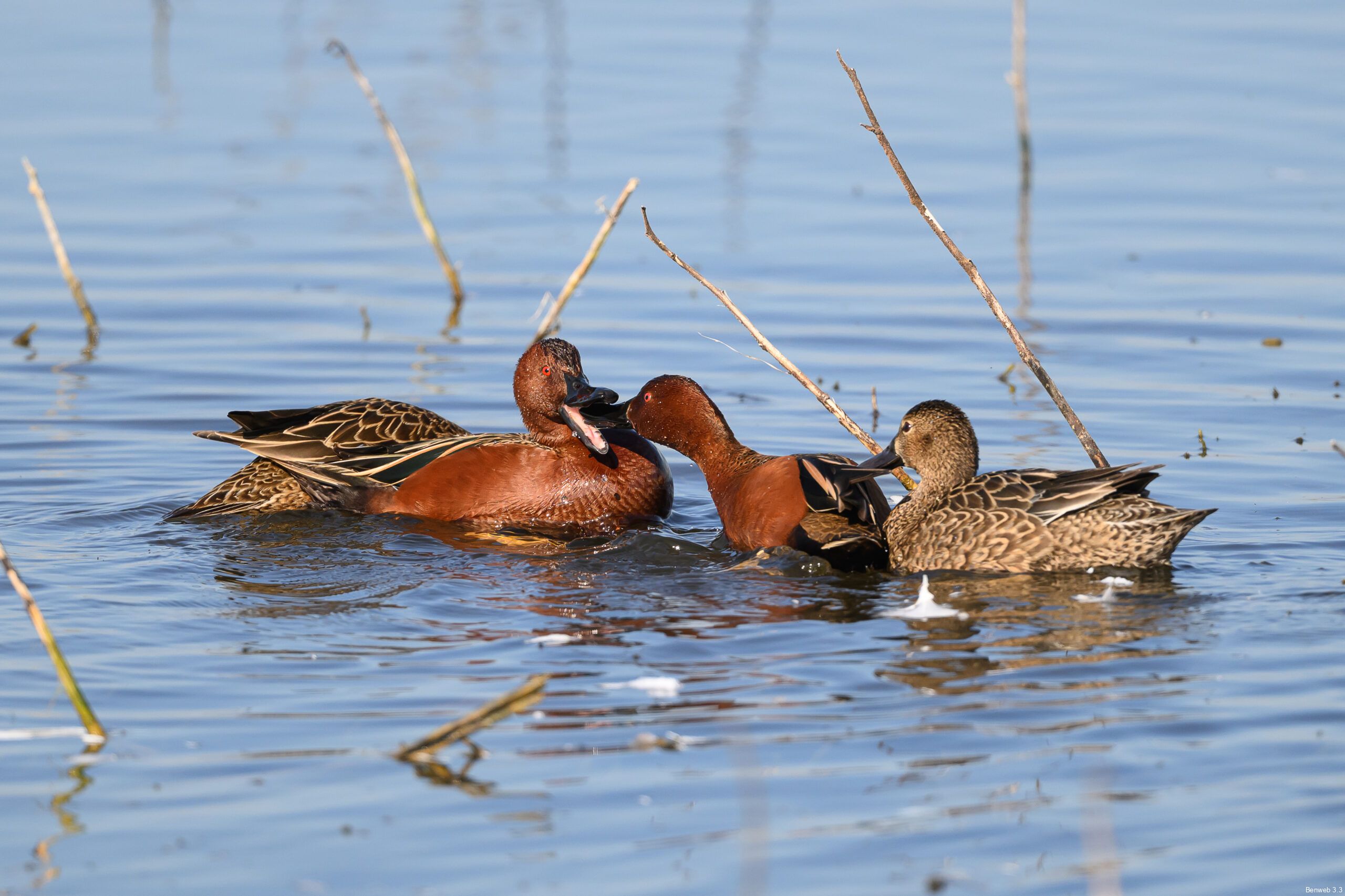
Perched birds are beautiful, and birds in flight are a nice technical challenge (can you get the bird in focus, in frame, with an interesting background, etc.?). But the most exciting kind of photo is one that captures behavior. And on the final leg of the tour, I was able to capture a little bit of that: a couple of Cinnamon Teal squabbling over something:
And, because there were so many of them, and they are so fun to look at, here’s a picture of a Black-necked Stilt:
After I left Merced, I made a brief stop at the nearby San Luis NWR and did that auto tour. It was getting late into the day, though, and most of the wildlife was hidden, and the light was pretty harsh, so I don’t have anything to show from that part of the trip.
All told, it was successful visit, and one that left me eager to return. (I’m still chasing that nice photo of any of the geese and cranes.) The refuge website offers a nice list of what’s going on with what kind of wildlife throughout the year. In August, there are supposed to be kettles of Swainson’s Hawks, which I’m eager to see.