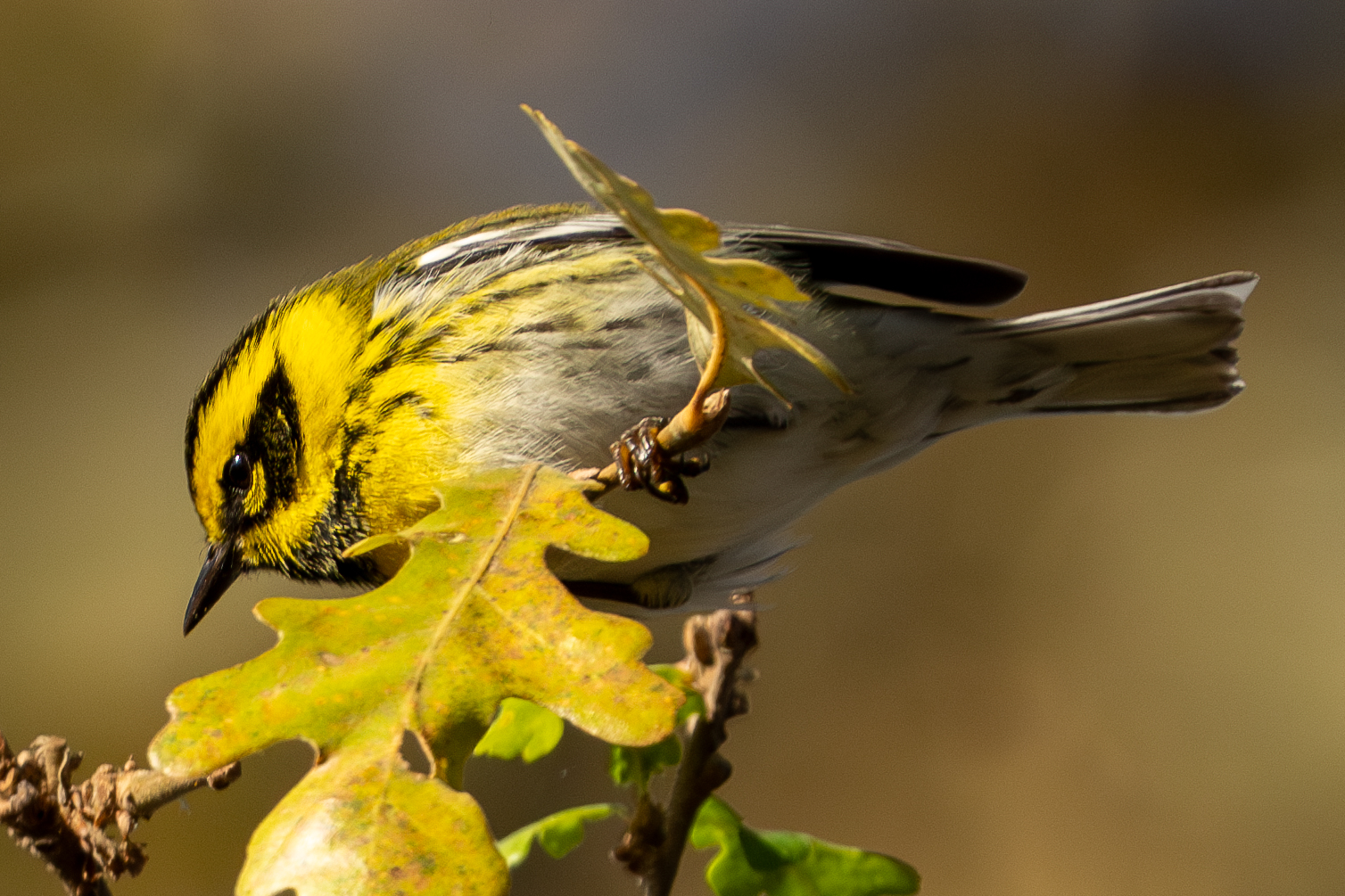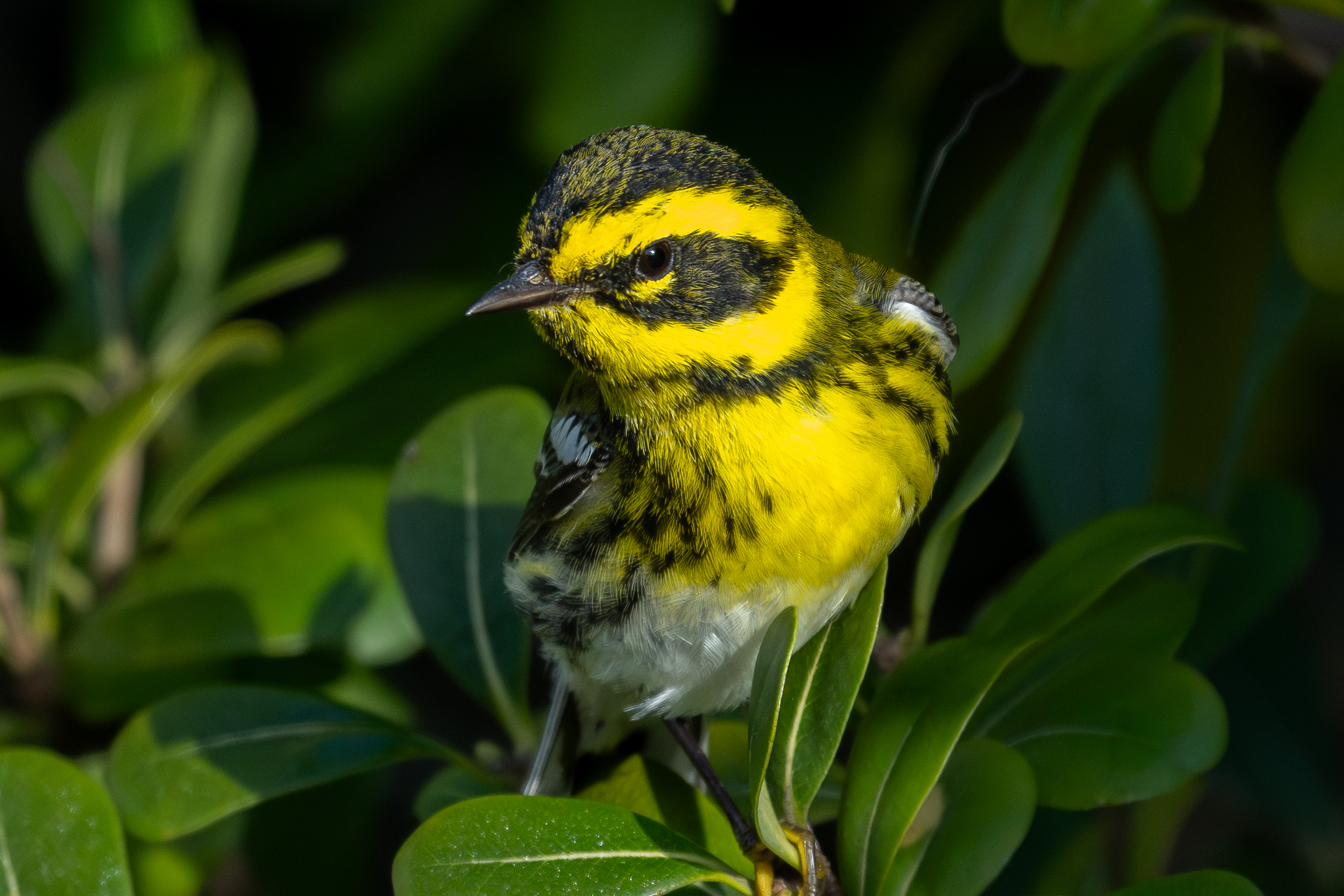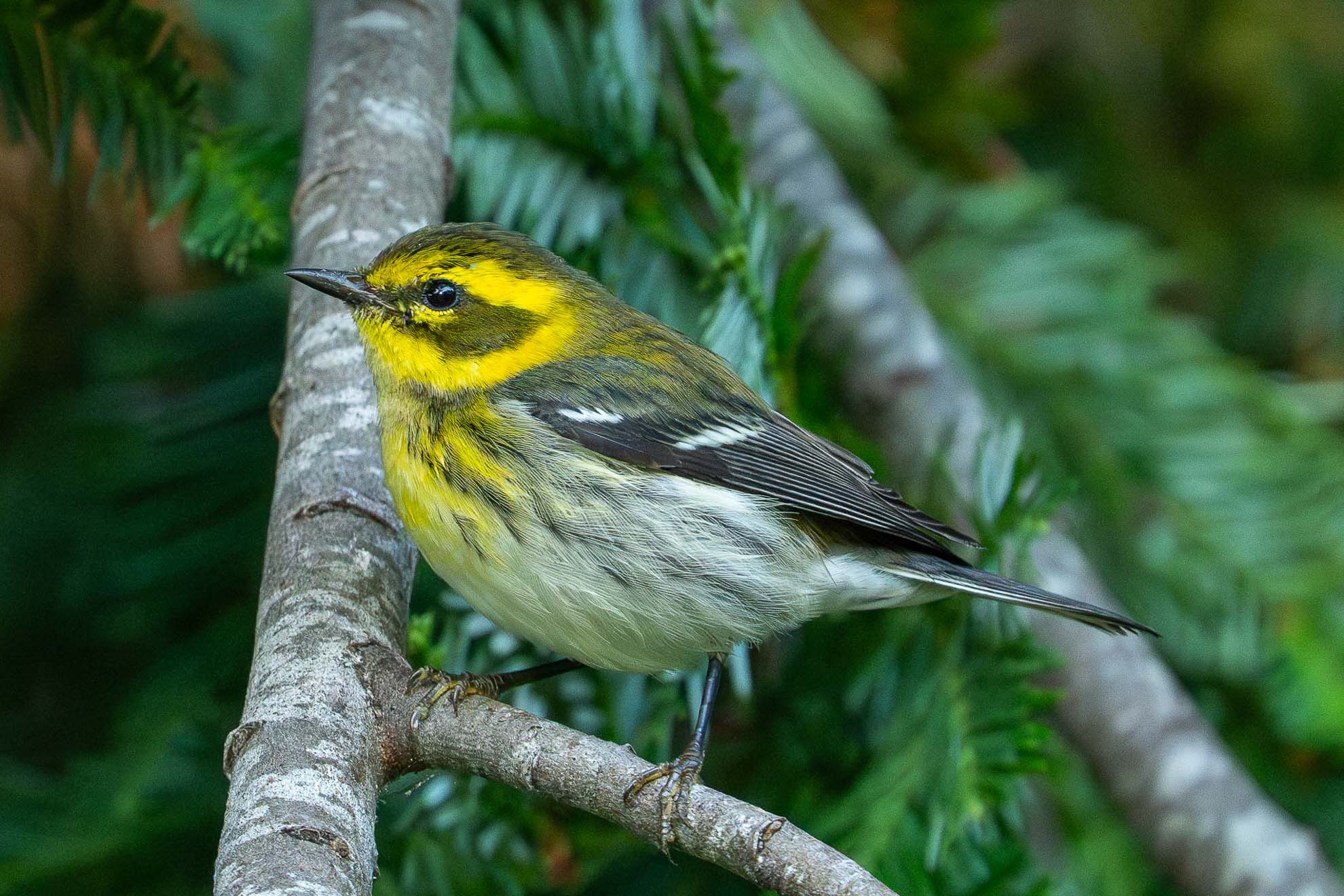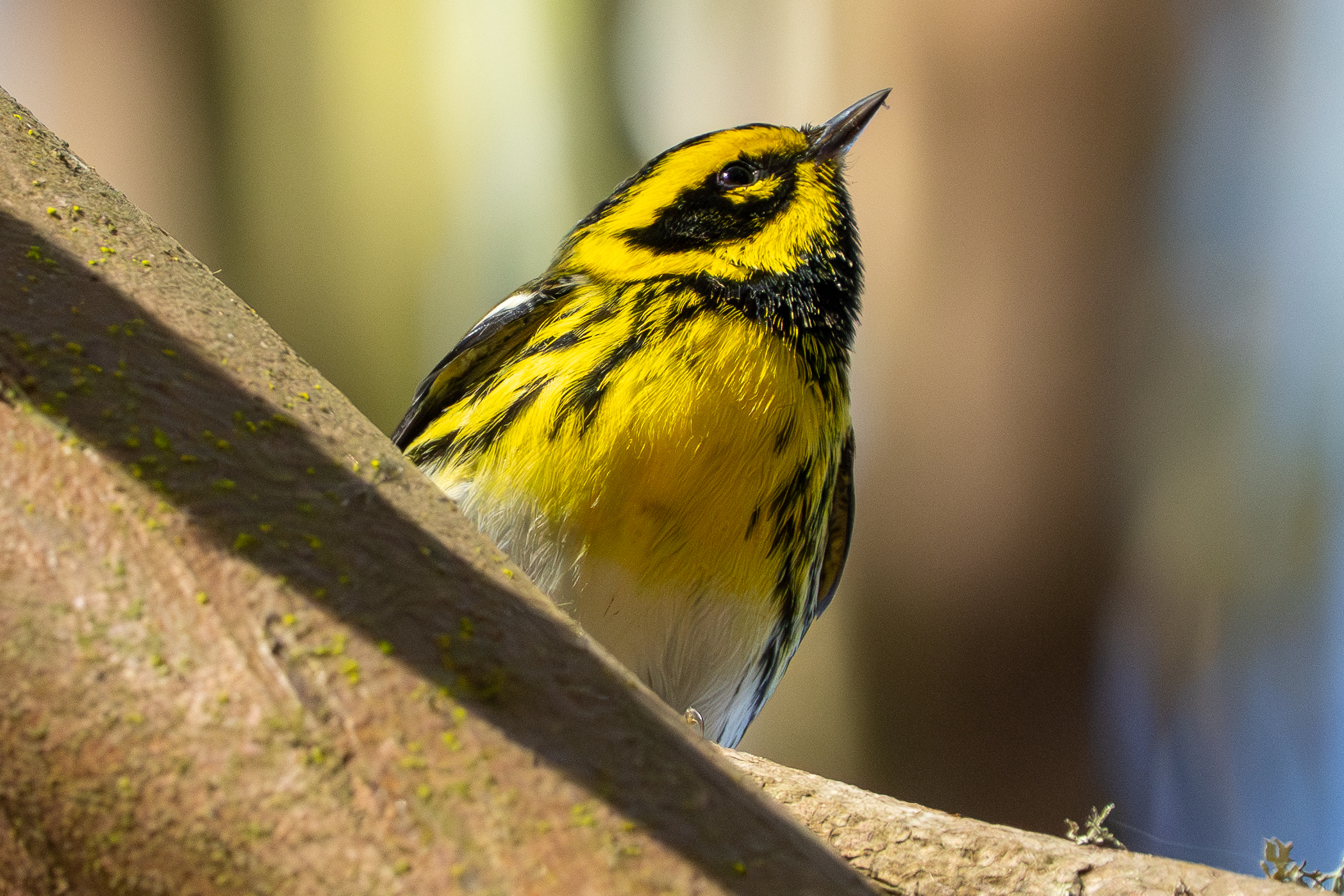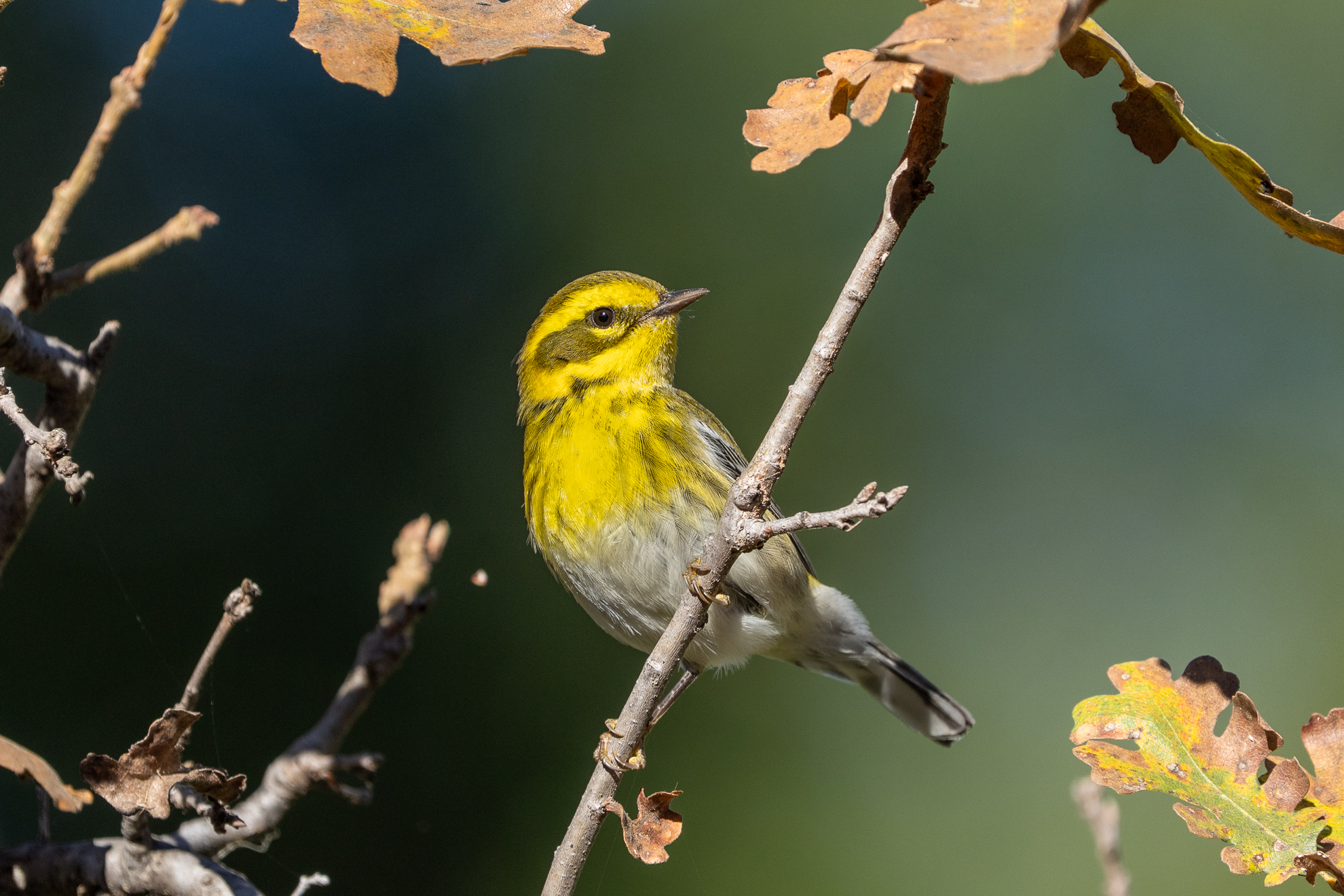
This small yellow bird of the Western states is a winter resident here on the Central Coast. It breeds to our north, in fir and spruce-fir forests. As with many warblers, adults can be sexed by their different plumages: the males have black markings on a yellow body, where the females have green to olive markings on a yellow body.
What I hadn’t known until I read the account in Birds of the World (text last updated in 1998, shame on BotW!) was that there are two geographically distinct populations, and that there is a slight morphological difference between them (first quote from the “Movements and Migration” section; second from the “Distribution” section:
Apparently 2 distinct groups of migrants: those that winter in California and Oregon which appear to breed in the Queen Charlotte Islands and possibly Vancouver Island, and the remainder of the breeding population that move from breeding habitats in Alaska, w. Canada, and n.w. U.S. to extreme s. North America and Central America.
First group has shorter wings than second and is especially prevalent along central coast of California (Morrison and Hardy 1983a, Root 1988b). Along Pacific Coast, winters on se. Vancouver I. and on extreme southwestern coast of British Columbia. In Oregon, uncommon in inland w. Oregon (west of Cascades) and along coast, with high variability among years (Gilligan et al. 1994). In California, wintering individuals are uncommon from Del Norte Co. south to Sonoma Co. but common along the central coast, becoming less common southward from San Luis Obispo Co. south to Santa Barbara Co., and uncommon south to n. Baja California peninsula (Root 1988b, Small 1994, Howell and Webb 1995). Small (Small 1994: 221) indicates that “moving eastward from the coast they rapidly become scarce, and are very rare in the interior valleys and deserts.” Also winters throughout Baja California Norte, except along east coast and in extreme southern portion (Howell and Webb 1995).
Back in the twentieth century when the BotW account was written, “very little” was known about their habitat use in migration, and “little” was known about their habitat usage in their wintering territories. With the huge growth in birding after eBird was introduced, perhaps this situation has improved somewhat, but perhaps not.
I’ve gotten a few good pictures of them over the years I’ve been here: