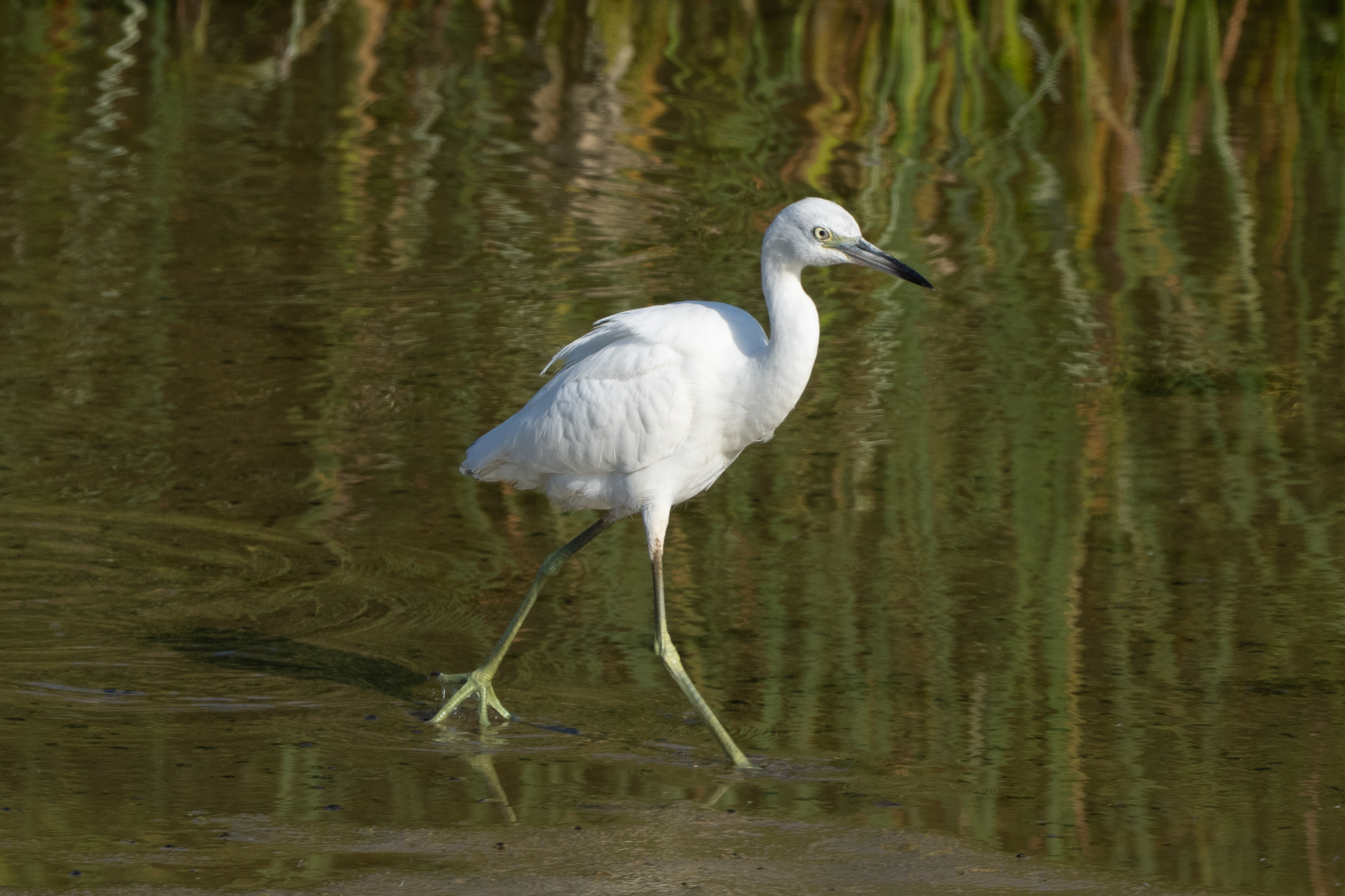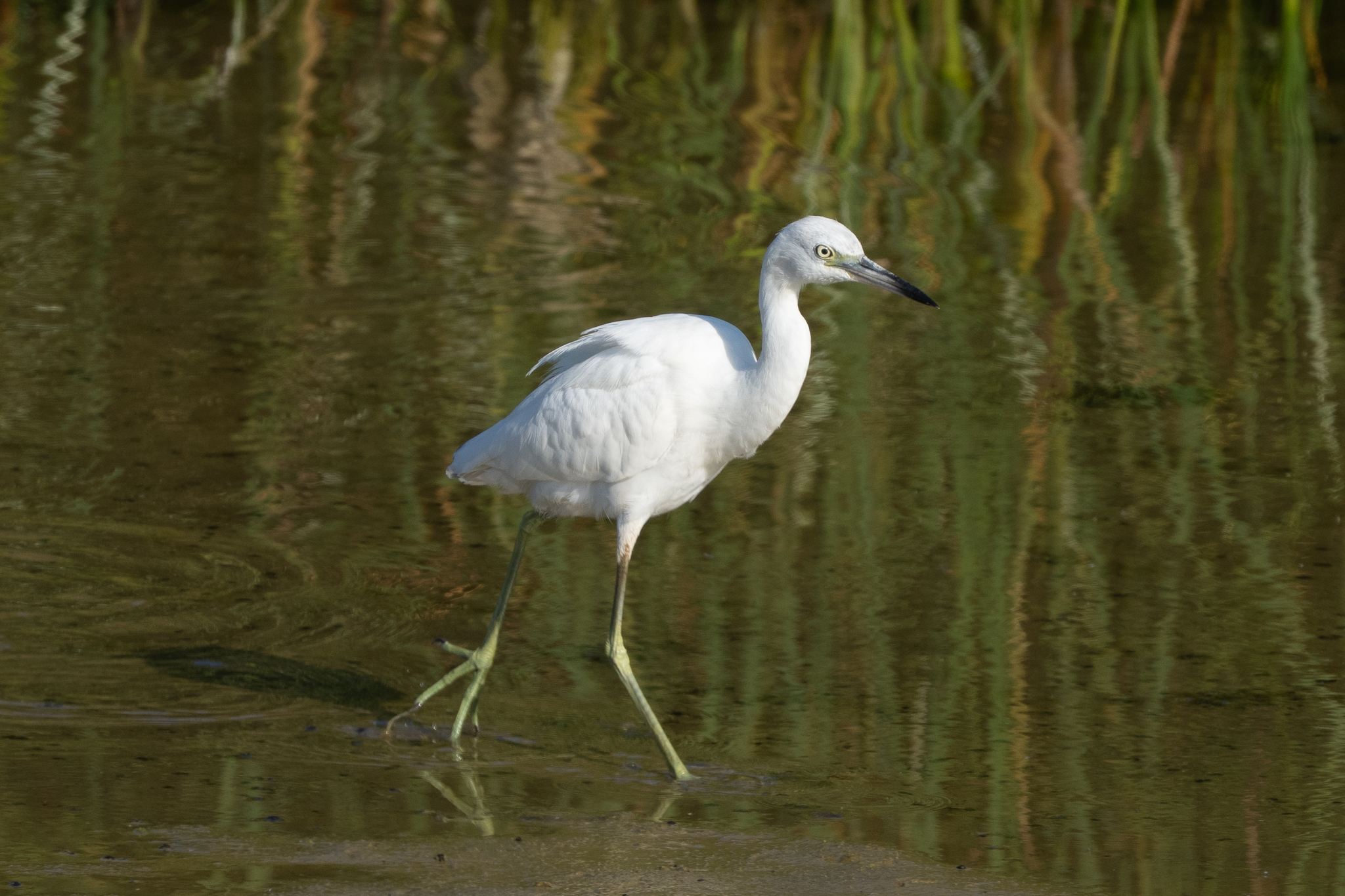
There aren’t a whole lot of species of herons and egrets in North America, but their distribution is a bit spotty. I’m fairly familiar with most of them after decades in Florida; a few of them are less common here than there; none are more common here. Of the ten species of herons/egrets, three are “medium-sized” and white: Cattle Egret, Snowy Egret, and subadult Little Blue Heron (yes, the little blue heron is white when it’s young).
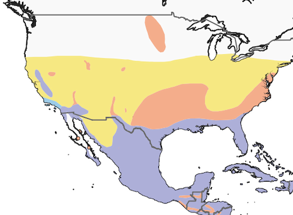
Western Cattle Egret (Ardea ibis), a relatively recent immigrant from Africa, widely present in the Southeastern states, has only a handful of records here on the Central Coast. I’ve checked my eBird lists from my time in Florida and I was surprised to discover that I’d recorded it only 45 times on the 370 checklists I submitted since 2004 in that state. I suspect the reason I recorded it so seldom is my usage of eBird: between 2004 and 2010, I submitted 280 checklists; between 2011 and 2023, only 90. Basically, I birded a lot less until January 2023, when the flame rekindled.
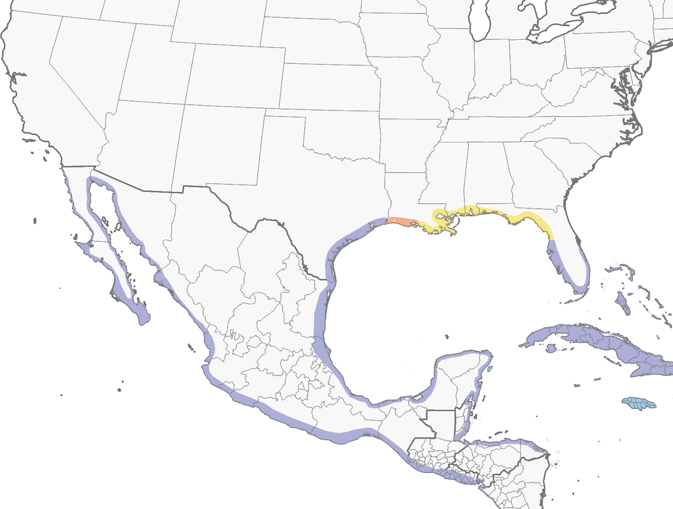
Reddish Egret (Egretta rufescens) is another bird less often seen west of the Rockies, and even where it is present, it is quite a bit less common than the Cattle Egret. Its distribution is entirely coastal, from Florida across the Gulf Coast, and along both coasts of Mexico and northern Central America. Its occurrence in California north of the Baja California peninsula is entirely accidental. I’ve logged this bird in eBird a whopping four times in Florida, and twice (same bird, same location, two different days) here in California.
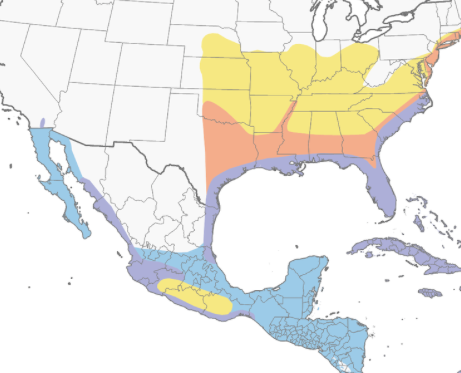
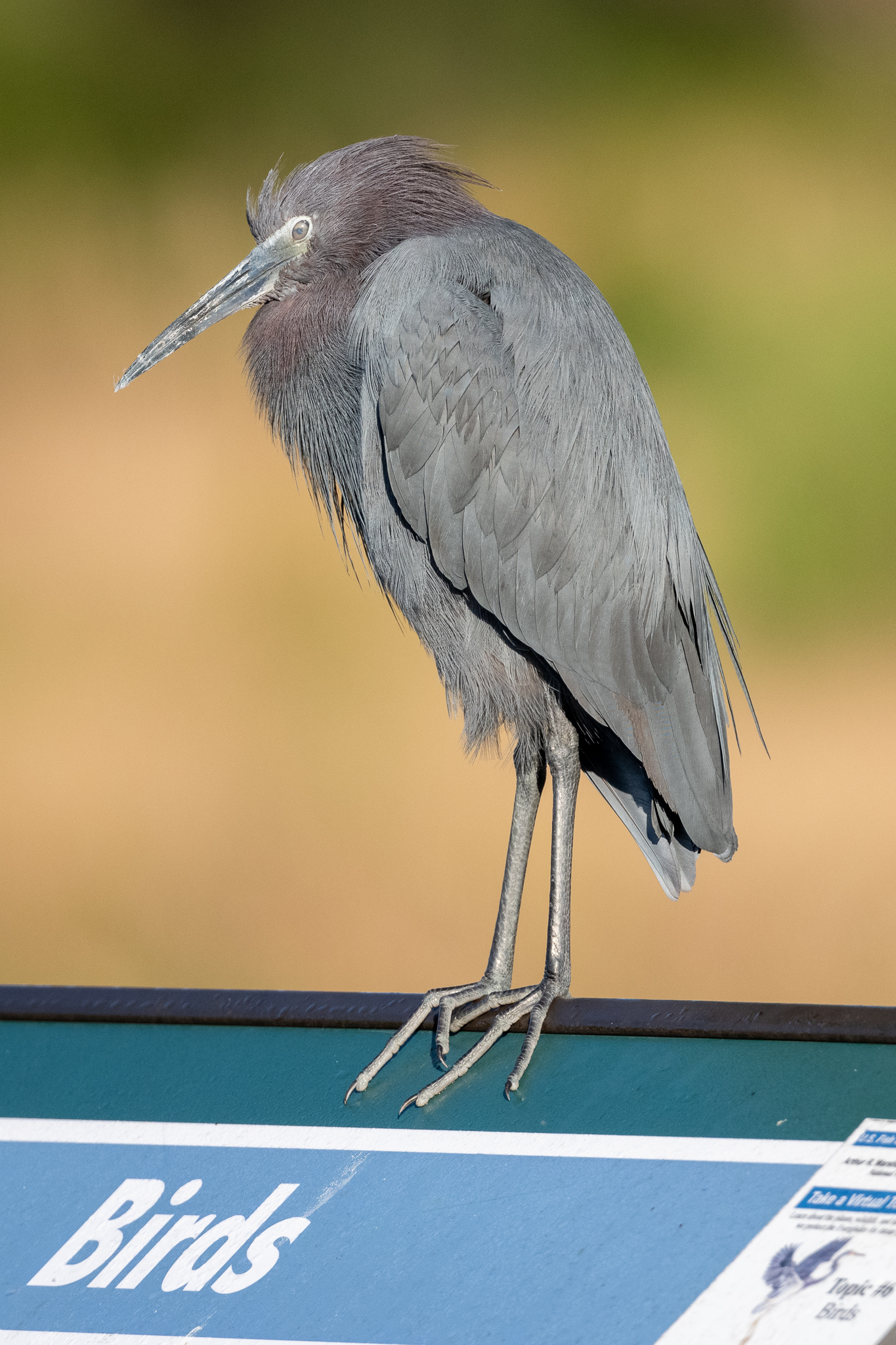
Little Blue Heron (Egretta caerulea) is relatively common in Florida–not as rare as Reddish Egret but nowhere near as common as Cattle Egret–but it’s rather rare here in San Luis Obispo County (sightings of an adult in June 2018 and an immature in November 2019, then nothing until this year). Its range map is quite interesting: fairly widely distributed in the southeast, then it hits a wall in the middle, and then, like Reddish Egret, distributed around both coasts of Mexico and Central America.
Adult Snowy Egret and adult Little Blue are easy to tell apart:
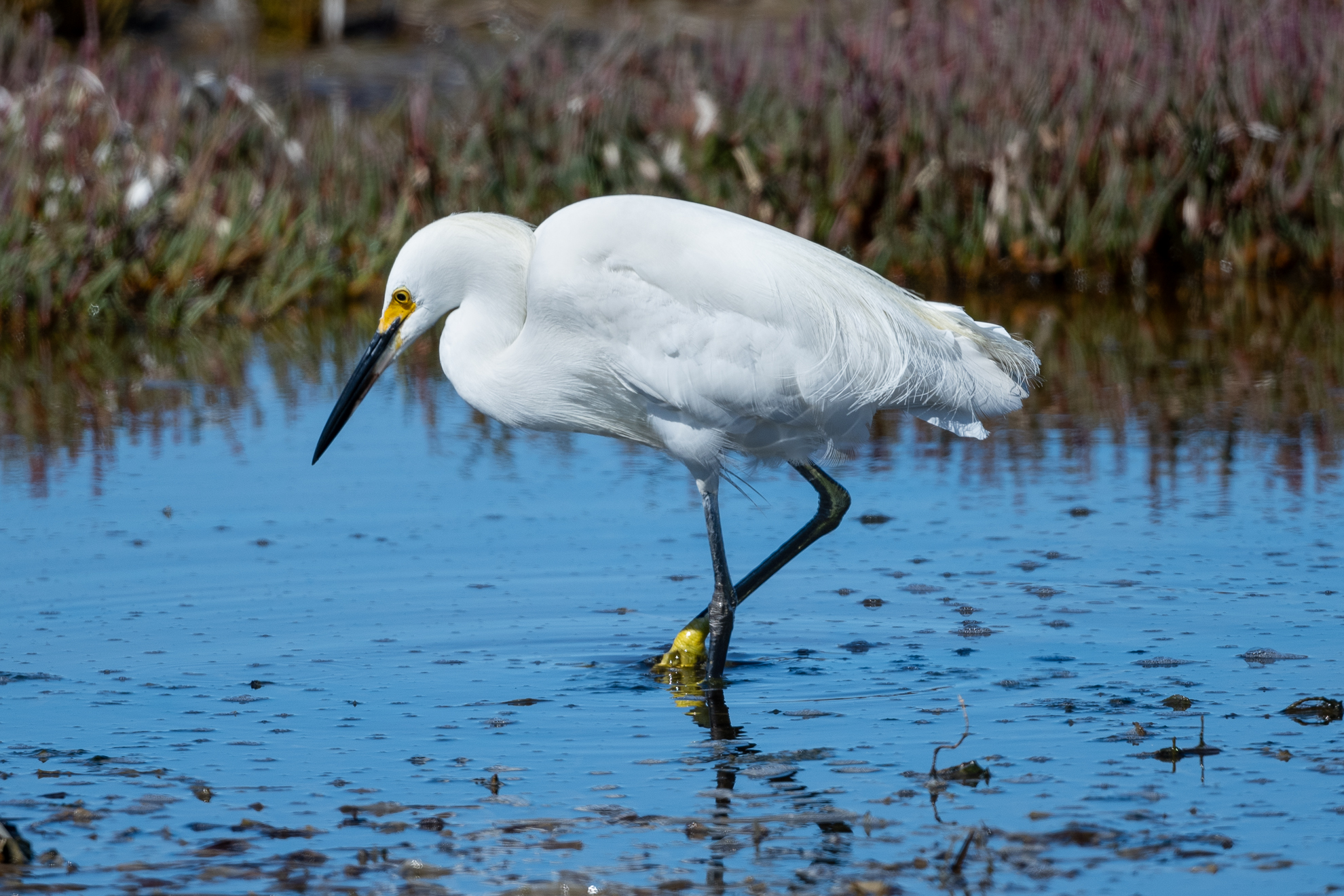
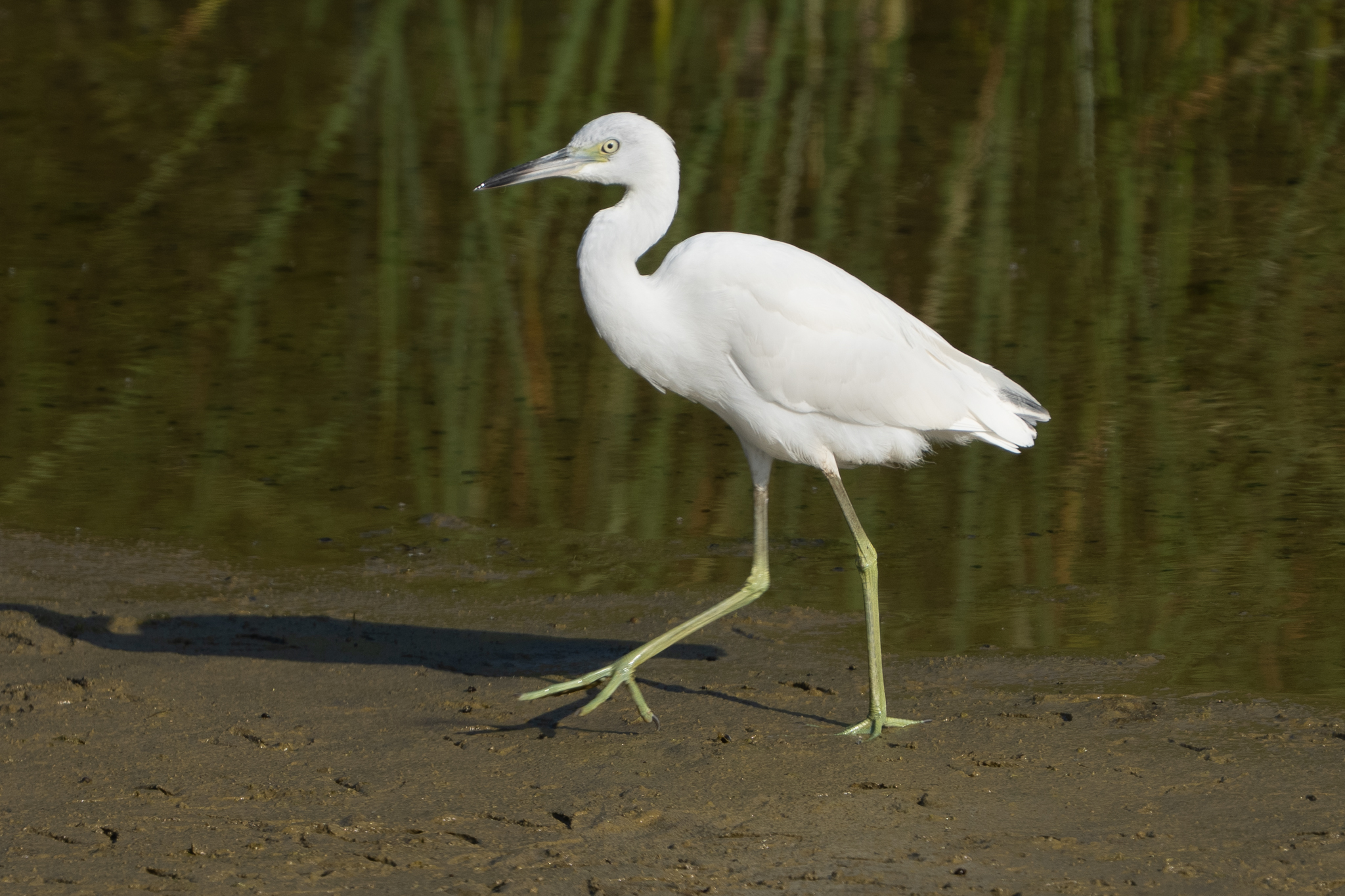
On the other hand, young Little Blue Heron looks a lot like the young Snowy Egret, so they’re a bit harder to differentiate. (From Birds of the World: “white-plumaged subadults are often confused or misidentified as other white herons.”) Until Little Blue is into its second year, they’re all white, just like Snowy. So that means they’re both relatively large white wading birds with light-colored legs and feet and dark bills. The difference, as always, is in the details. In places like Florida, where both birds are common, it’s important to be able to tell them apart, and almost all intermediate birders are expected to be able to do so. Here’s how to avoid falling into that trap:
- Size: Young Little Blue is a slightly smaller bird than young Snowy, but that doesn’t help with isolated birds. Similarly, LBHE is a thinner-bodied bird than SNEG, useful when both are together, less so when not.
- Color: They’re both white, but many young LBHE show a bit of dark in a few strategic locations on the body: some have dark wingtips; young SNEG never does. All LBHE have a bicolored bill that is darker at the tip, grayer near the face; young SNEG has an all-black bill and adults have the top mandible black and bottom mandible yellow (very bright yellow in breeding plumage). The irises of LBHE are noticeably pale, contrasting with the dark pupil; SNEG has bright yellow irises. Also, the legs are greener on LBHE, yellower on SNEG. Snowy also often starts to show the black on the front of the leg that is prominent in the adult bird.
- Behavior: LBHE has a slow, deliberate foraging behavior (“Compared to other day-herons that run or use their wings while foraging, Little Blue Heron tends to hunt in a very methodical manner, using a serial, slow, walk-peer-walk sequence”); SNEG has many different feeding behaviors (“Broadest behavioral repertoire (21 of 34 described behaviors) of all North American herons”), with its feet being particularly active in attempting to stir up prey.
So while the young birds are a bit of a challenge to distinguish, it’s certainly doable, especially where their ranges overlap and all birders are confronted with the ID challenge. However, Little Blue is extremely uncommon here on the central coast, while Snowy can be seen in many places on any given day. So even though the birds are confusingly alike, there’s almost never a need to remember the little details that differentiate them. Again, that’s almost never.
The other day, though, I rolled up to Morro Creek after a good hour and a half birding up the coast at Villa Creek, and several carloads of birders came pouring into the lot at the same time. They were showing some newer birders (and a former SLO county top birder who’s moved away) some of the county’s rarities. Morro Creek has been the favored roosting spot of a Neotropic Cormorant for months now, so I imagine that’s what their target bird was. And last weekend, a big stir was caused by a documented sighting of Mourning Warbler, an eastern bird that must have lost its way during migration.
Among the group were several of our county’s best birders, and then me. We all walked up the creek together, and one of the young hotshots immediately started stirring up trouble: “That white bird looks like a Little Blue Heron.” “Ha,” I thought to myself, “I used to reach for rare birds when I was starting out, too. Young Snowy Egrets look a bit different from adult birds, but a Little Blue? I doubt it.” Then again, Liam is one of our county’s most talented birders; if he’s mentioning something, odds are there’s something worth mentioning.
And sure enough, closer looks at the bird revealed its green legs, a large-looking eye with a pale iris, and even (clinching the ID when visible) dark on the wingtips. Sure enough, a Little Blue Heron. Look at every bird until you see what it is. Don’t look at them and know what it is.
Here’s a little gallery of the bird: