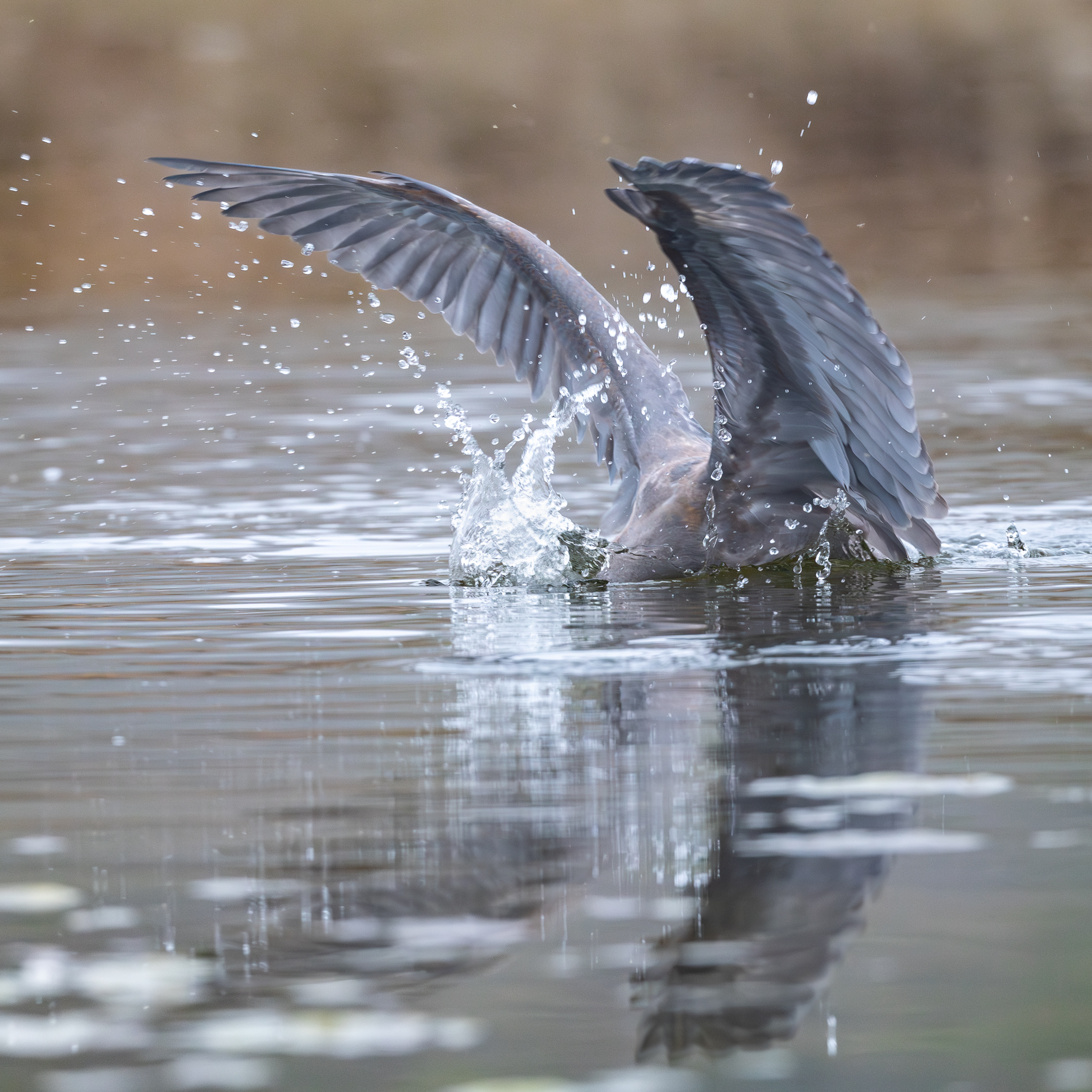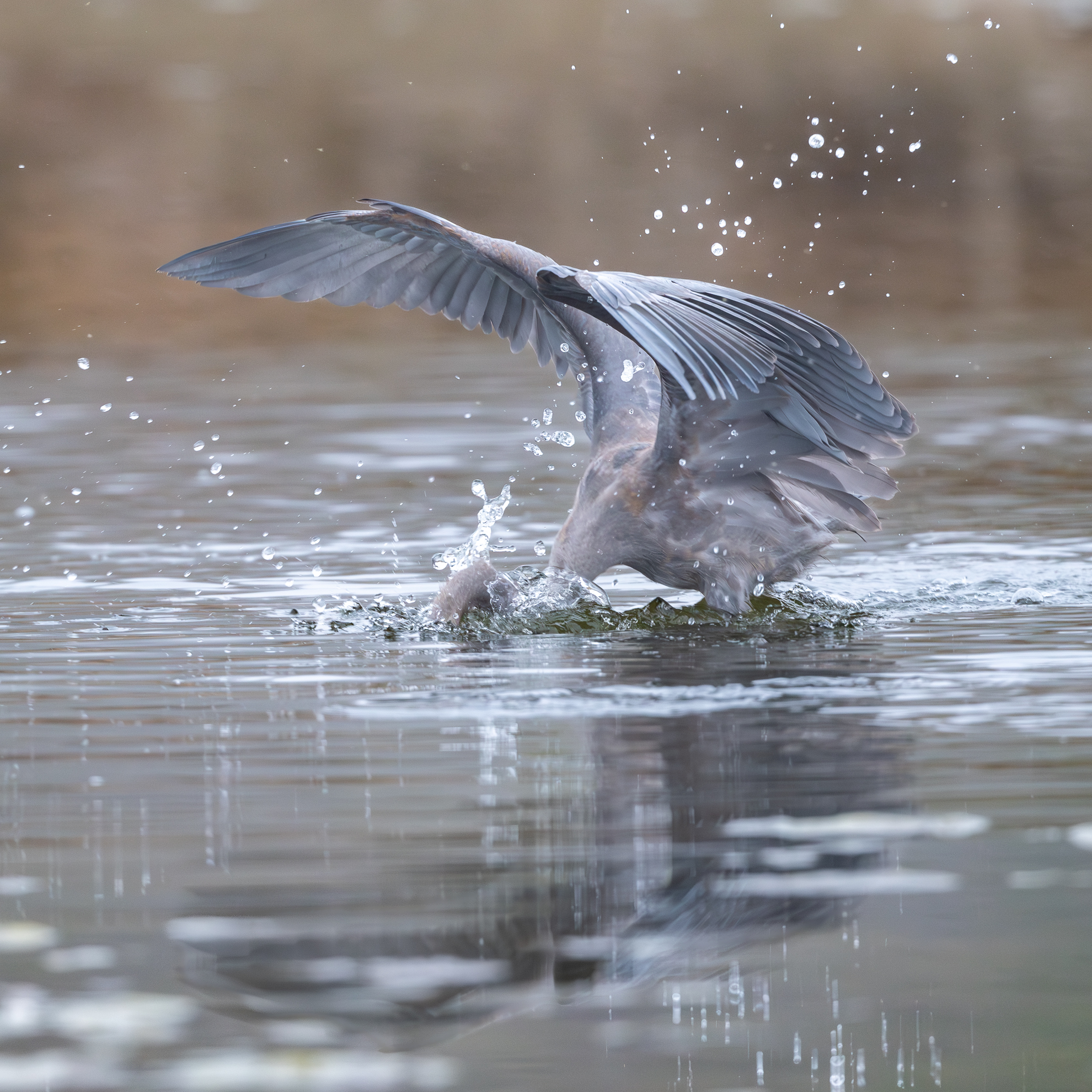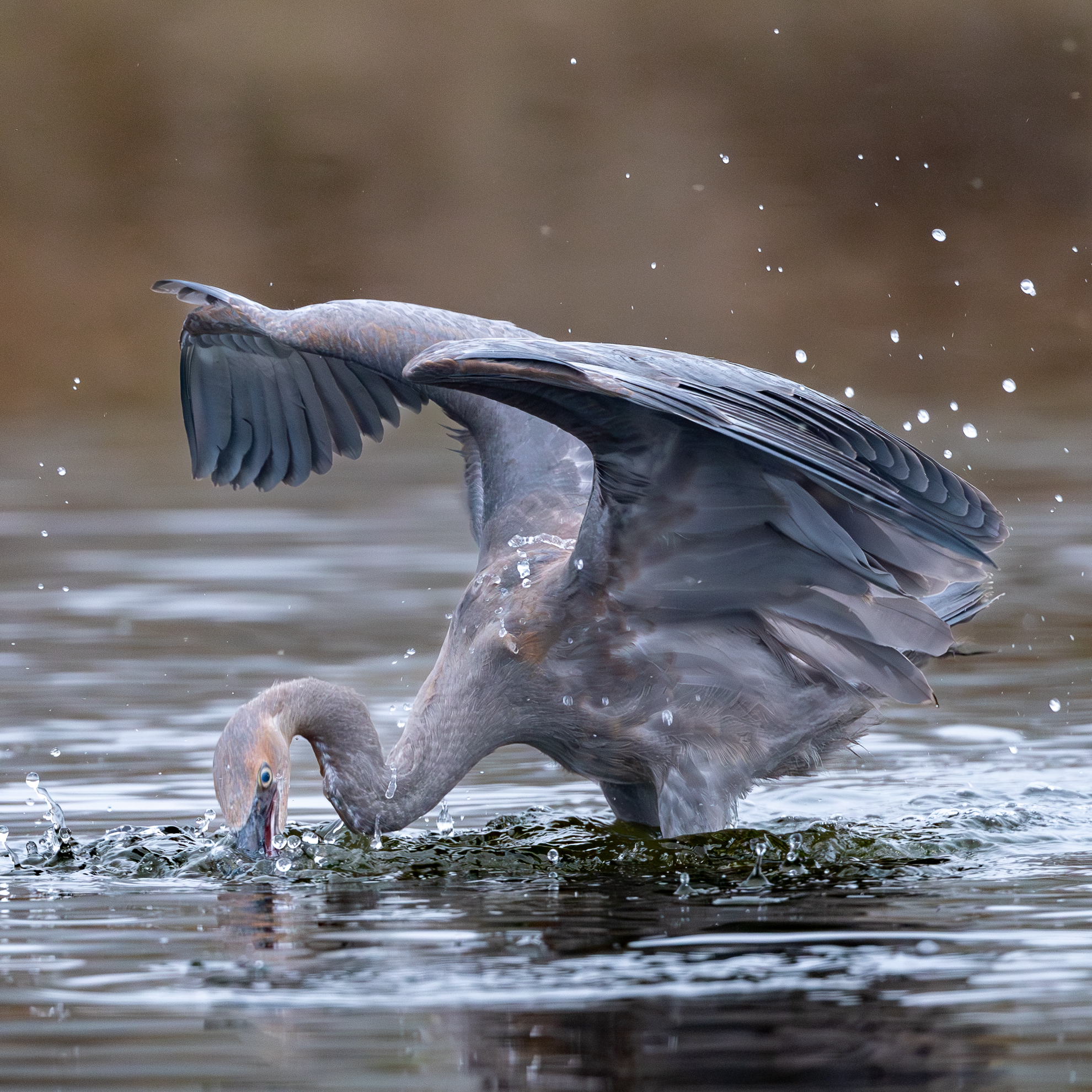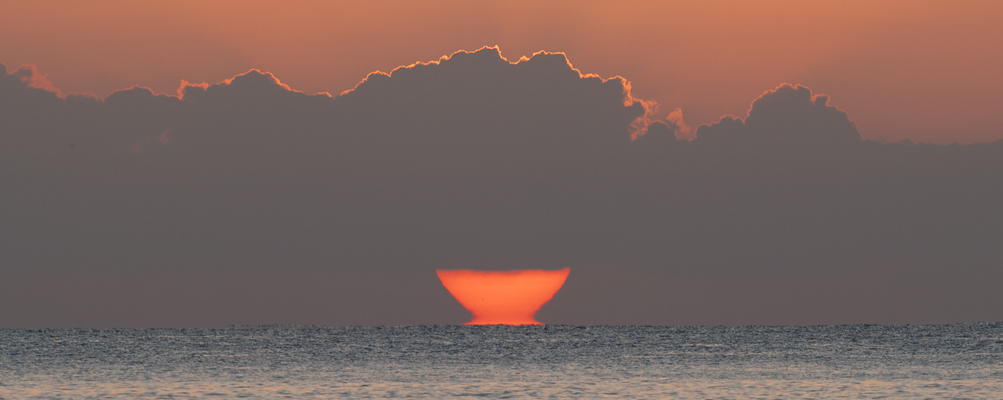
August is when the summer heat really starts to bear down on the inland valleys of California’s central coast. Temperatures routinely hit the high 90s and low 100s. (Tuesday and Wednesday of this week had identical highs and lows: 103 and 52.
This time of year, kids are getting ready to return to school, with varying degrees of eagerness. Shorebirds are returning in greater numbers from their various breeding grounds in the Arctic or the Great Plains, perhaps also displaying varying degrees of eagerness, considering the various arrival times for the different species.
Also in August, California’s wildfire season kicks into high gear. We’ve had two pretty big ones recently, with the Madre fire that burned through 80,000 acres in southern San Luis Obispo County in July and now the Gifford fire that seems to be burning what that one missed, at 130,000 acres and still under 50 percent contained.
So on the last weekend before school started, I wanted to escape the heat and the smoke here at home and head over to the coast for some relaxing birding in cooler weather. And it just so happened that a young Reddish Egret (Egretta rufescens), an infrequent visitor to our shores, has been seen hanging out at Villa Creek over on the coast. So off I went, early in the morning both Saturday and Sunday.
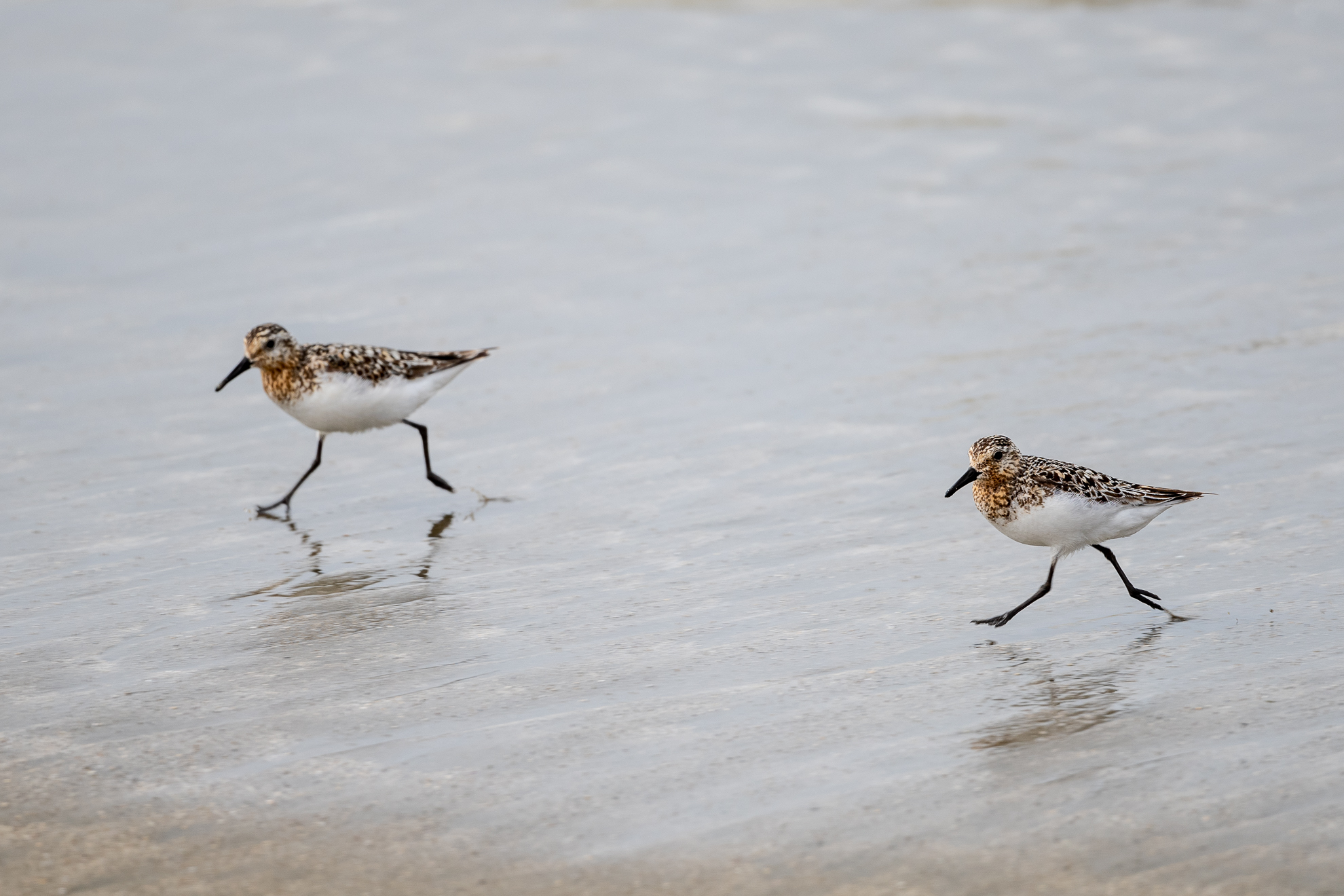
Villa Creek is the northernmost section of Estero Bluffs State Park. Once you’re there (don’t miss the parking area), it’s a short hike along a blufftop trail, then another short (but it feels long because it’s on sand) walk along the beach, and then you’re around the corner to the lagoon. At least on this visit, and presumably relatively frequently, the upper berm of the beach has a bunch of kelp wrack, and the dunes behind that are one of the best places I’ve seen for Snowy Plover, Semipalmated Plover, Killdeer, and a few sandpipers (Least, Western). On both visits this weekend, I found a Long-billed Curlew or two, a Marbled Godwit, Black Turnstones, Black Oystercatchers, and more! And on at least one day, there was a Short-billed Dowitcher!
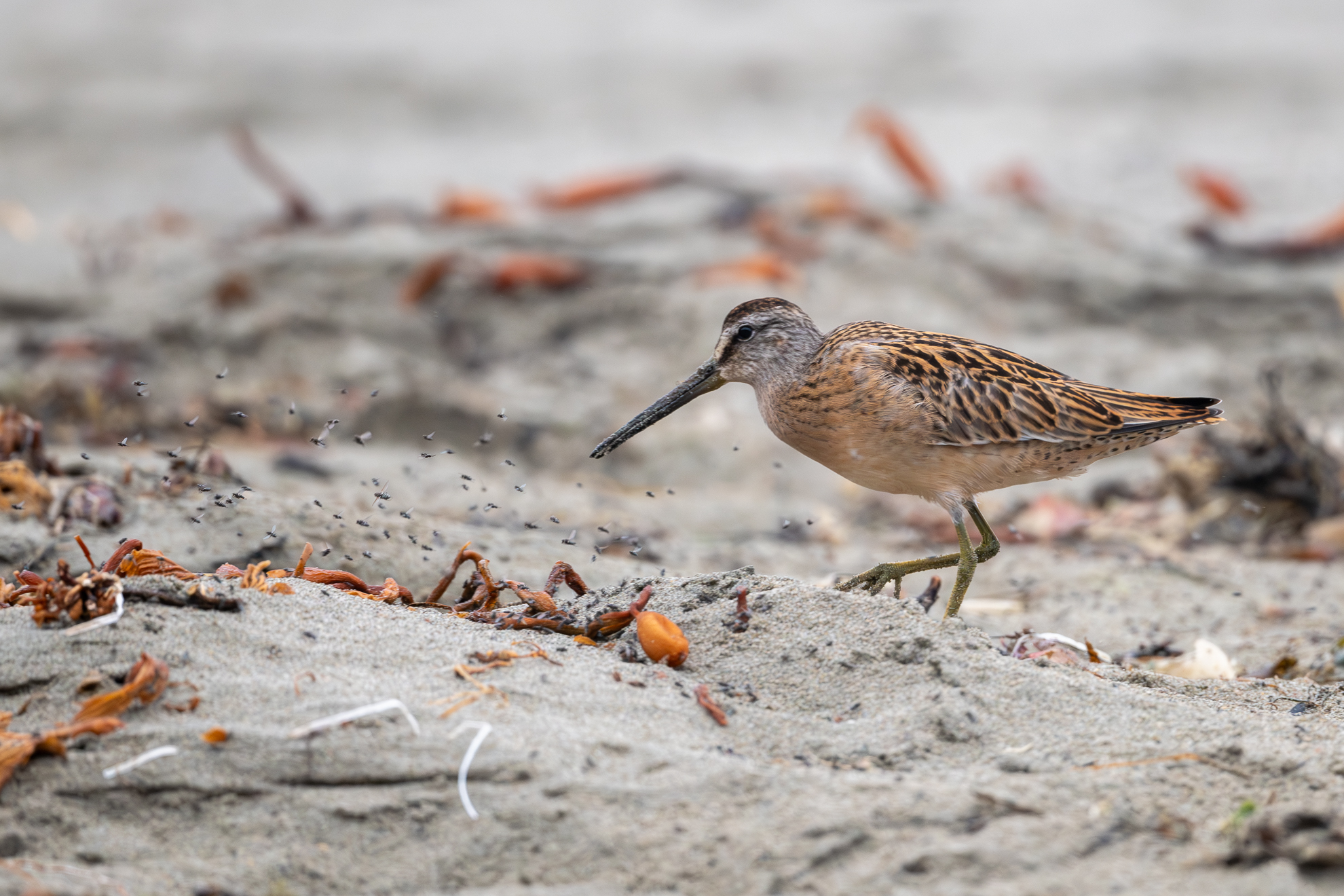

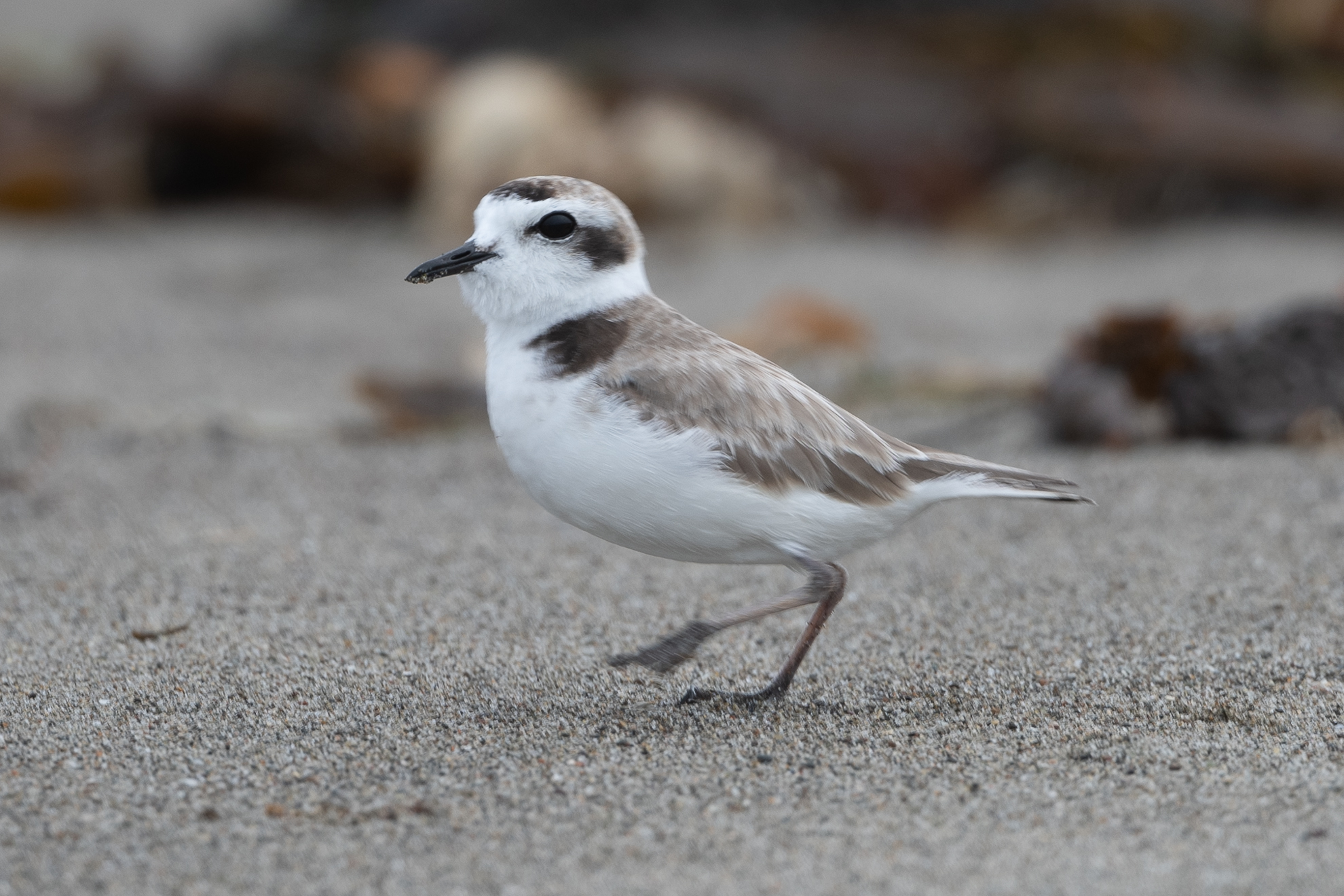
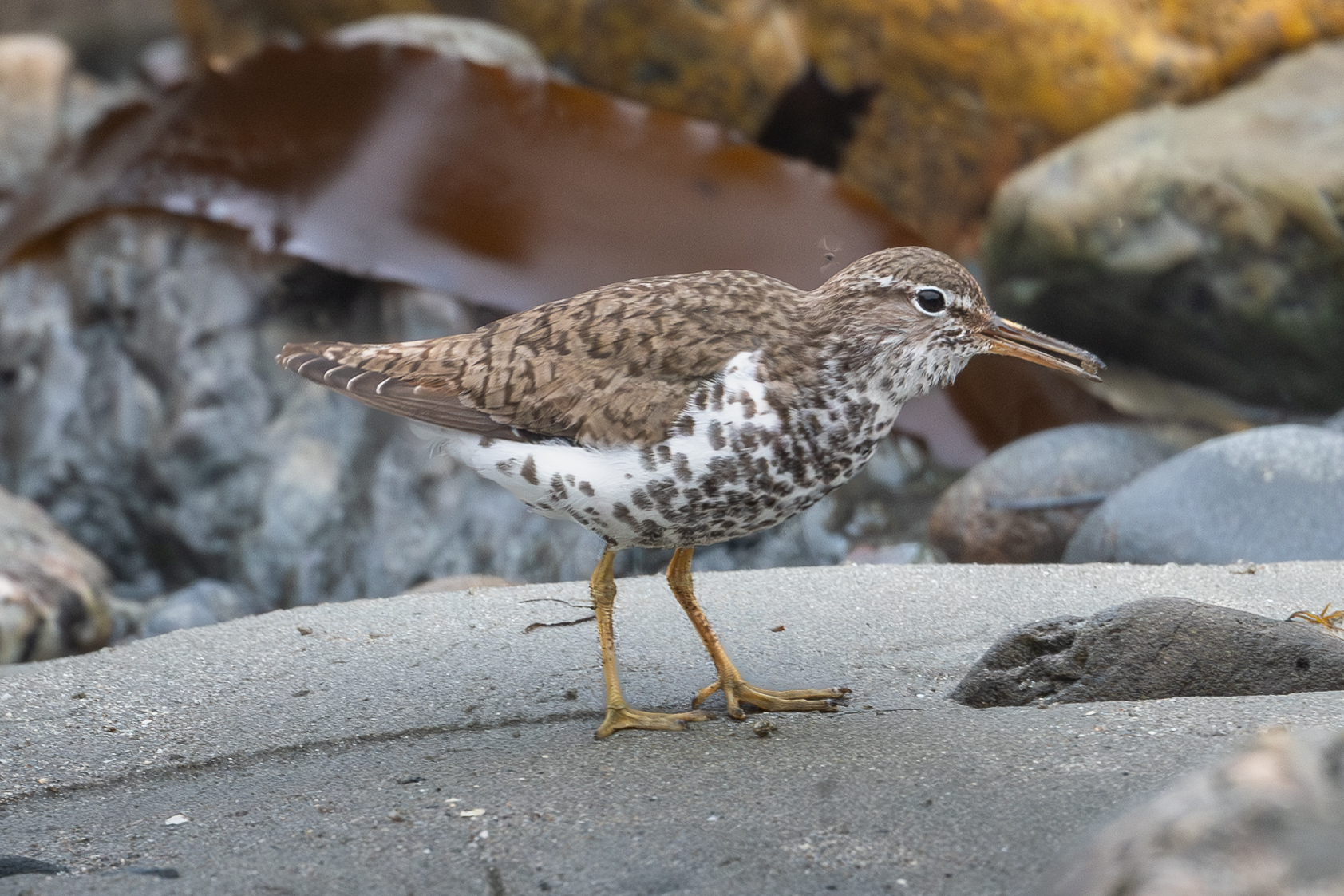
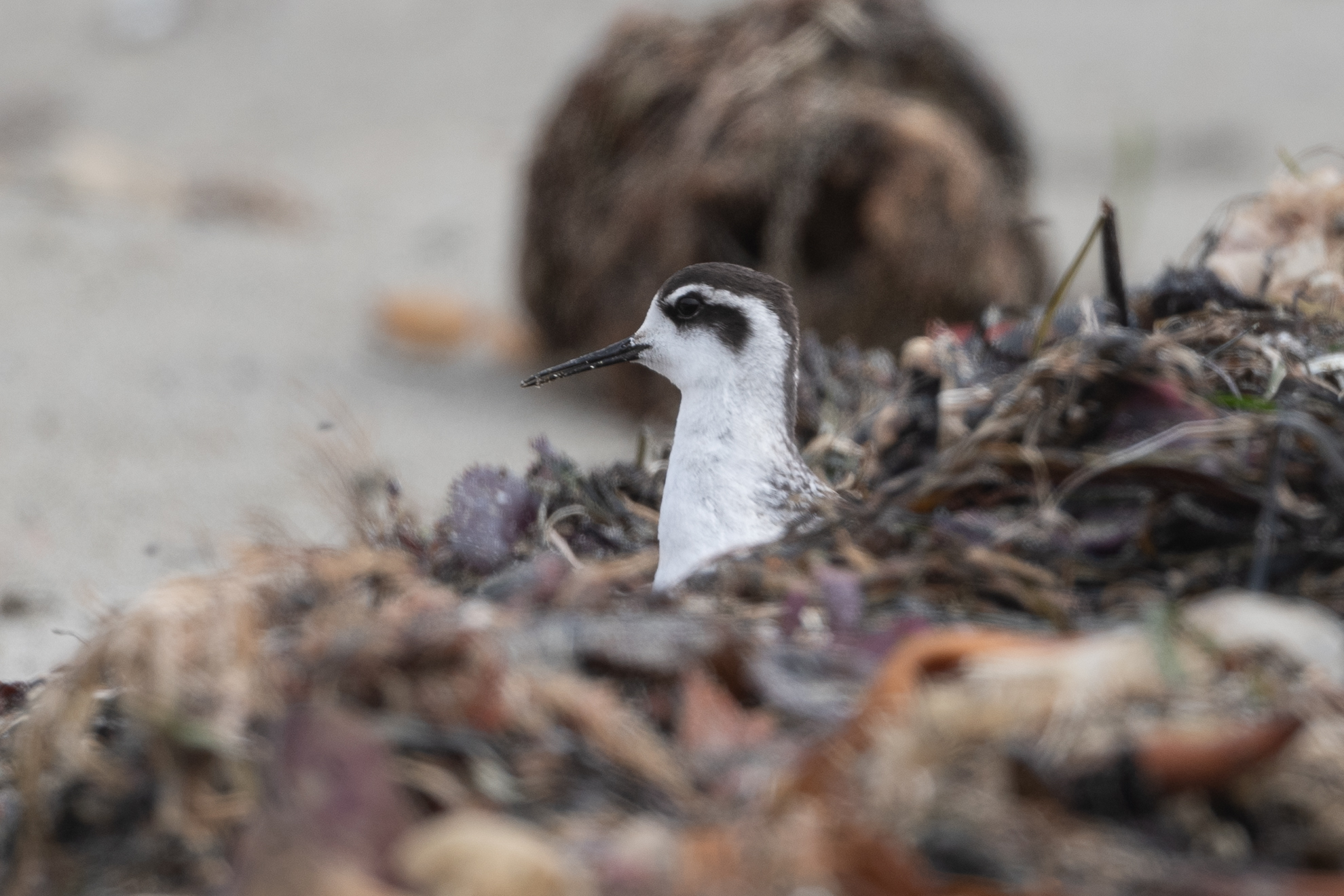
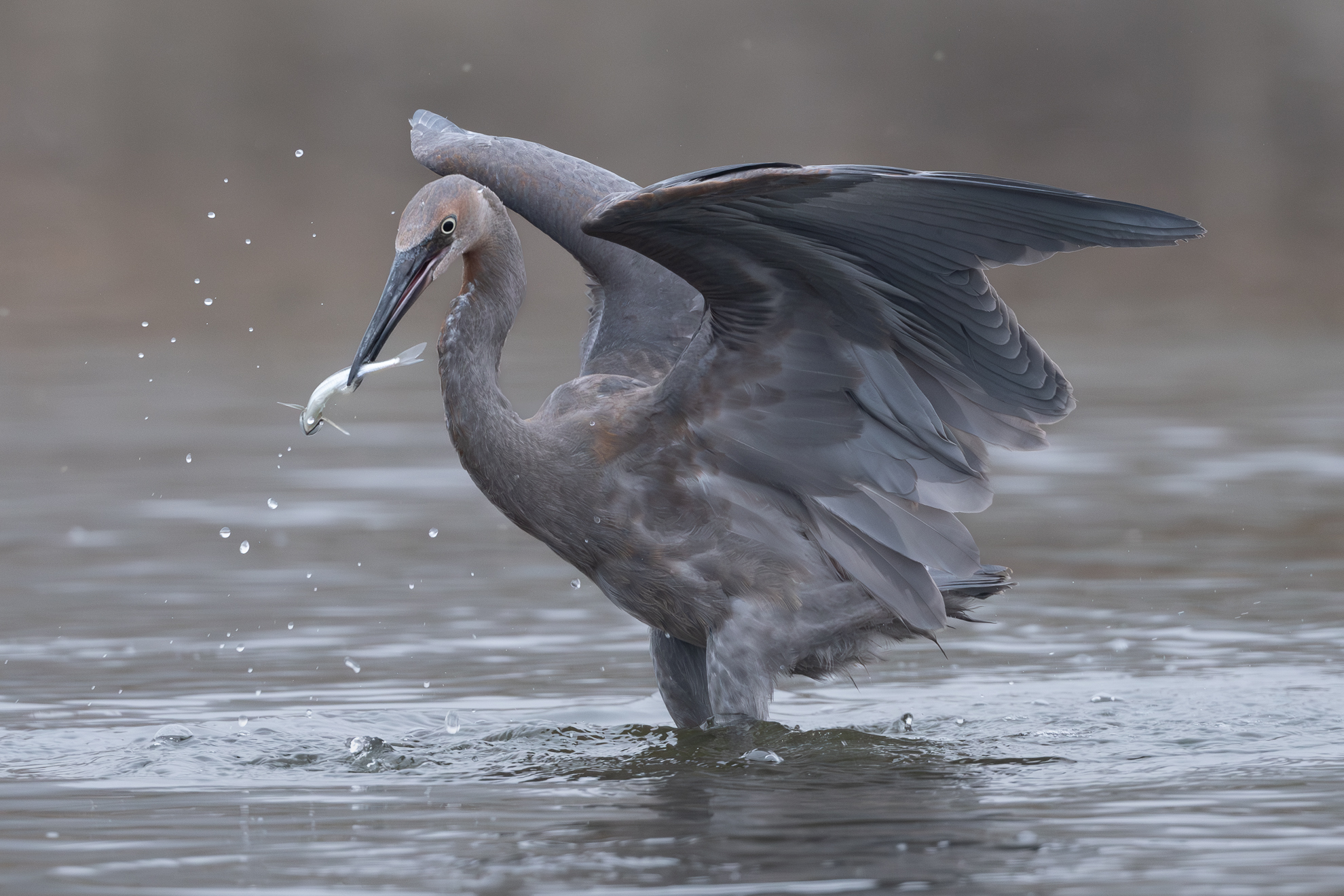
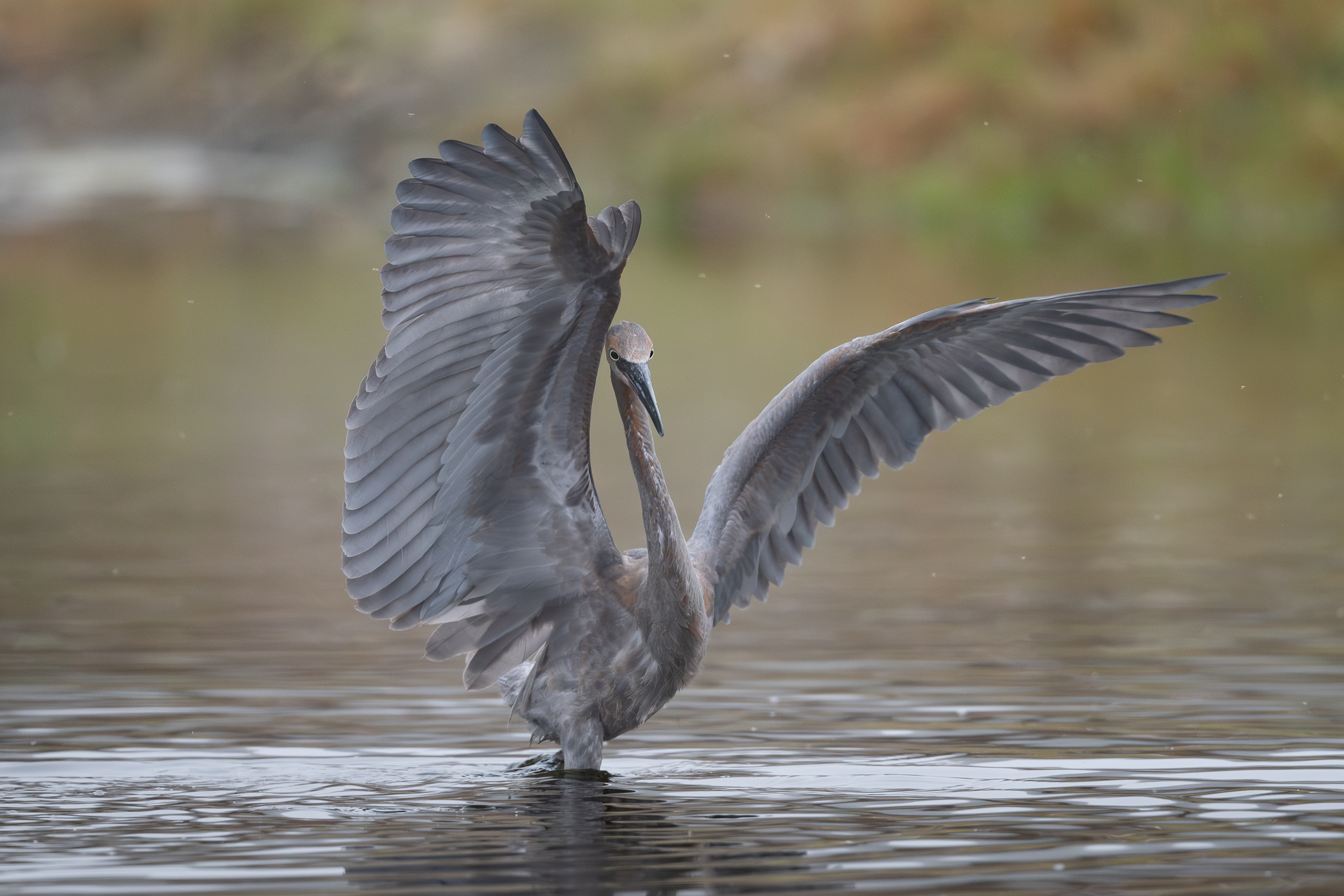
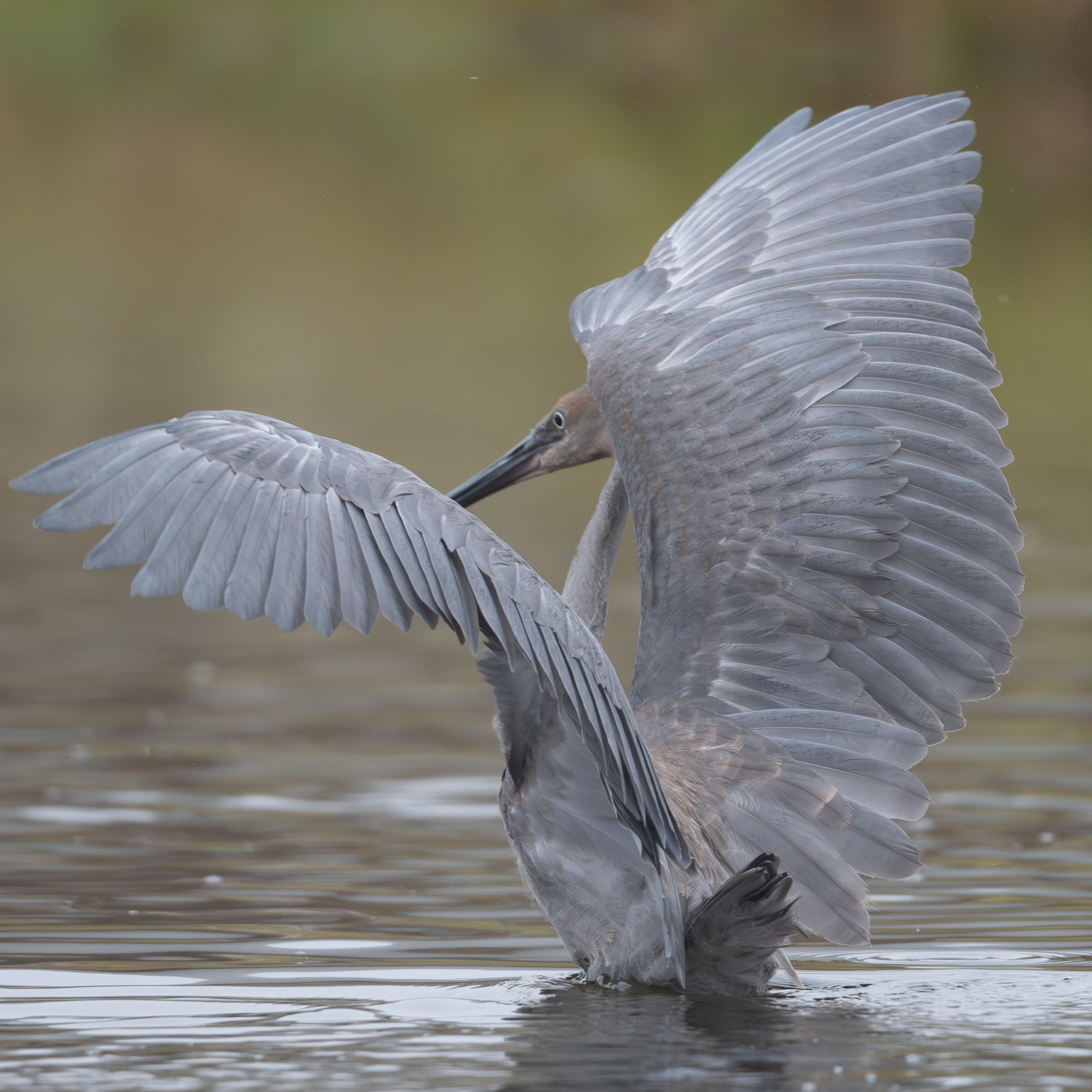
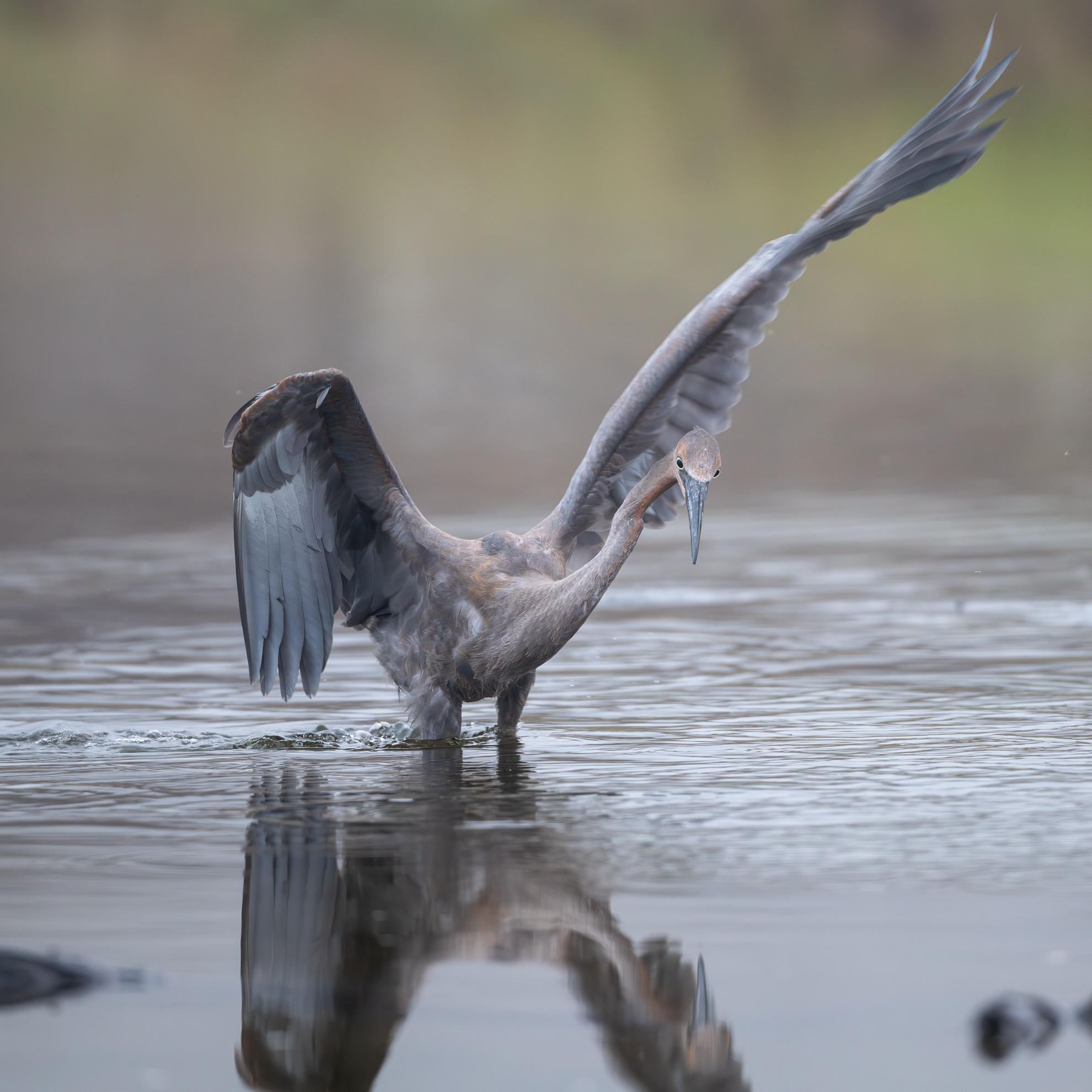
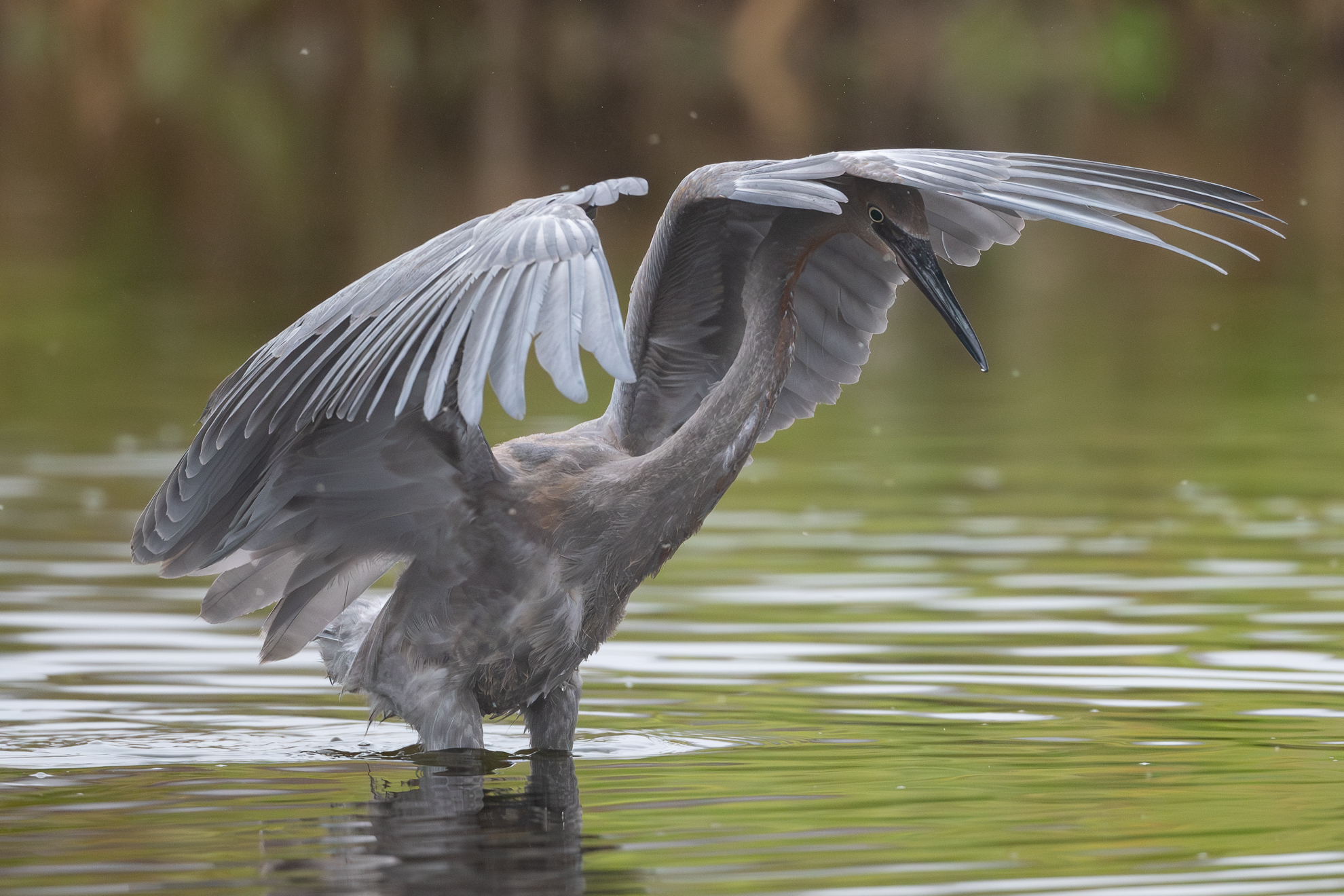
Not to mention the star attraction, the Reddish Egret:
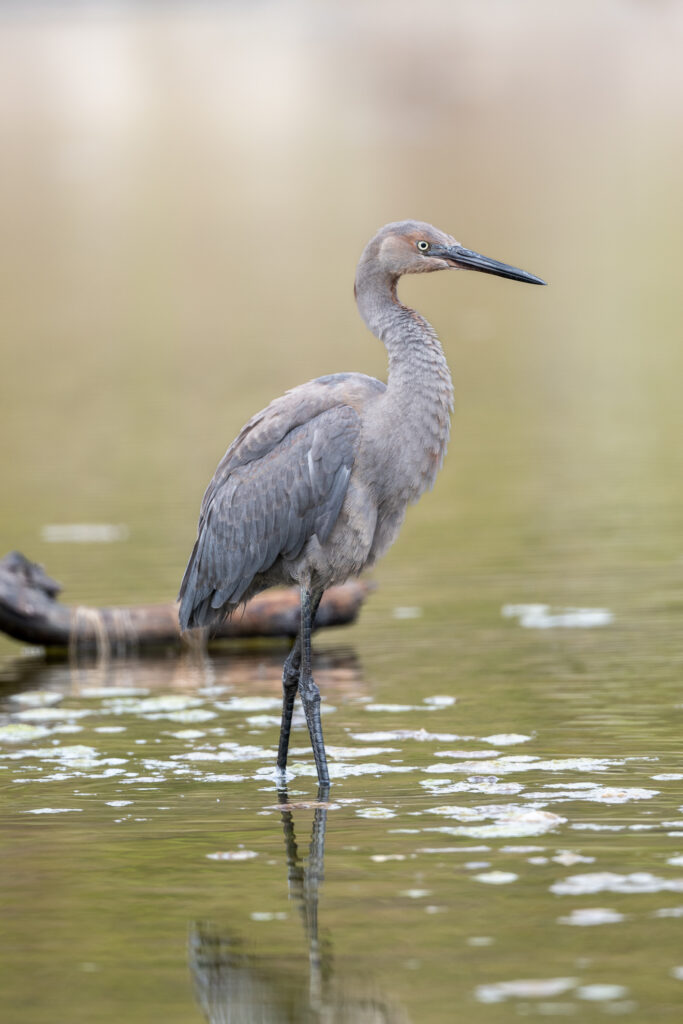
Birds of the World begins its description of the bird like this: “The Reddish Egret is a charismatic species that inhabits coastal estuaries and lagoons of the Gulf of Mexico and Caribbean.” The species was nearly extirpated from the United States back in the days of plume hunting (the cause around which the Audubon Society was founded back in the early 1900s.) Today the populations are apparently rebounding. It’s still our rarest and least studied ardeid, though (that’s ornithologist speak for “heron and egret”). Rare enough that I’d only logged four sightings in eBird during my two decades in Florida, and I’d never seen one in California. (They are rare and irregular visitors to California; SLO county probably gets one every three to five years: in the past sixteen years there have been reports in only six years: 2011, 2016, 2018, 2019, 2021, and 2025.)
They breed on the Gulf Coast in Florida and Texas (and in a very few locations in Alabama and Louisiana, though the range maps show those states as “migration” rather than breeding), and along both the Gulf and Pacific Coasts of Mexico. Throughout their breeding range, they rely on mangrove islands for nesting. In migration, adults appear to show fidelity to their stopover sites, which is nice for birders planning trips. (Extreme extralimital birds, and young ones like this one, probably do not, though, so once this bird leaves, it’s unlikely to return.)
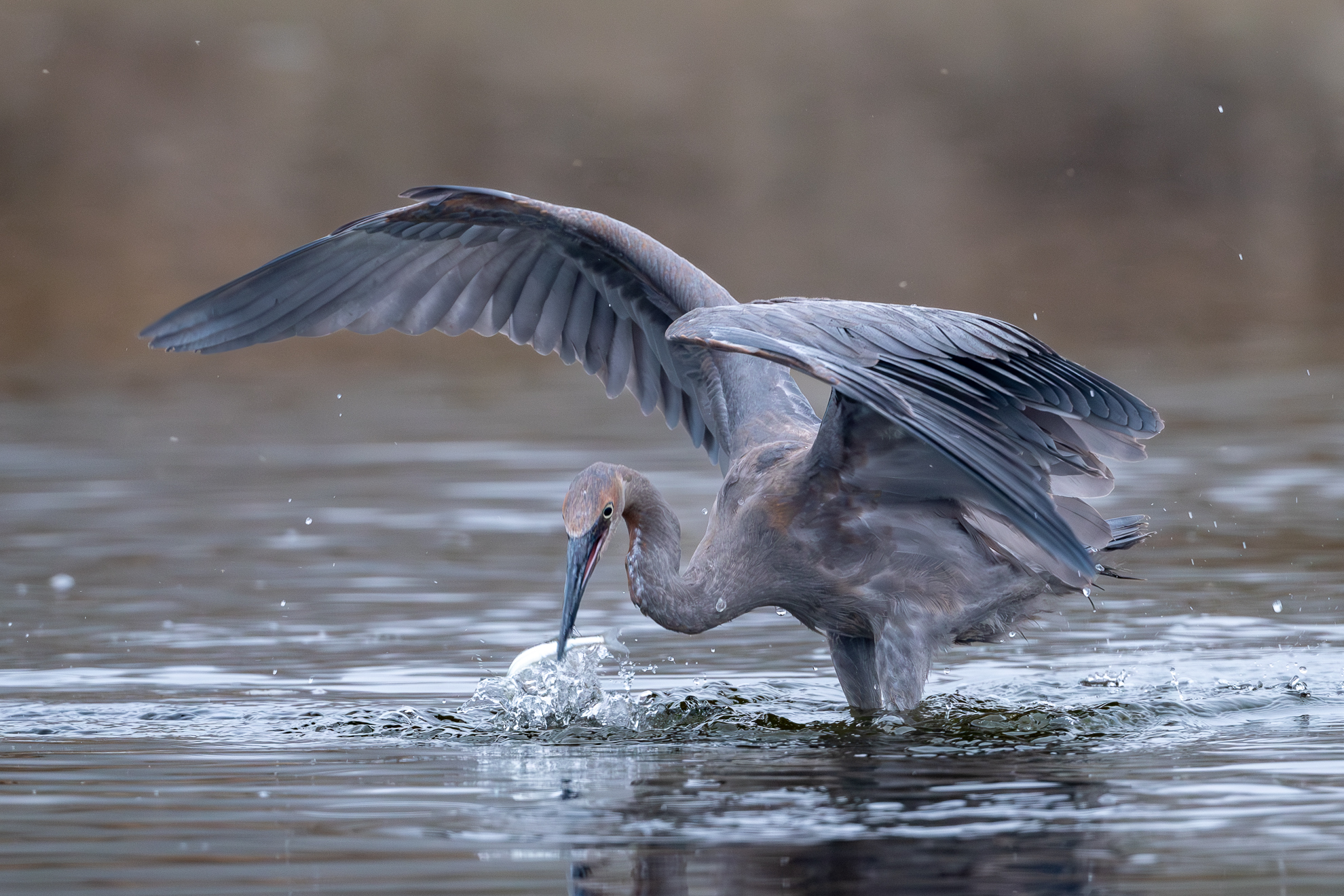
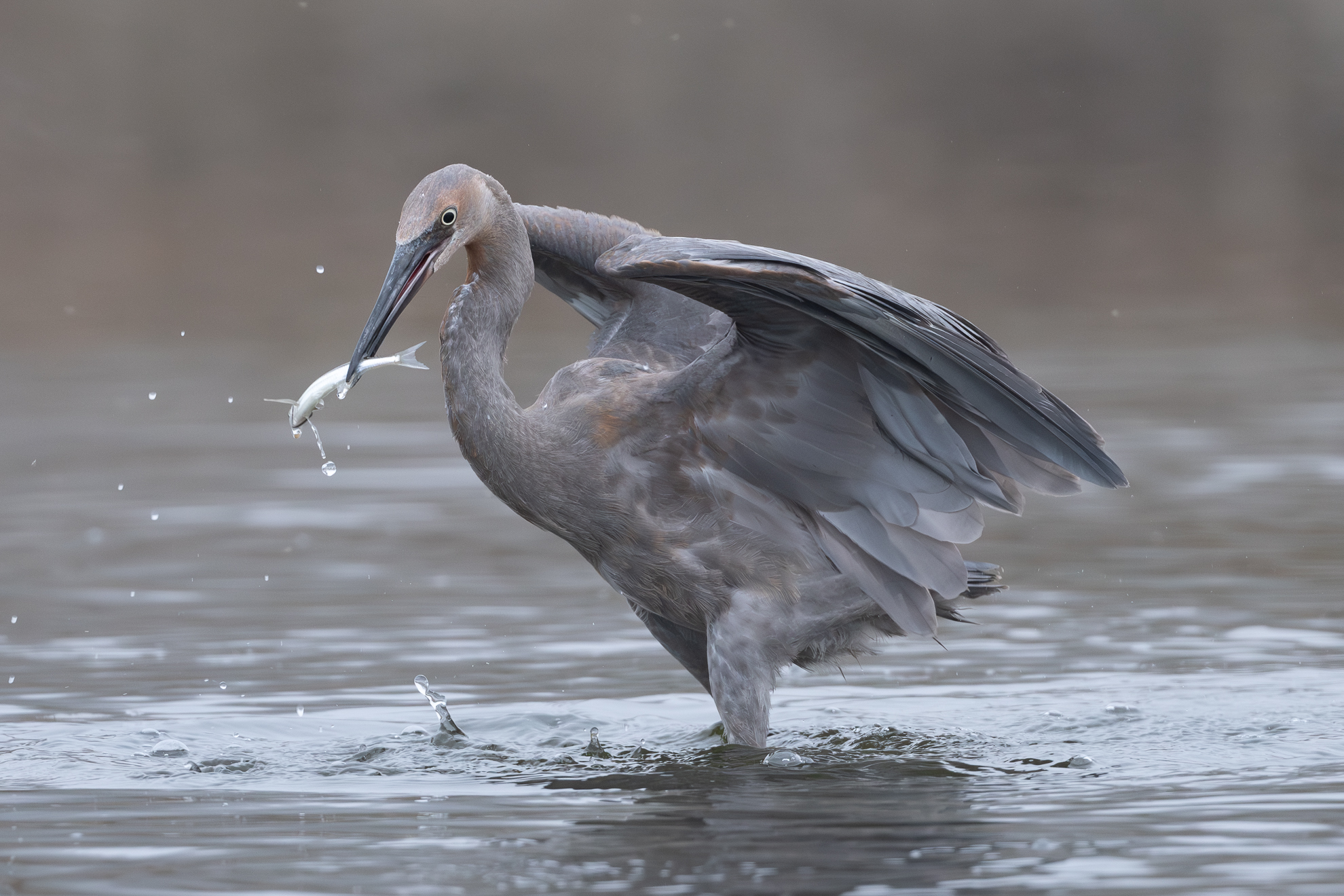
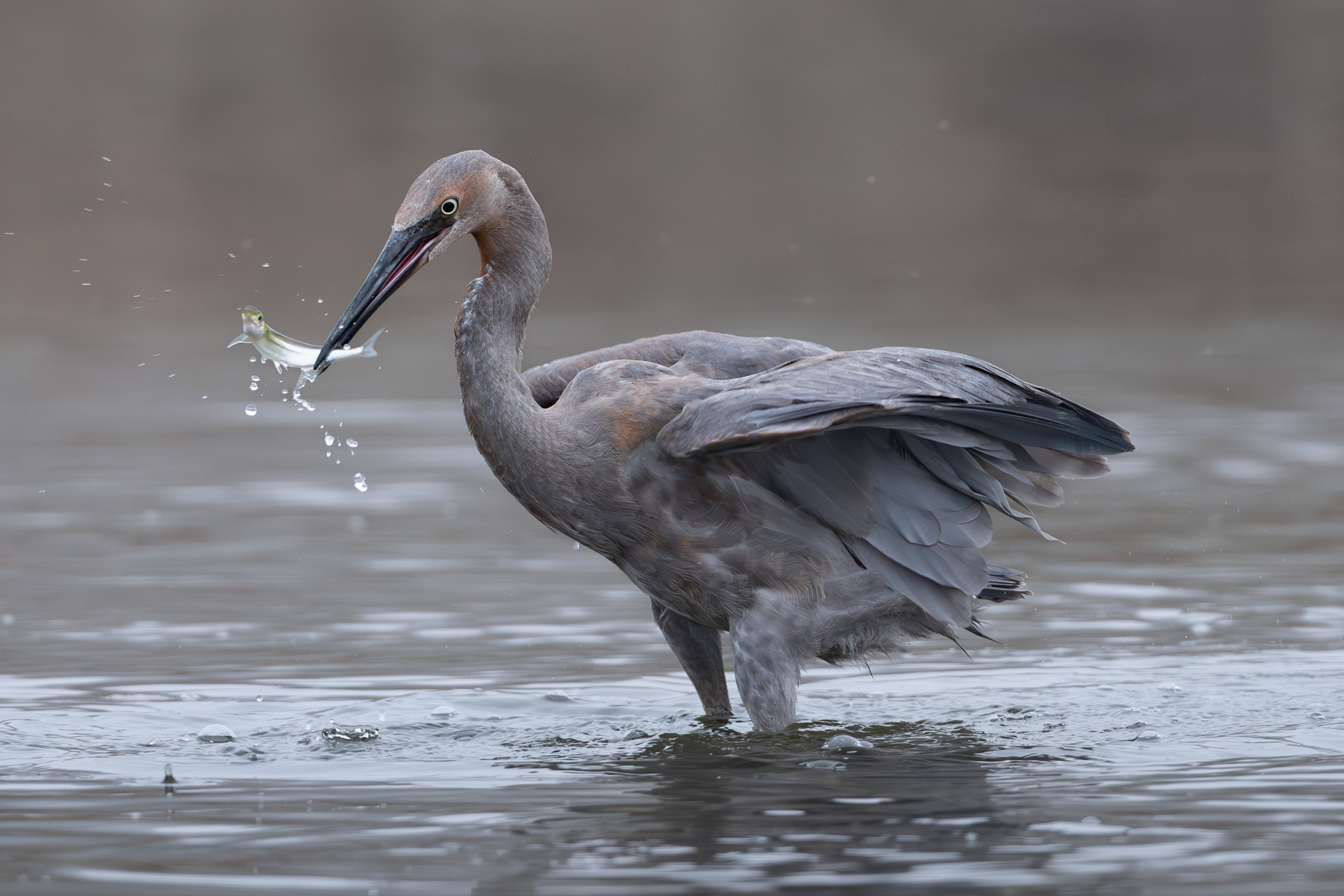
One of the reasons Birds of the World describes the species as charismatic is the dramatic coloration of the adult bird: on the dark morph, a dark bluish gray body with a red head and throat; the white morph is all white, but its face gets dramatically red during breeding sason. The bird at Villa Creek hasn’t reached adulthood yet, but it’s on its way. There are hints of red coming in on the back of the neck and on the face.
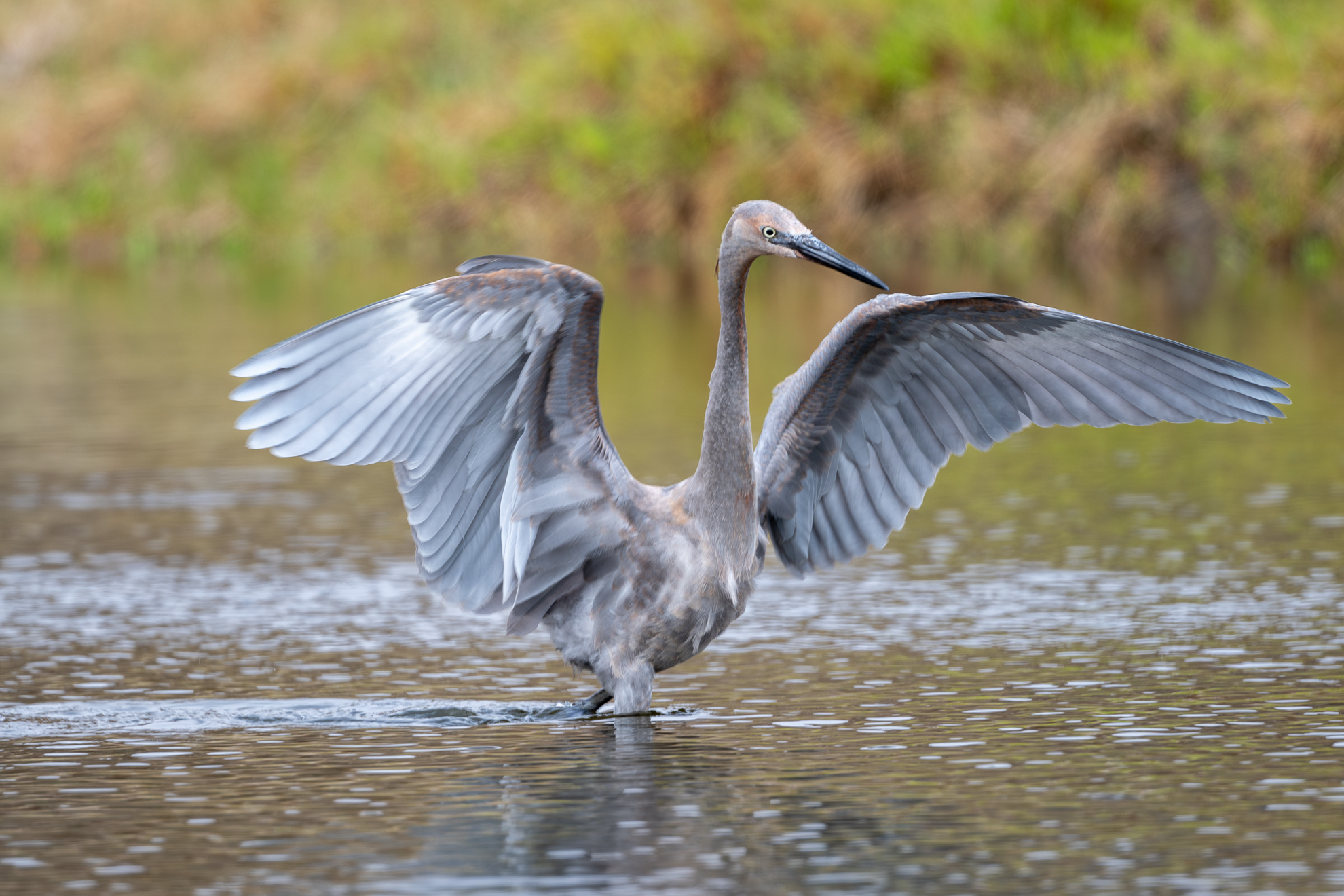
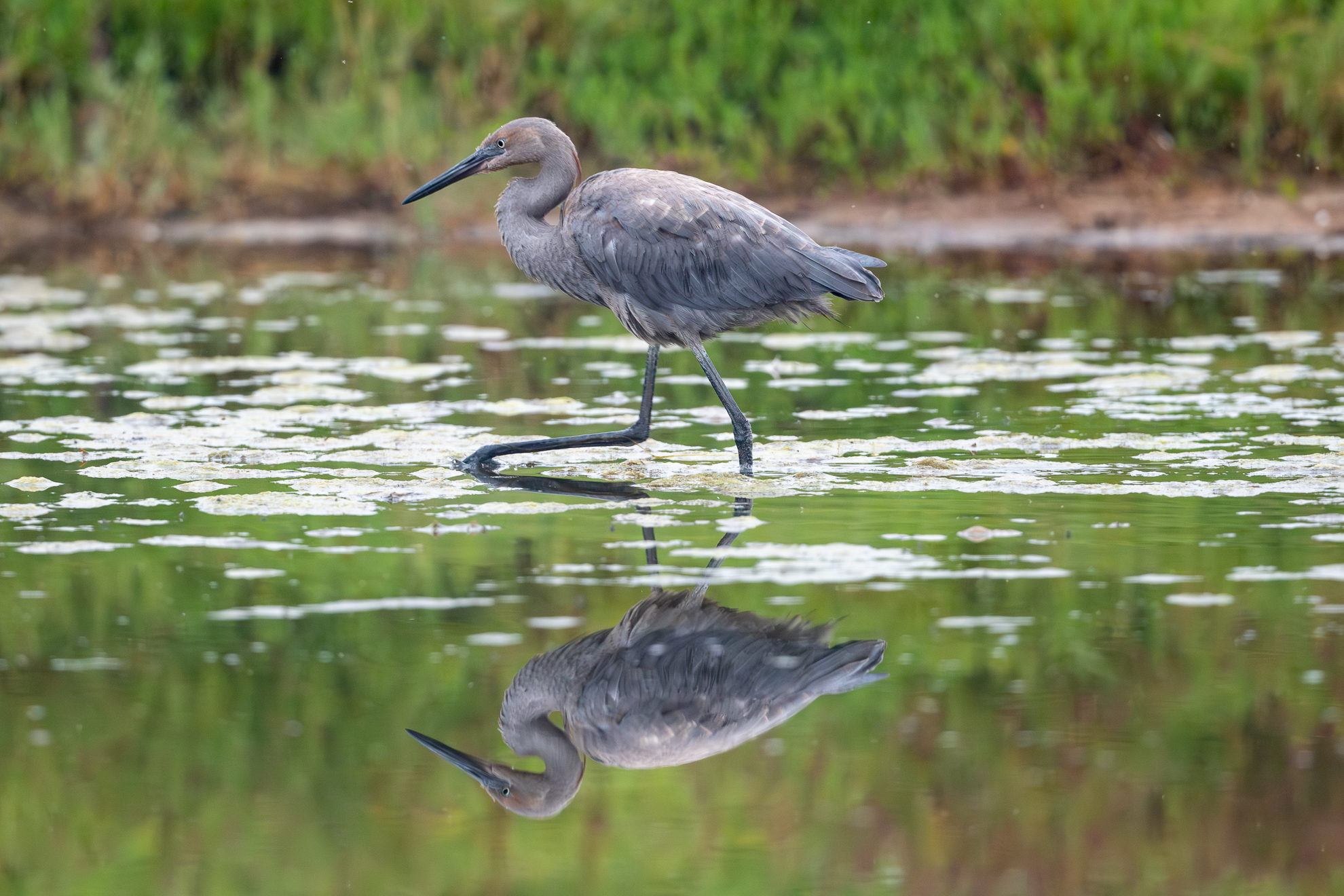
The other reason BoW mentions the bird’s charisma is its dance moves. When it’s actively feeding, it shimmies and shuffles and high steps and moves its head and wings. Birds of the World describes it in somewhat dry terms, like this: “Visual, diurnal feeder. Most varied and active of any North American heron in foraging techniques used; most methods are a variation of Disturb and Chase “
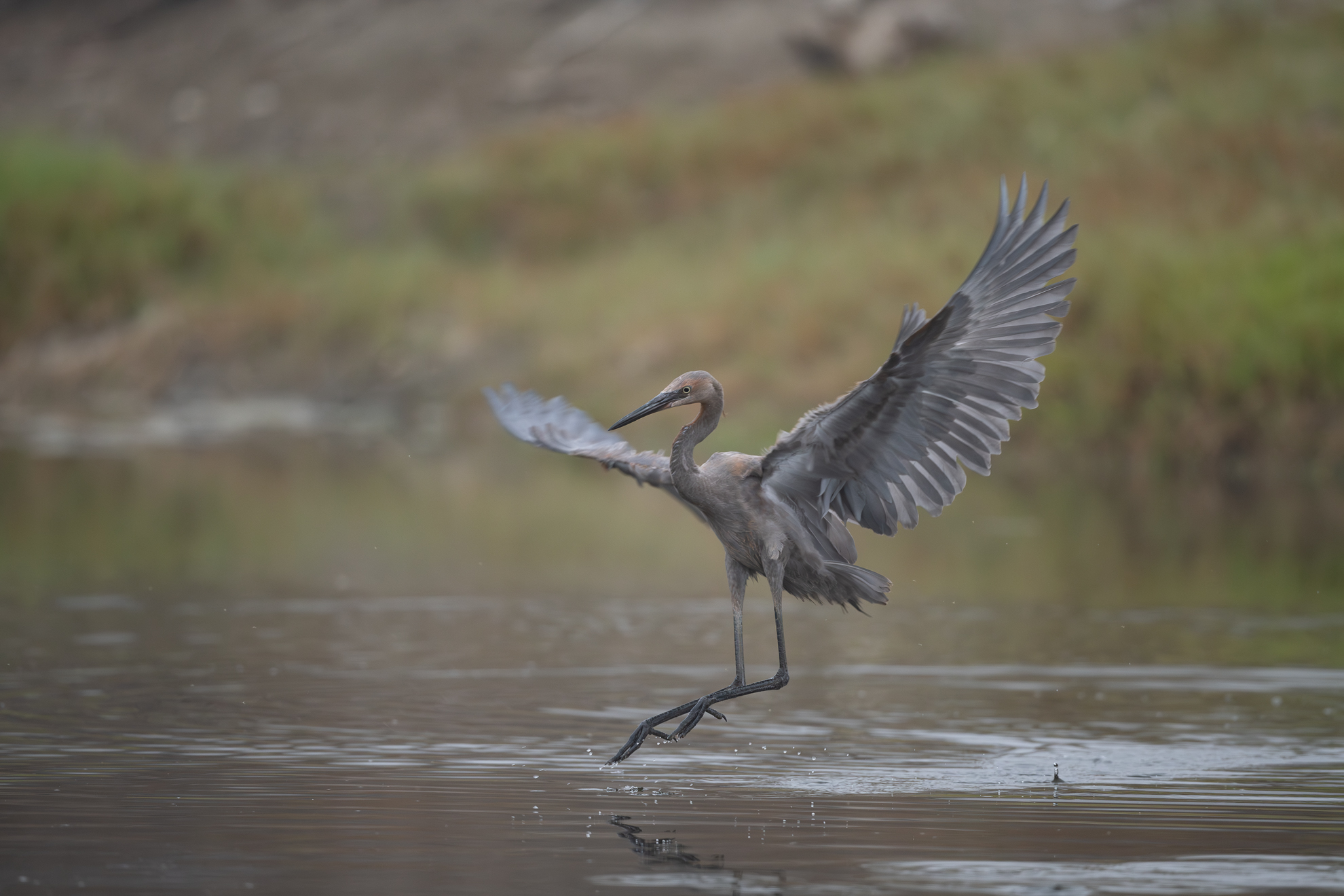
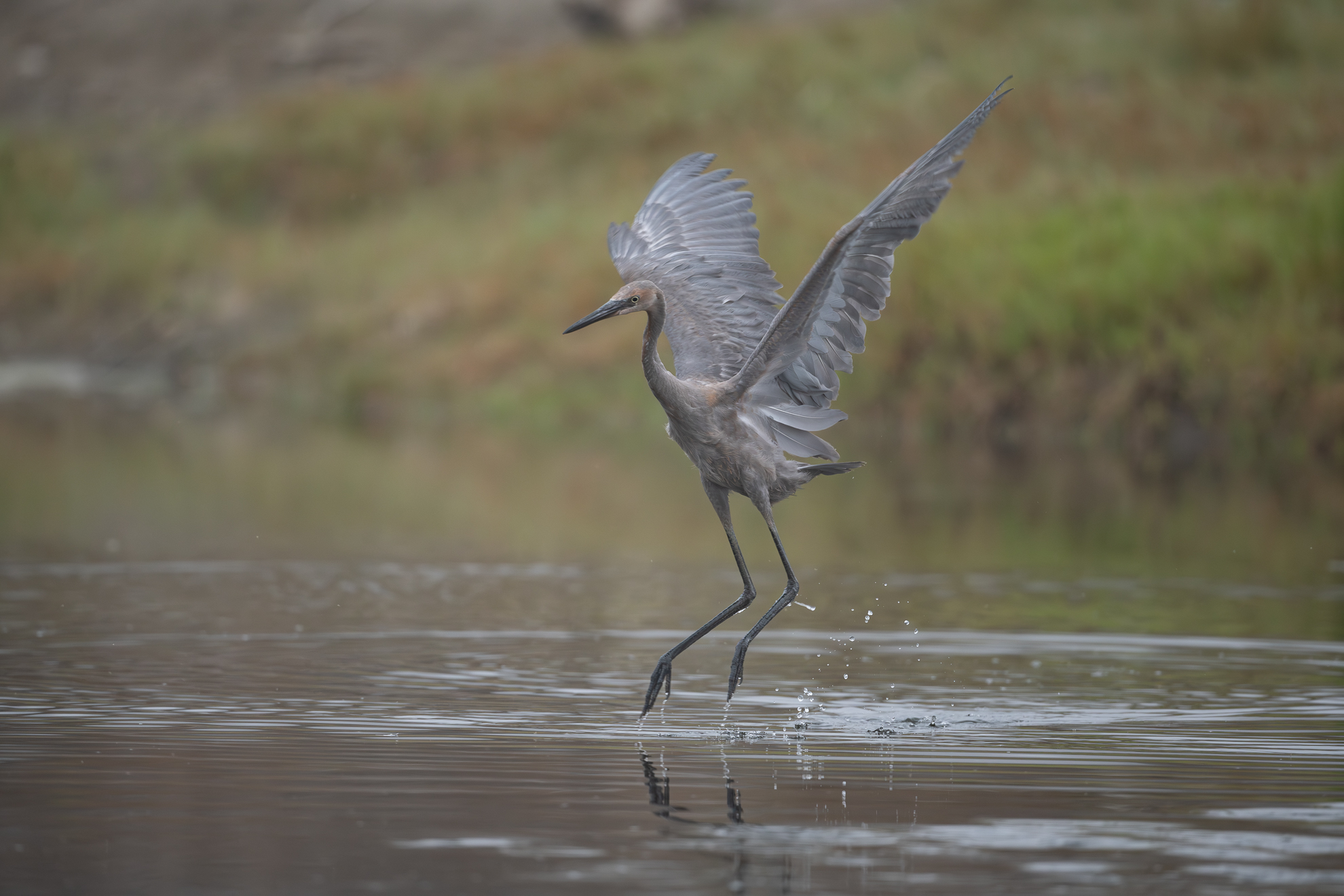
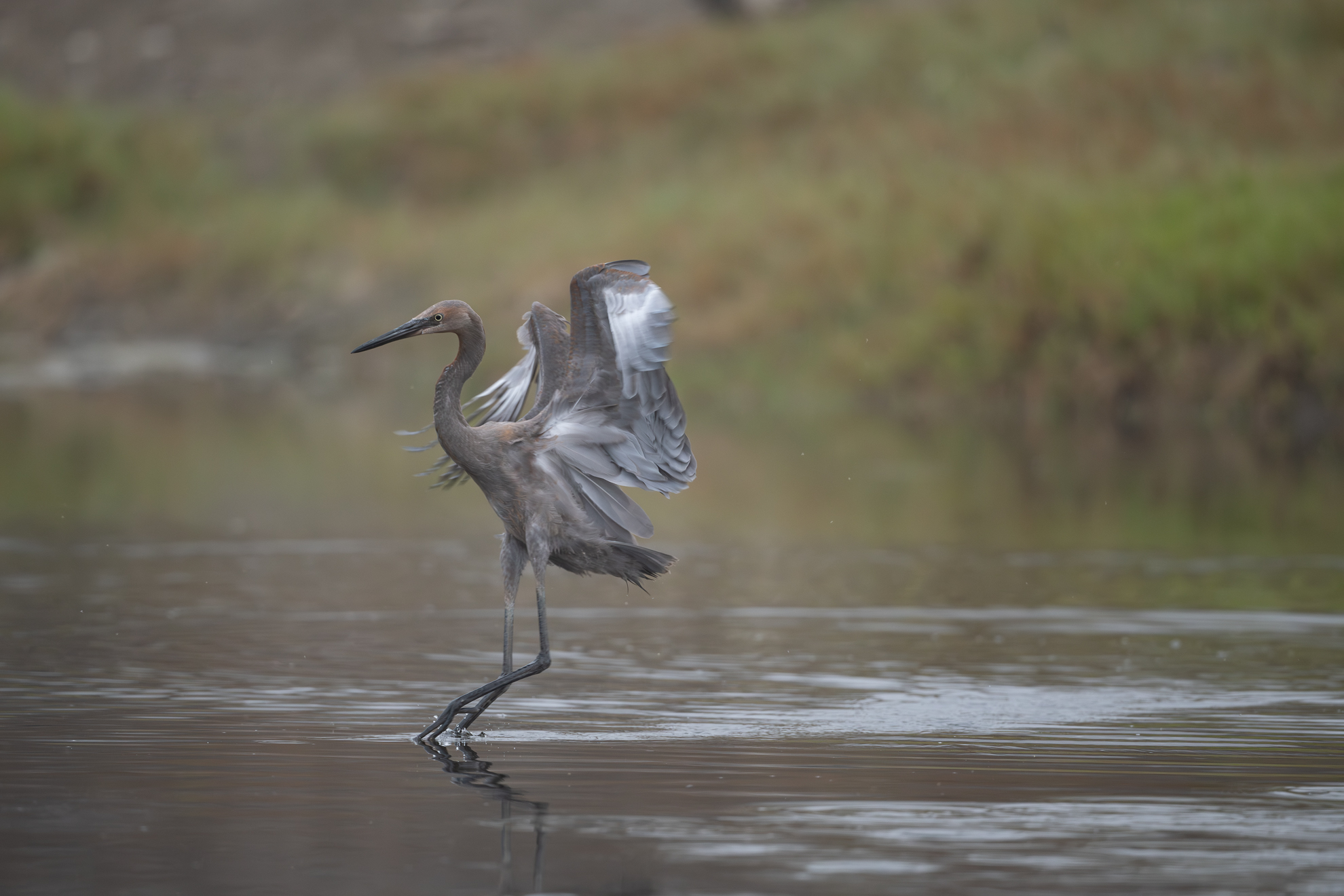
Some of the poses it strikes while hunting up food can be quite dramatic:
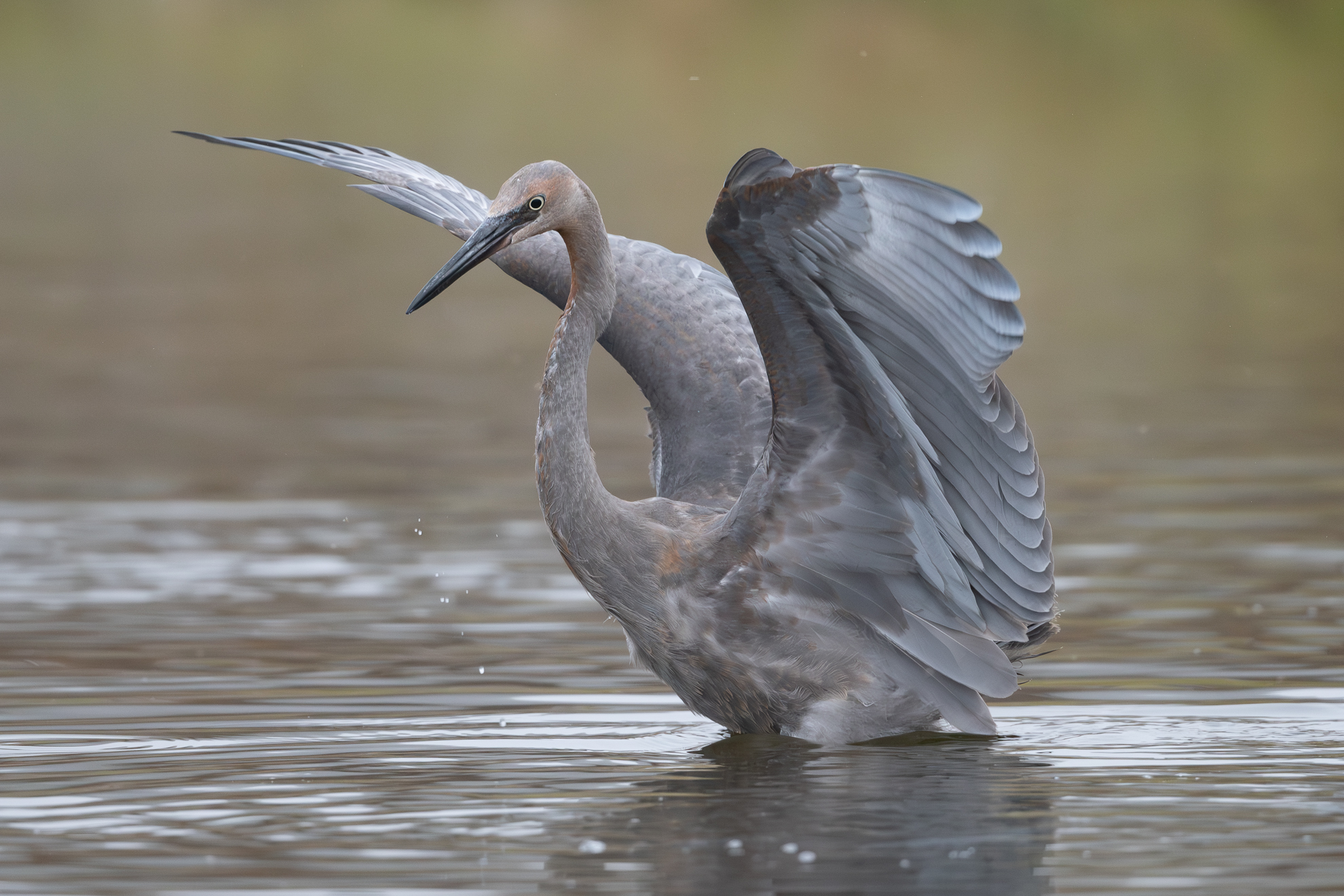
The point of it all, of course, is to catch some fish: